
Category Science & Technology
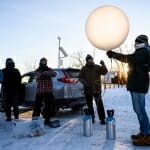
Hardy scientists launch weather balloon in bitter cold
Professor of Atmospheric and Oceanic Sciences Grant Petty and a group of students launch a helium-filled weather balloon from frozen Lake Mendota at sunrise on Jan. 31.
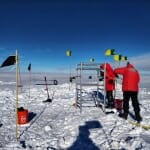
At UW–Madison’s Antarctic outpost, they take this kind of weather in stride
Temperatures in Madison rivaled those in Antarctica on Wednesday and Thursday, prompting the city to all but shutter its doors. But for researchers at UW–Madison’s IceCube project, an enormous particle telescope built in the ice beneath the South Pole, it was just another day at the office.

Genes behind lager yeast’s cold- and sugar-loving success revealed
Behind the world’s most popular alcoholic beverage is a yeast adapted to the cold. New research has shown how modern lager yeast adopted the cold-loving and sugar-hungry traits essential to their success.
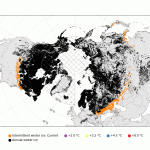
As the climate warms, tens of thousands of lakes may spend winters ice free
A new study from an international team of researchers, including at UW–Madison, shows that many northern latitude lakes are at risk of experiencing some ice-free winters in the coming decades.
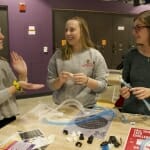
Undergrads design ventilator device; form company to aid newborns during surgery
Undergraduates in biomedical engineering created an improved "wye" that connects airway tubes for infants during surgery. They've applied for a provisional patent.
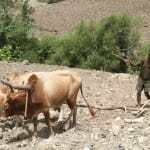
As climate heats up, rising rainfall averages hide crop-killing droughts
Research performed in the Ethiopian highlands shows that even in years with above average rainfall, crops can be severely reduced by drought early in the growing season, when seeds must sprout and get established.
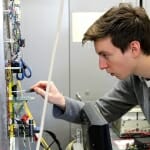
Gamma ray telescope ready for prime time
A new telescope, part of an international effort to develop and build the world’s largest, most sensitive gamma-ray detector, was unveiled to the public Thursday. UW–Madison scientists developed a camera at the heart of the telescope.
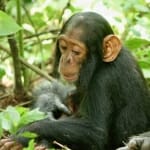
Human respiratory viruses continue to spread in wild chimpanzees
Less than two years after the first report of wild chimpanzees in Uganda dying as a result of a human “common cold” virus, a new study has identified two other respiratory viruses of human origin in chimpanzee groups in the same forest.
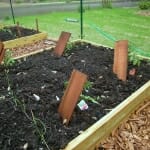
New method assesses lead hazard in soil
UW-Madison researchers describe a way to use a common, low-cost soil test to determine how much of the lead is bioaccessible, and therefore dangerous.
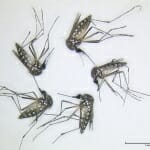
A new kind of mosquito repellent that comes from bacteria
University of Wisconsin–Madison researchers describe the first mosquito-repelling compounds to be derived from bacteria, and they appear to work at lower doses than repellents currently on the market.
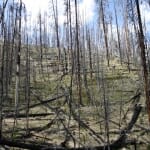
With fire, warming and drought, Yellowstone forests could be grassland by mid-century
“It’s terrifying in some ways,” says Monica Turner, who has been researching in Yellowstone for decades. “We are not talking many years away. Today’s college students will be mid-career. It feels like the future is coming at us fast.”
Stem cells: How we got here, where we’re going
This is the first in a series of four videos about stem cell research at UW–Madison: how it started, what it's achieved, and where it's headed. Catch up on what's happened since James Thomson's prescient prediction that stem cells "will change medicine, period."
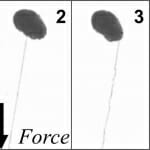
Unraveling threads of bizarre hagfish’s explosive slime
Jean-Luc Thiffeault, a University of Wisconsin–Madison math professor, and collaborators Randy Ewoldt and Gaurav Chaudhary of the University of Illinois have modeled the hagfish’s gag-inducing defense mechanism mathematically.

UW research instrument returns from 22,000-mile seaward journey
A lab known as SPARCLET, traveled for two months to aid in a study aimed at better understanding how pollutants and turbulent conditions over the Philippine Sea affect the region and influence global weather.
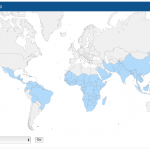
Study: “Post-normal” science requires unorthodox communication strategies
Proposals to fight malaria by “driving” genes that slow its spread through mosquitoes is a high-risk, high-reward technology that presents a challenge to science journalists, according to a new report.
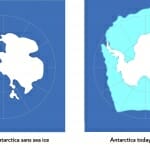
Antarctic ice sheet could suffer a one-two climate punch
Variations in the axial tilt of the Earth have significant implications for the rise and fall of the Antarctic Ice Sheet, which, if melted, would dramatically elevate sea level and alter the world’s coastlines.

Gene-editing tool now being used to develop better antibiotics
Jason Peters and colleagues have repurposed the gene-editing tool CRISPR to study which genes are targeted by particular antibiotics, providing clues on how to improve existing antibiotics or develop new ones.
Immune system’s front-line defense freezes bacteria in their tracks
New research suggests a previously unknown mechanism behind the function of antimicrobial peptides, which are being tested in early-stage clinical trials for treating infections resistant to classical antibiotics.
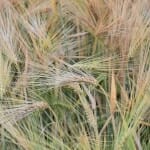
Ancient gene duplication gave grasses multiple ways to wait out winter
New research provides valuable insight into how winter-adapted grasses gain the ability to flower in spring, which could be helpful for improving crops, like winter wheat, that rely on this process.
Flashing lights protect livestock in Chile — by deterring pumas
New UW–Madison research shows how bright, flashing lights can prevent puma attacks on livestock in Chile, without harming the predators.