
Category For media
Stem cell technology developed at UW–Madison leads to new understanding of autism risks
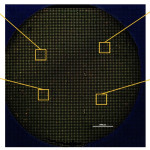
Ashton says researchers using technologies like the RosetteArray are finding that the risk factors for autism spectrum disorder are boiling down to a couple of core pathways, that seem to have roles very early in human brain development, which is helpful information as researchers work on treatments.
UW–Madison to cover full cost of undergraduate degree for students from Wisconsin Indian tribes
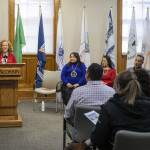
The Wisconsin Tribal Educational Promise program is not based on financial need; financial support will be awarded regardless of family income. When it begins next fall, the program will cover those already on campus, not just those new to campus. Any currently enrolled students at that time who qualify — undergraduates, J.D. students and M.D. students — will receive the program’s financial support.
New research offers insights into the biochemistry that makes grasses flower
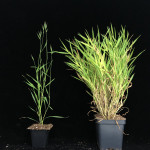
The genetics of plant flowering have long been studied in model species of the mustard family. Now, scientists at UW–Madison have identified key genes responsible for flowering in a grass species.
Federal physics advisory panel recommends funding next generation IceCube observatory, other major experiments
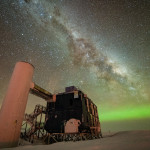
A group of scientists tasked with advising the federal government's investments in particle physics research is recommending that the United States fund a planned expansion of the IceCube Neutrino Observatory, an international scientific collaboration operated by the University of Wisconsin–Madison at the South Pole.

Meet Jnae Thompson, student speaker for 2023 Winter Commencement
Winter commencement student speaker Jnae Thompson came to UW–Madison with a plan. But after two years, she realized her freshman-year goals no longer fit the person she was becoming. She took on the hard work of reimagining her future and herself, but she looks back with no regrets. Now, she believes her own story might help others.
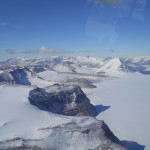
Antarctica’s ancient ice sheets foreshadow dynamic changes in Earth’s future
Identifying how and why Antarctica's major ice sheets behaved the way they did in the early Miocene could help inform understanding of the sheets' behavior under a warming climate.

Media advisory: COP28 experts available
FROM: Veronica Rueckert, national media manager, rueckert@wisc.edu

New paper links childhood deprivation to accelerated biological aging later in life
By using advanced epigenetic aging techniques and new data from older adults, a team of researchers found that being deprived of a nurturing childhood environment is associated with accelerated biological aging in adulthood.
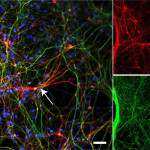
Scientists produce human norepinephrine neurons from stem cells, with significant implications for researching diseases like Alzheimer’s and Parkinson’s
Researchers have identified a protein that is key to the development of a type of brain cell believed to play a role in disorders like Alzheimer’s and Parkinson’s diseases and used the discovery to grow the neurons from stem cells for the first time.

Chancellor Mnookin on stronger standards for courts weighing scientific evidence, expertise
Chancellor Mnookin, one of the most cited evidence law scholars in the nation, has published a new editorial in the journal Science in light of updates to a federal rule clarifying the use of scientific expertise in the courtroom. She argues for more consistent application of sound science and evidence, particularly in criminal cases.
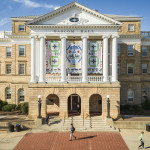
Seed by Seed
In celebration of the University of Wisconsin’s 175th anniversary, banners designed in collaboration by Molli Pauliot, Marianne Fairbanks and Stephen Hilyard merge traditional Ho-Chunk handcrafts with cutting edge animation software to create a design that honors Ho-Chunk heritage and the technical skill of the handmade.
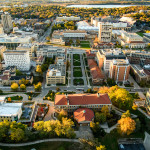
Wisconsin business leaders and UW–Madison push for new engineering building with latest campaign
Statewide effort includes letter to legislators signed by executives of the state’s top companies and associations.
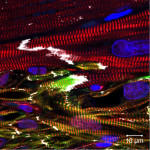
Combining cell types may lead to improved cardiac cell therapy following heart attack
A new study from researchers at the University of Wisconsin–Madison and Academia Sinica of Taiwan points to an improved method for regenerating heart muscle following a heart attack.
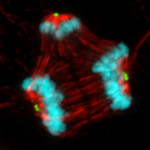
Common chemotherapy drugs don’t work like doctors thought, with big implications for drug discovery
Findings reveal the likely reason why certain chemotherapies are effective for many patients. Importantly, they also help explain why attempts to find new chemo drugs based solely on stopping cellular division have been so disappointing.
Study finds mindfulness training may not be enough to increase eco-friendliness
The innovative study marks the first time researchers have conducted a randomized controlled trial to test whether a direct relationship exists between meditation and eco-friendly attitudes and behaviors.
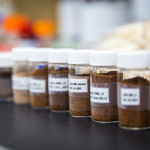
UW–Madison project combines art, policy and science to create plant-based plastics and benefit marginalized communities
A team led by University of Wisconsin–Madison scholars has a plan to turn paper mill waste into plant-based plastics, slashing greenhouse gas emissions and other pollution and creating economic opportunities in ways that benefit marginalized communities.
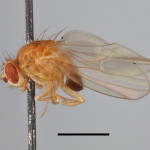
200-year-old DNA helps map tiny fly’s genetic course to new lands, modern times
The humble fruit fly is one of the most thoroughly studied animals on the planet and new insights continue to be revealed about the fly’s evolution thanks to centuries-old DNA.

Advertising rental housing in Spanish puts off many potential renters
Researchers found that rental ads published in Spanish deterred many would-be renters of diverse backgrounds from applying for a lease.
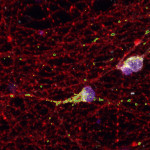
Discovery reveals mitochondria as potential treatment target for fragile X syndrome
The results fundamentally change how scientists understand the developmental origins of fragile X syndrome and suggest a potential treatment for brain cells damaged by the dysfunction.
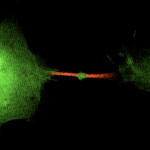
Remnant of cell division could be responsible for spreading cancer
The midbody’s involvement in cell signaling and stimulating cell proliferation has been investigated before, but UW researchers wanted to look inside the midbody remnants to learn more.