
Category For media

UW–Madison biochemist wins prestigious forestry prize for discoveries that support sustainable energy and product innovations
UW–Madison biochemistry professor John Ralph has been awarded the forestry industry's top prize, alongside collaborator Wout Boerjan, a professor at Ghent University in Belgium, for their groundbreaking research on the molecular structure of lignin, one of the main components of plant cell walls.
Wisconsin Idea Database reveals UW–Madison’s positive impact across all 72 counties
Latest data show how UW provides educational opportunities, builds the workforce and economy in every county in the state

UW–Madison to name new Computer, Data & Information Sciences building for John and Tashia Morgridge
The building will be the first to bear the name of UW–Madison’s largest benefactors.
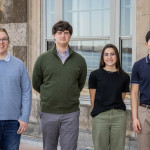
Four UW–Madison students awarded prestigious 2024 Goldwater Scholarships
Four University of Wisconsin–Madison students have been named winners of 2024 Goldwater Scholarships, the premier undergraduate scholarship in mathematics, engineering and the natural sciences in the United States.
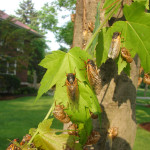
Cicada experts and resources available from UW–Madison
A historic double brood of cicadas is expected to emerge this spring, with hatchings centered on the Eastern and Midwestern parts of the United States.
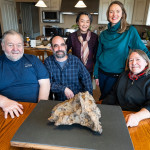
Exceptional meteorite, plowed up from a Dane County field, finds new home in UW Geology Museum
The hunk of iron weighs in at nearly 110 pounds, is Wisconsin's 15th classified meteorite, and is the first ever recorded in Dane County.
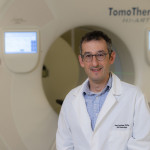
Jonathan Levine to become dean of UW–Madison School of Veterinary Medicine
At Texas A&M, Levine has served as professor and head of small animal clinical sciences. His time there has given him an in-depth understanding of what it takes to build an impactful research and care program in an academic veterinary school, as well as an appreciation of the importance of fostering an inclusive environment that values diverse perspectives.
Researchers reveal evolutionary path of important proteins
New research from the University of Wisconsin–Madison decodes the evolutionary pathway of regulatory proteins, the molecules that help control gene expression.
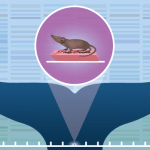
All creatures great and small: Sequencing the blue whale and Etruscan shrew genomes
Size doesn’t matter when it comes to genome sequencing in the animal kingdom, as a team of researchers at the Morgridge Institute for Research recently illustrated when assembling the sequences for two new reference genomes — one from the world’s largest mammal and one from one of the smallest.
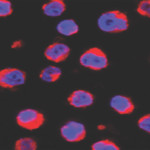
Some lymphomas become resistant to treatment. Gene discovery may offer path to overcome it.
Researchers have been trying to understand why and how certain lymphoma treatments often stop being effective. Lixin Rui and his team believe they've found the reason — and a potential alternative treatment.

Q&A with Prof. Steffi Diem, a UW–Madison fusion scientist and 2024 U.S. Science Envoy
Diem, a fusion energy expert, specializes in heating the ultra-hot fuel for fusion and confining it within efficient and compact magnetic bottles. Her selection as one of four new U.S. Science Envoys highlights growing recognition of fusion's role in building a clean and renewable energy future.

175th anniversary celebration keeps bringing the wow with ultimate community open house
As the University of Wisconsin nears the close of its 175th anniversary year, there’s one final flagship event you won’t want to miss. It’s the biggest and best yet, with more than 60 events.

Chancellor Mnookin statement on engineering building, changes to reciprocity
Chancellor Jennifer Mnookin released the following statement on Wednesday, March 6 following a ceremony in which Governor Tony Evers signed bills authorizing a new engineering…
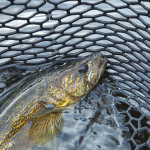
Walleye struggle with changes to timing of spring thaw
Newly-hatched walleye are hungry fish, dependent on meals of tiny zooplankton during the spring. As Midwestern lakes thaw unusually early or late, these prized fish can miss the dinner bell.
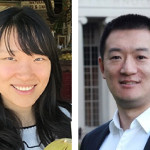
Two UW–Madison researchers receive prestigious Sloan Fellowships
UW–Madison’s 2024 Sloan Fellows are Ke Fang, assistant professor of physics, and Xiangyao Yu, assistant professor of computer sciences.
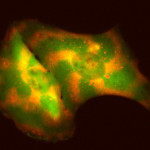
Programming cells to organize their molecules may open the door to new treatments
Biochemists at UW–Madison have developed a tool to control how certain proteins move in mammalian cells, a discovery that has multiple potential uses for treating or studying diseases by engineering specific cellular activities or studying cellular activity in a living organism.

Knowing what dogs like to watch could help veterinarians assess their vision
Researchers at the University of Wisconsin–Madison have taken a novel approach to assessing canine vision. Their recent study uses a dog's interest in a variety of video content to better measure the quality of its vision.
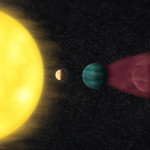
Earth-sized planet discovered in ‘our solar backyard’
A team of astronomers have discovered a planet closer and younger than any other Earth-sized world yet identified. It’s a remarkably hot world whose proximity to our own planet and to a star like our sun mark it as a unique opportunity to study how planets evolve.
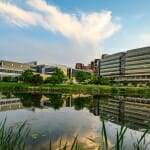
UW–Madison receives $150 million grant to to lead nationwide Alzheimer’s disease study
The five-year study will provide state-of-the-art imaging and blood-based biomarkers for researchers around the world to study and advance the field of Alzheimer’s and related dementias. The work is also designed to shed light on mixed dementia, where more than one neurological disease is contributing to dementia.
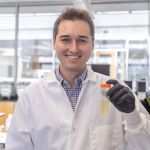
Multitasking microbes: UW–Madison scientists engineer bacteria to make two valuable products from plant fiber
UW researchers have engineered bacteria that can produce two chemical products at the same time from underutilized plant fiber. The discovery could help make biofuels more sustainable and commercially viable.