
Category Health & Wellness

‘Live from Paris’ will connect Wisconsin with UN climate conference
Faculty and state business leaders in Paris to attend COP21 (Conference of the Parties to the United Nations Framework Convention on Climate Change) will connect to campus via video conferencing for a live discussion.
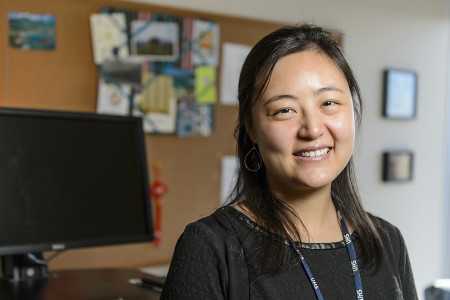
UHS psychologist hopes to help international students succeed
Students seek counseling at University Health Services for a variety of reasons. Now speakers of Mandarin have another option -- and advocate -- in Chinese native Canzi Wang.
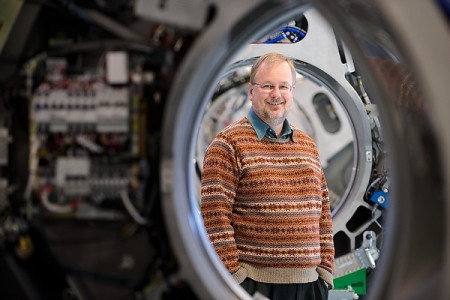
Innovative cancer treatment machine: Still made in Wisconsin
Innovator-entrepreneur Thomas “Rock” Mackie’s TomoTherapy, launched in 1997, remains one of the universities’ most successful spinoff companies.
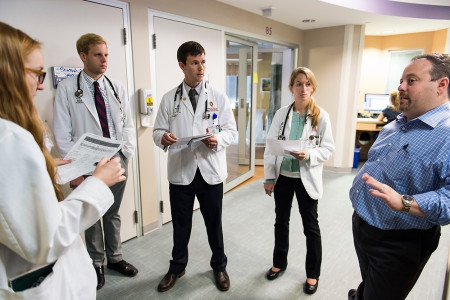
Josh Medow: Critical care for the brain
At Joshua Medow's first job, in the Neurocritical Intensive Care Unit at UW Hospital and Clinics, he saves lives. His patients have endured strokes, car accidents and shootings.

Ned Kalin wins Anna-Monika Prize for neuroscience research
Ned Kalin, chair of psychiatry at the UW School of Medicine and Public Health, will receive a major award this week at a conference in Amsterdam for his work in uncovering the signature of anxiety and depression in the brain.
Flu study, on hold, yields new vaccine technology
Vaccines to protect against an avian influenza pandemic as well as seasonal flu may be mass produced more quickly and efficiently using technology described today (Sept. 2) by researchers at the University of Wisconsin–Madison in the journal Nature Communications.

Morgridge Institute selects Pagliarini to lead campus metabolism initiative
Dave Pagliarini, a University of Wisconsin–Madison associate professor whose departmental home put metabolism research on the map worldwide, will help define the future of Wisconsin metabolism science as a lead investigator at the Morgridge Institute for Research.
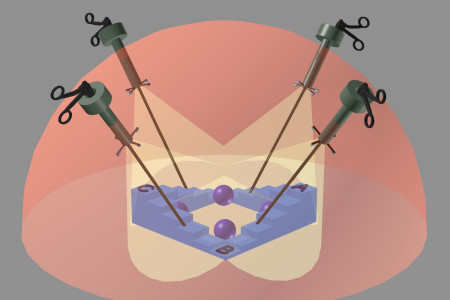
Wireless microcamera clusters broaden laparoscopic imaging
A revolutionary integrated imaging system under development at the University of Wisconsin–Madison could significantly advance laparoscopy, a minimally invasive surgical procedure that, over the last half century, has seen only incremental improvements in imaging.

Report: Bicycling deaths have decreased, but adults remain at elevated risk
Overall rates for U.S. biking deaths decreased 44 percent from 1975 to 2012, according to a new report published Aug. 14 by the Centers for Disease Control and Prevention and led by Jason Vargo, an assistant scientist with UW–Madison's Nelson Institute for Environmental Studies and Global Health Institute.
Dietary intervention primes triple-negative breast cancer for targeted therapy
A diet that starves triple-negative breast cancer cells of an essential nutrient primes the cancer cells to be more easily killed by a targeted antibody treatment, UW Carbone Cancer Center scientists report in a recent publication.
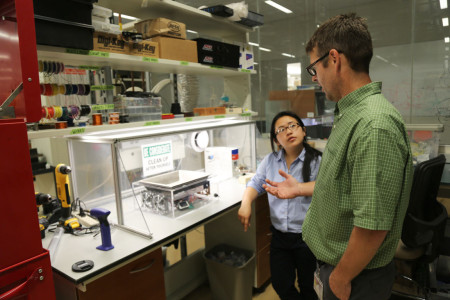
Gift to Morgridge Institute ‘Fab Lab’ to boost medical device innovations
A gift to the Morgridge Institute for Research will help spur medical device innovations coming directly from doctors - the people who know firsthand where the advances are needed.

UW-Madison collaboration promotes well-being in the workplace
Standing in front of a room of business professionals, Jill McDermott shares a number: two quadrillion - the number of megabytes of information broadcast daily. She pauses to let the audience reflect on how this inundation of information contributes to distractions in the workplace that can chip away at a person's well-being and ability to respond to daily challenges, whether it's giving projects the attention they deserve or shaking off a setback or conflict with a colleague.

Protein Suggests a New Strategy to Thwart Infection
The newfound ability of a protein of the intestines and lungs to distinguish between human cells and the cells of bacterial invaders could underpin new strategies to fight infections.
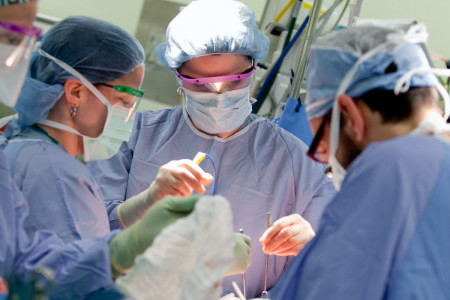
GlovesOn program trains Wisconsin surgeons in latest operating techniques
An innovative surgical training program at the University of Wisconsin–Madison recently hosted its 125th participant, making it one of the nation's most active surgical training programs for practicing surgeons - and the only program of its kind in the state.
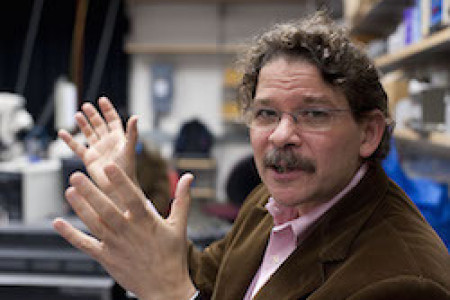
Navigating multiple myeloma with ‘Google Maps’ for the cancer genome
In some ways, studying the genetics of cancer has been like examining the individual tiles on a mosaic, says David C. Schwartz, a professor of genetics and chemistry at the University of Wisconsin–Madison. To make his point, he brings his face close to the table where he sits - his mosaic for the purpose of illustration - and describes the details of each imaginary tile.
Genetic approaches to cancer, neural development lead to honor for UW–Madison scientists
Two University of Wisconsin–Madison researchers - one investigating the genetic basis of cancer growth and the other, the role of genes in neural development and learning - have earned funding and a prestigious honor from the Greater Milwaukee Foundation.
Brief alcohol screening misses mark for people who most need help, study says
As screening for alcohol problems during doctor visits has become more mainstream, a new study published in the journal Addiction finds that the technique does not increase successful referrals to alcohol counseling and treatment.

Amazing Grace: Singing in chorus helps Alzheimer’s patients
Dementia may have stolen some memories from the Amazing Grace Choir, but it sure hasn't taken their music. The chorus began last year as an outreach project of the Wisconsin Alzheimer's Institute.
Tests show Midwestern canine flu outbreak stems from new strain
Canine flu outbreak
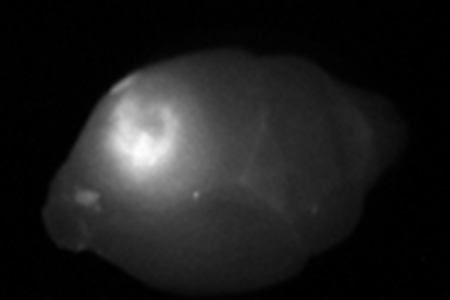
Ready, aim, fire! Cancer-targeting mechanism underlies promising UW–Madison spinoff
For all their lethality, cancer cells don't look much different from healthy cells, a simple fact that causes endless pain and suffering. Finding cancer cells that have spread and threaten to grow into metastatic tumors is often a life-and-death matter.