For environmental studies students, nature can be the best classroom. In late July, graduate students enrolled in Conservation of Biodiversity spent a day at Six Mile Creek in Waunakee, Wisconsin, learning about stream ecological monitoring techniques. Their time in the field was a kind of “boot camp” for water-quality sampling and tracking, which are among the many aspects of conservation taught in the class.
The graduate-level course is part of the University of Wisconsin–Madison’s environmental conservation professional program that prepares students to address environmental challenges through practical conservation training. Many of the graduate students go on to become volunteers with the Rock River Coalition, which leads monitoring efforts at Six Mile Creek.
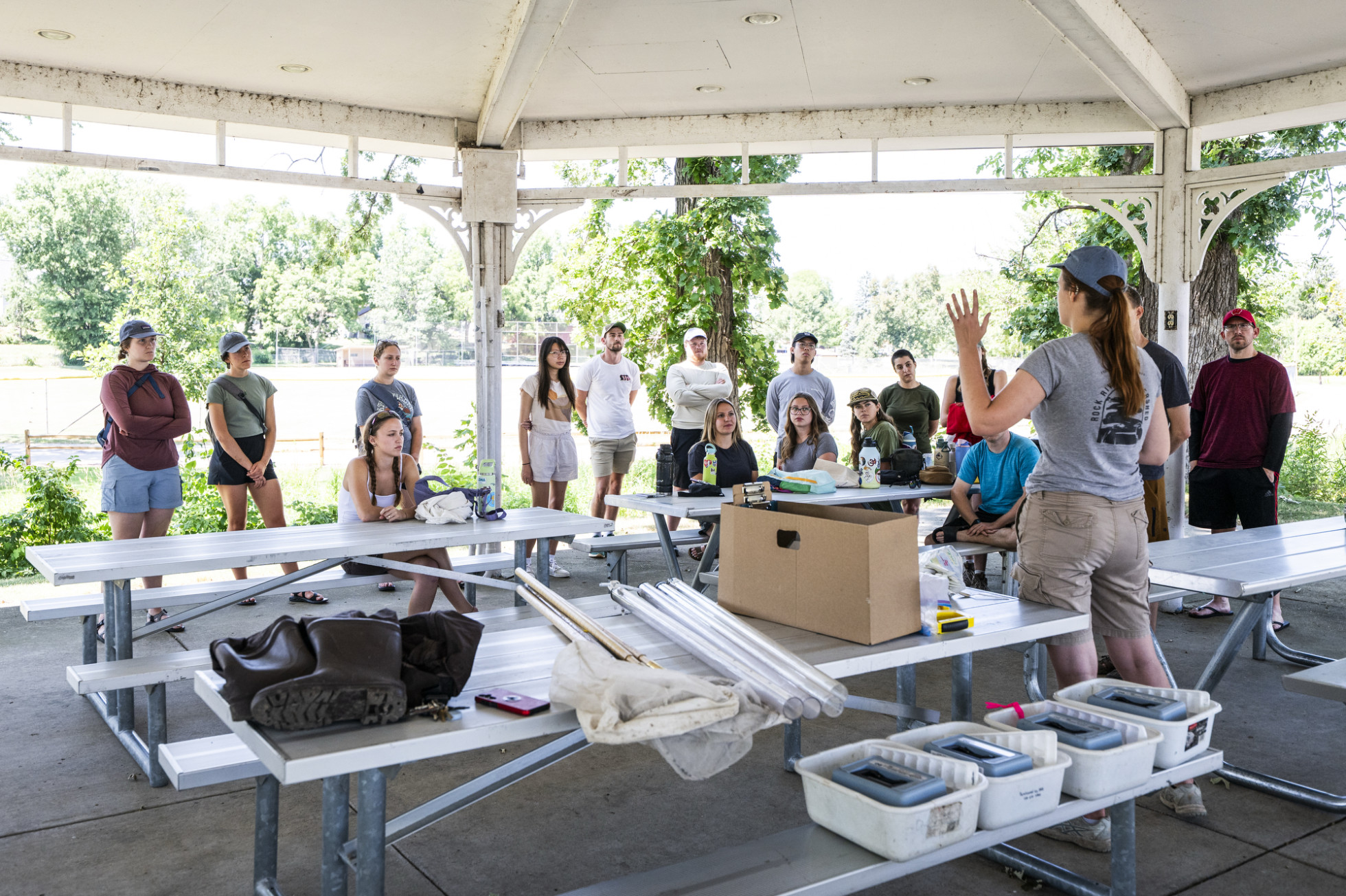
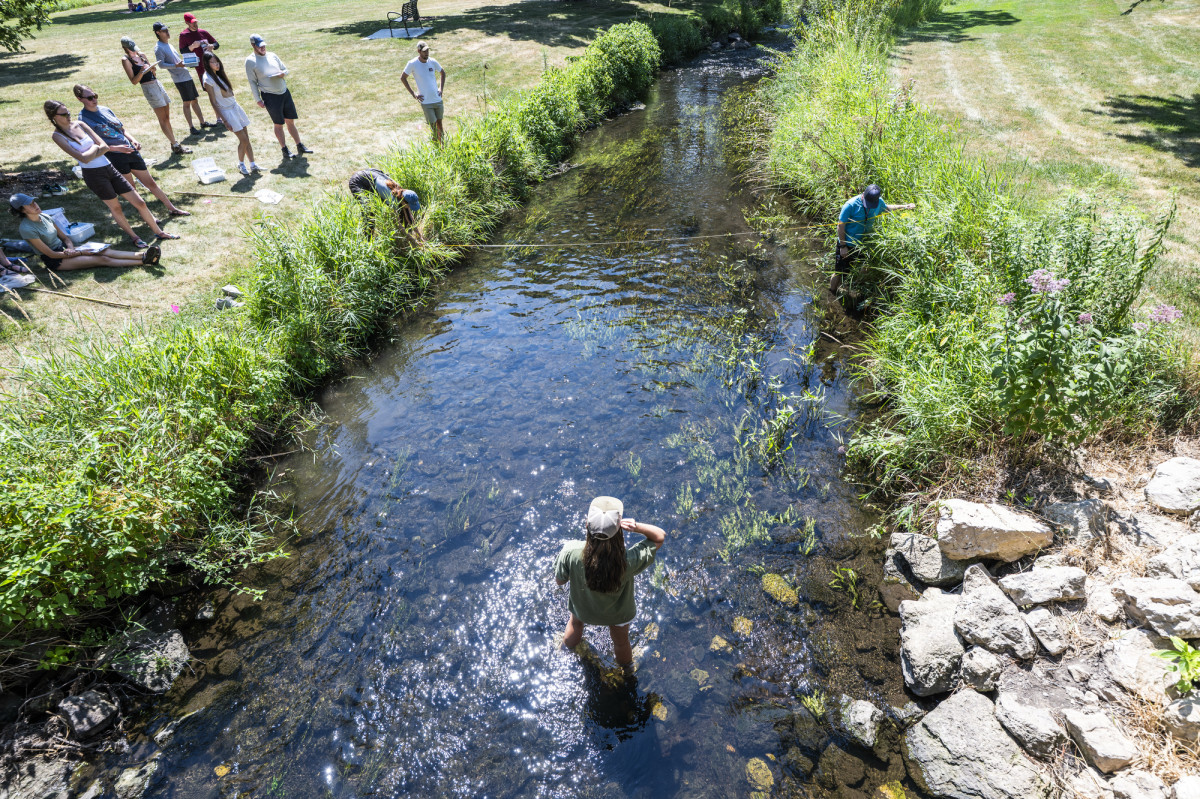
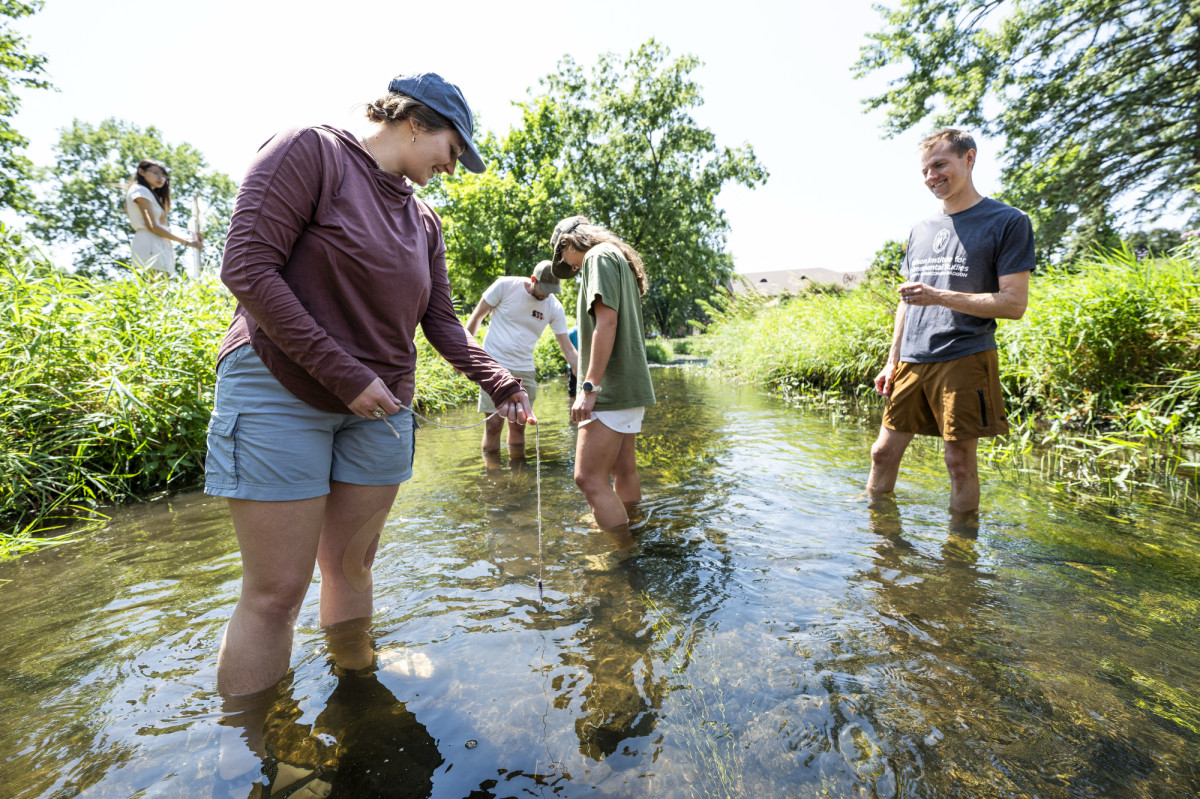
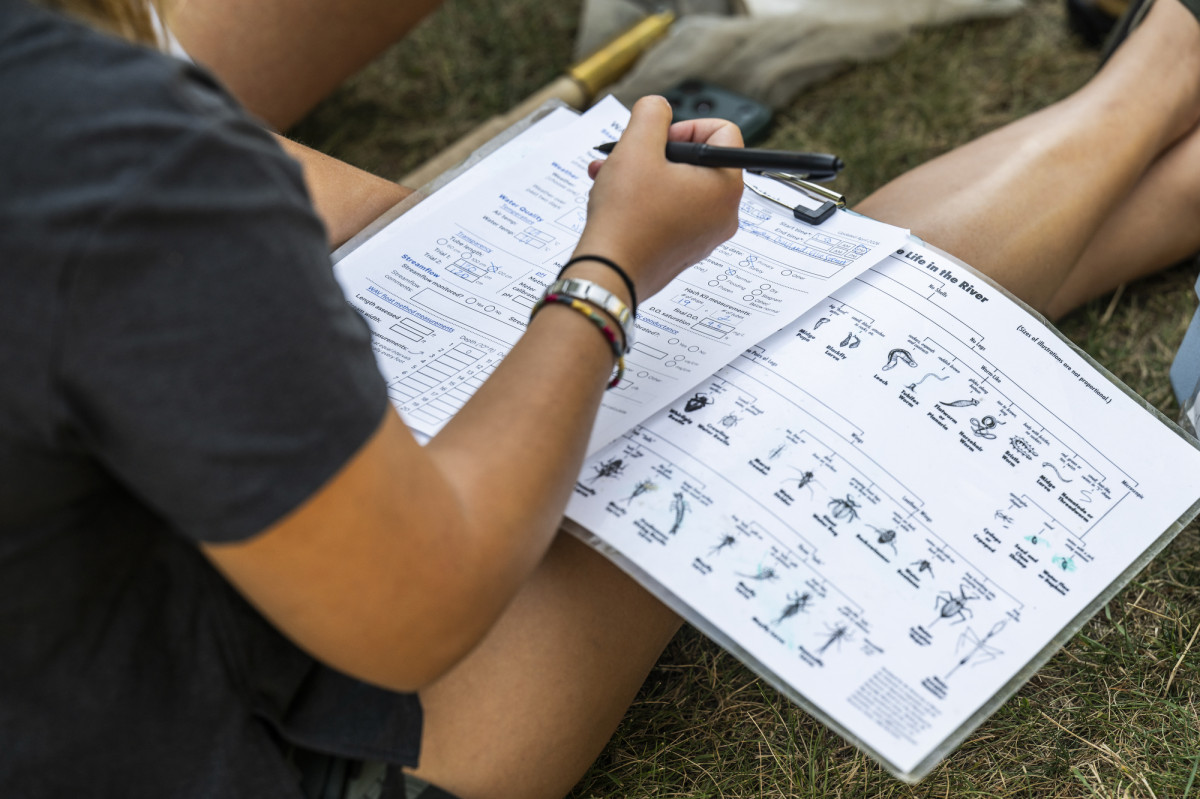
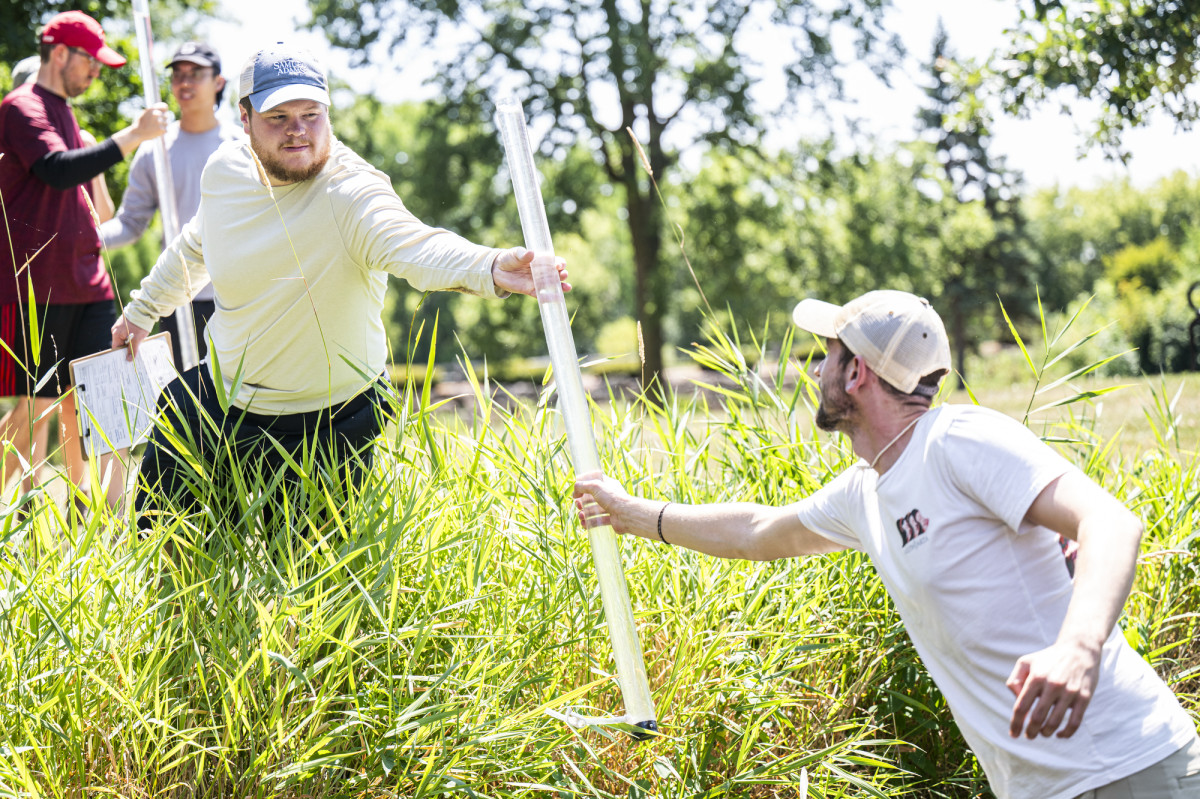
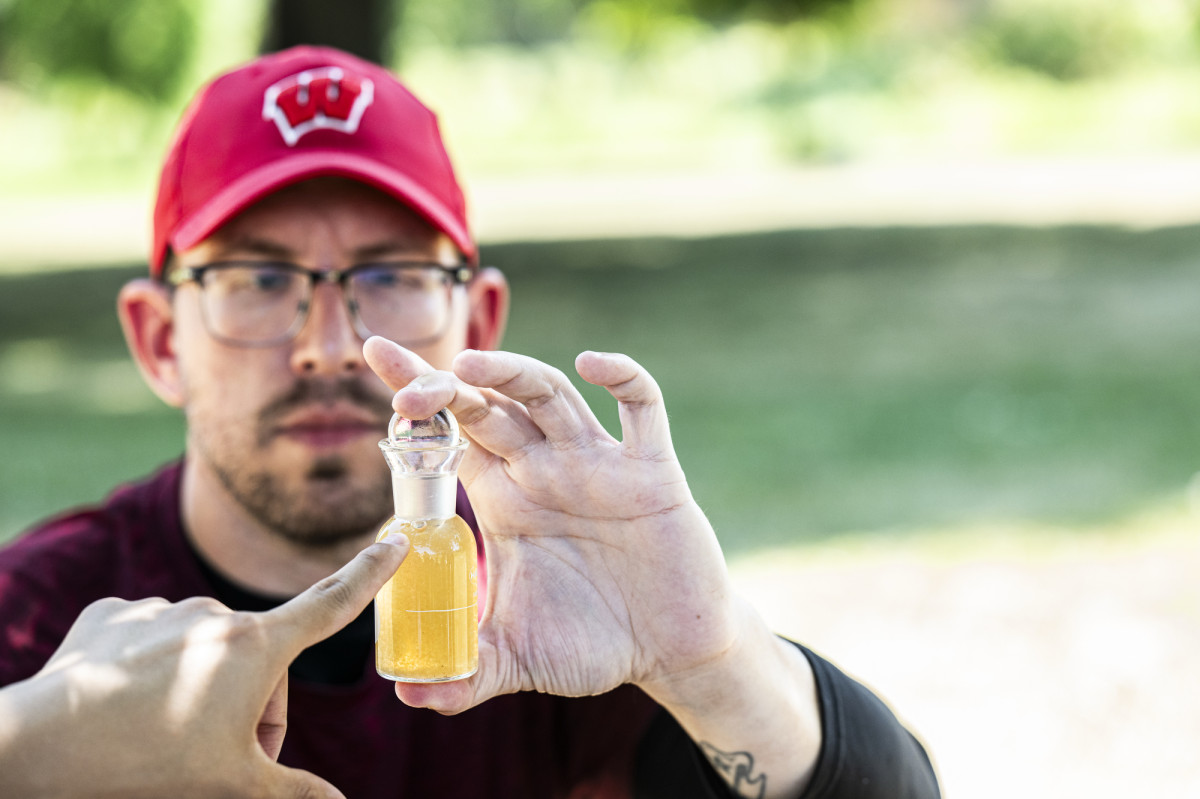
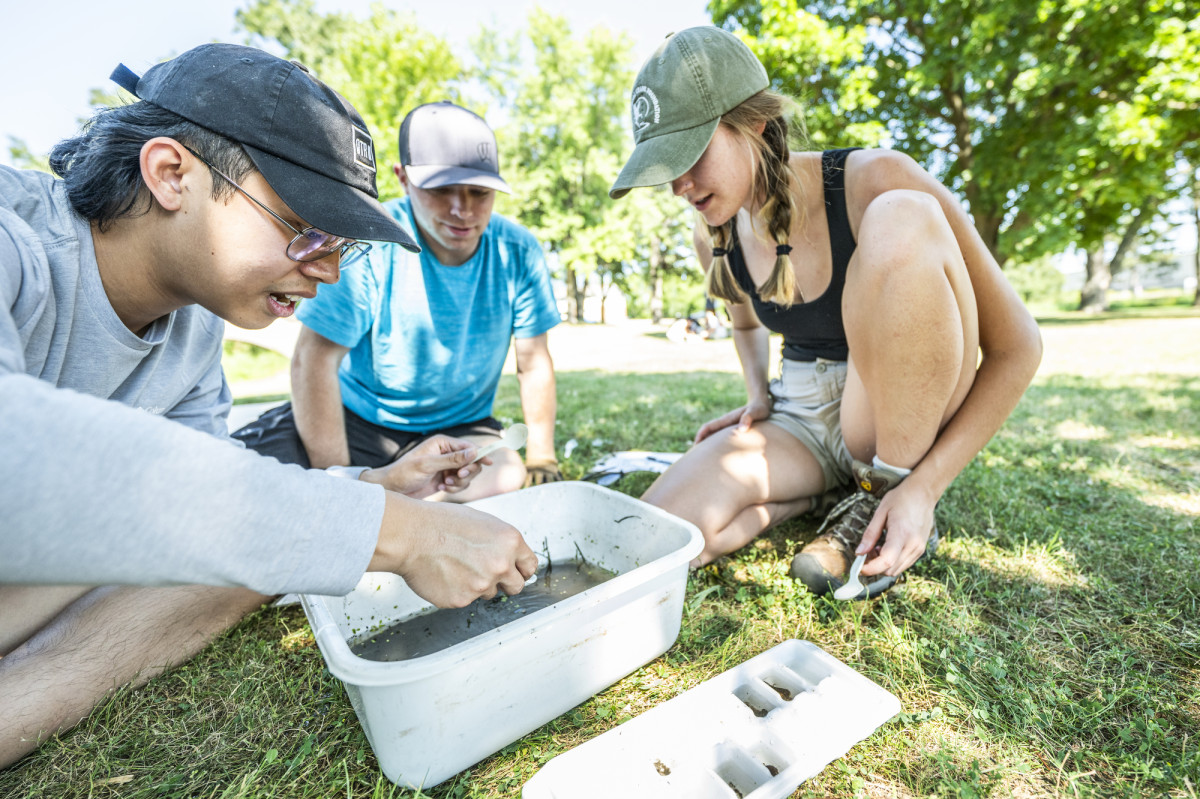
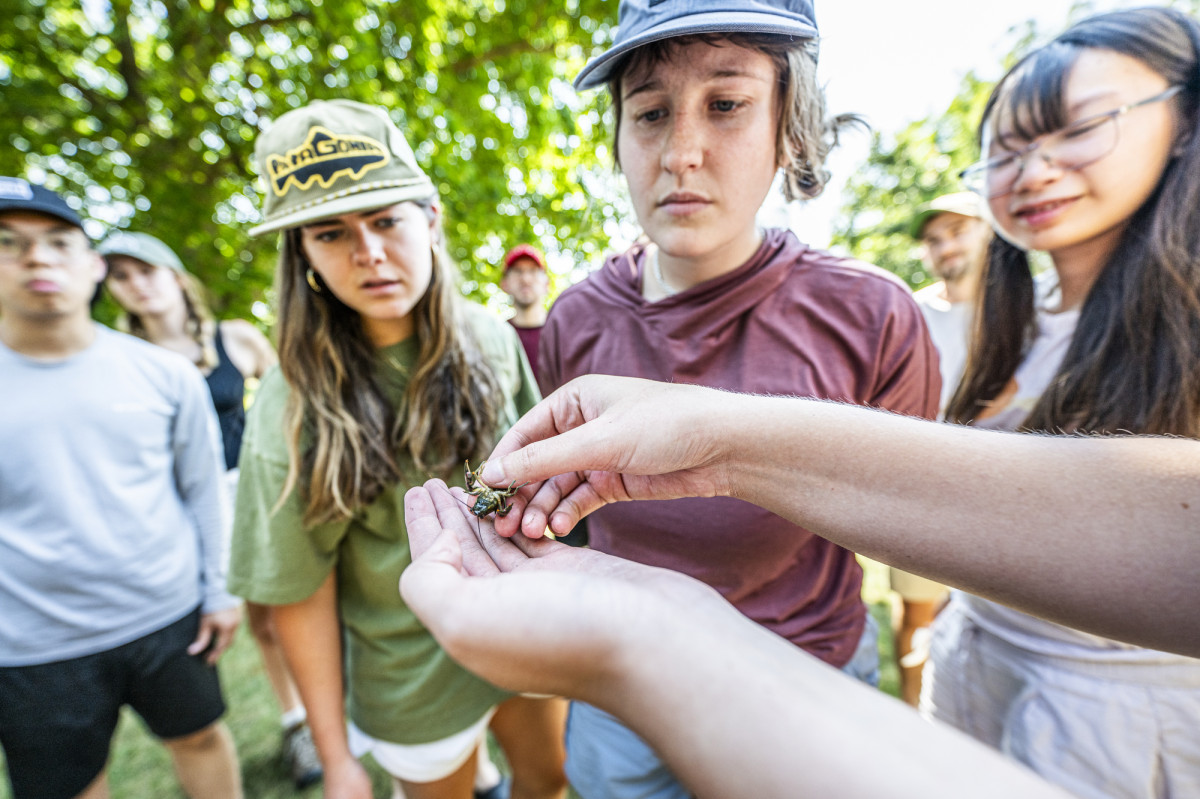
Lizzy Reitzloff, stream monitoring and aquatic invasive species program coordinator for the Rock River Coalition, instructs UW–Madison graduate students ahead of their field experience. Photo: Taylor Wolfram / UW–MadisonStudents measure stream width at Six Mile Creek in Waunakee, Wisconsin. During their field experience, graduate students learned stream ecological monitoring techniques, including macroinvertebrate sampling and water-quality testing. Photo: Taylor Wolfram / UW–MadisonGraduate student Lola Wasserman (left) and peers measure water temperature as part of their crash course in water monitoring techniques. Photo: Taylor Wolfram / UW–MadisonA student uses a Water Action Volunteers baseline stream data sheet to track water-quality measurements taken from Six Mile Creek. Photo: Taylor Wolfram / UW–MadisonStudents prepare a collection tube that will be used to measure and track water transparency. Photo: Taylor Wolfram / UW–MadisonA graduate student uses a dissolved oxygen kit to measure the creek’s water quality. Photo: Taylor Wolfram / UW–MadisonFrom left to right, graduate students Khoi Do, Christopher Kirkwood and Kiana Hebenstreit separate macroinvertebrates from their water sample. Macroinvertebrate sampling is a key part of assessing water quality because their sensitivity to pollution can be an indicator of stream health. Photo: Taylor Wolfram / UW–MadisonStudents look at an invasive rusty crayfish, distinguished from native crayfish by their dark, rusty spots on each side of their carapace. Photo: Taylor Wolfram / UW–Madison