
Tag Research

In a sea of data, Bioinformatics Resource Center rides genomic wave
In July 2012, the UW–Madison Bioinformatics Resource Center opened for business, providing one-stop shopping for genetic sequencing, genome assembly, analysis and a host of services to help UW–Madison faculty and others make sense of the sea of data generated by new technologies that have put the secrets of human, plant, animal and microbial genomes within tantalizing reach.

Archeologists return to mysterious Aztalan site in Jefferson County
Research groups from three Midwestern universities are digging yet again at Aztalan, a state park near Lake Mills, Wis., hoping to unravel the history of a walled outpost that was once thought to be related to the Aztec culture in Mexico.
Diamond catalyst shows promise in breaching age-old barrier
In the world, there are a lot of small molecules people would like to get rid of, or at least convert to something useful, according to University of Wisconsin–Madison chemist Robert J. Hamers.
Waisman scientists model human disease in stem cells
Many scientists use animals to model human diseases. Mice can be obese or display symptoms of Parkinson's disease. Rats get Alzheimer's and diabetes. But animal models are seldom perfect, and so scientists are looking at a relatively new type of stem cell, called the induced pluripotent stem cell (iPS cell), that can be grown into specialized cells that become useful models for human disease.
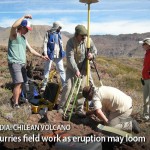
Exploring a volcano: The romance and the reality
A UW–Madison team endures hardship in the field, where a deceptively calm volcanic site could be spewing lava within weeks.

Affirmative action doesn’t hurt less-prepared students, researchers say
Those who oppose affirmative action sometimes argue that such policies do far more harm than good to students who are admitted to competitive colleges or universities without the academic preparation of their peers.

Innovation institute to broaden U.S. palette of advanced materials
Sporting sleek cases, sensitive touch screens, and an ever-increasing array of features, today's smartphones and tablets provide consumers unparalleled mobile computing capability.

Morgridge Institute taps biomedical innovator as chairman
The trustees of the Morgridge Institute for Research at the University of Wisconsin–Madison have named Fred Robertson as chairman, replacing outgoing chairman Ernie Micek, whose term as chair has ended and who will remain on the board.
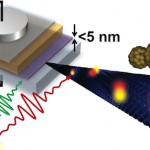
Future looks bright for carbon nanotube solar cells
In an approach that could challenge silicon as the predominant photovoltaic cell material, University of Wisconsin–Madison materials engineers have developed an inexpensive solar cell that exploits carbon nanotubes to absorb and convert energy from the sun.

Industry helps create new potato breeding professorship
Advances in biotechnology such as DNA sequencing have helped speed the pace of plant breeding in many food crops, but applying these tools to the potato, which has an extra set of chromosomes, has been a bit more difficult.

Grandparents gather for support at Waisman Center
You're not alone. It's a simple message but one that can provide great comfort. That is just part of what those who gather at the Waisman Center as part of the Grandparents' Network take with them following each meeting.
Researchers unearth bioenergy potential in leaf-cutter ant communities
As spring warms up Wisconsin, humans aren't the only ones tending their gardens.

Professor helps ‘Sesame Street’ reach children of imprisoned parents
For the past two years, psychologist Julie Poehlmann’s worked as an advisor for “Sesame Street” on developing materials that will help children with incarcerated parents and the people who are taking care of them.
Bugher to retire after guiding University Research Park growth, success
Mark Bugher, who helped to mold UW–Madison’s University Research Park into an economic and technology transfer force admired nationally, plans to retire in October.
Innovative solar cell structure stores and supplies energy simultaneously
The potential energy available via solar power might seem limitless on a sunny summer day, but all that energy has to be stored for it to be truly useful. If you see a solar panel on a rooftop, in a large-scale array, or even on a parking meter, a bulky battery or supercapacitor is hidden just out of sight, receiving energy from the panel through power lines.
History professor documents GI conduct in WWII France
On June 6, 1944, a massive military force arrived on the beaches of Normandy in a surprise invasion intended to overthrow Nazi Germany. The story of brave Allied forces splashing ashore under heavy fire has been immortalized in novels, memoirs, documentary films, and blockbuster movies - with American GIs cast as the unequivocal heroes of the day.
RFID advance to improve safety of nation’s blood supply
A six-year collaboration between industry and the University of Wisconsin–Madison RFID Lab has achieved a major milestone with the Food and Drug Administration (FDA) clearing the first RFID-enabled solution to improve the safety and efficiency of the nation's blood supply.