
Tag Health & medicine
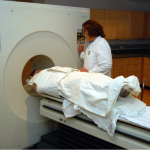
Down syndrome helps researchers understand Alzheimer’s disease
The link between a protein typically associated with Alzheimer's disease and its impact on memory and cognition may not be as clear as once thought, according to a new study from the University of Wisconsin–Madison's Waisman Center. The findings are revealing more information about the earliest stages of the neurodegenerative disease.

Yogic breathing shows promise in reducing symptoms of post-traumatic stress disorder
One of the greatest casualties of war is its lasting effect on the minds of soldiers. This presents a daunting public health problem: More than 20 percent of veterans returning from the wars in Iraq and Afghanistan have post-traumatic stress disorder, according to a 2012 report by RAND Corp.
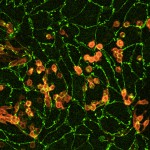
Wisconsin scientists find genetic recipe to turn stem cells to blood
The ability to reliably and safely make in the laboratory all of the different types of cells in human blood is one key step closer to reality. Writing today (July 14, 2014) in the journal Nature Communications, a group led by University of Wisconsin–Madison stem cell researcher Igor Slukvin reports the discovery of two genetic programs responsible for taking blank-slate stem cells and turning them into both red and the array of white cells that make up human blood.
University Health Services selects new prevention director
Jeanette Kowalik has been named the new director of prevention services and campus health initiatives at University Health Services (UHS), the student health clinic of the University of Wisconsin–Madison.
UW, Madison schools team up to train mindfulness muscles
Mindfulness practice in the classroom may be one way to help students improve their academic performance, nurture their emotional well-being and bolster their behavior.
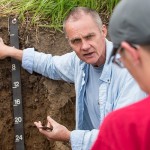
Faster, safer method zaps tumors with great success
When Kevin McSweeney was referred to UW Health last year for a tumor in his liver, he had already gone through six rounds of chemotherapy and 13 surgeries over ten years to treat his metastasized cancer.
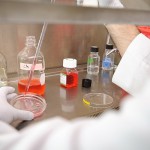
Genes found in nature yield 1918-like virus with pandemic potential
An international team of researchers has shown that circulating avian influenza viruses contain all the genetic ingredients necessary to underpin the emergence of a virus similar to the deadly 1918 influenza virus.
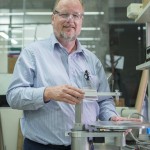
Mackie to receive highest honor in medical physics
Thomas "Rock" Mackie, director of medical engineering at the Morgridge Institute for Research, will receive the highest honor in the field of medical physics for his far-reaching contributions to medical imaging.

Program matches doctors and rural communities that want each other
For some people, moving away from their small hometown is the ultimate goal. Dave Hubbard wanted the complete opposite. In his search for the perfect career in family medicine, the physician from southwestern Wisconsin wanted to return to his roots.

It’s not all wedded bliss: Marital stress linked to depression
Marital stress may make people more vulnerable to depression, according to a recent study by University of Wisconsin–Madison researchers and their colleagues.
Annual Wisconsin Stem Cell Symposium to focus on blood
World stem cell leaders will converge on Promega's BioPharmaceutical Technology Center in Fitchburg on April 30 for the 9th Annual Wisconsin Stem Cell Symposium: From Stem Cells to Blood.
Statewide sessions explore accelerated use of electronic medical records
With more hospitals and health clinics adopting electronic medical records (EMRs) with the incentive of the 2009 American Recovery and Reinvestment Act, there is a growing public interest in how to incorporate the technology in a way that enhances health and addresses concerns about privacy and information security.

The key to easy asthma diagnosis is in the blood
Using just a single drop of blood, a team of University of Wisconsin–Madison researchers has developed a faster, cheaper and more accurate tool for diagnosing even mild cases of asthma.

Hair from infants gives clues about their life in the womb
Like rings of a tree, hair can reveal a lot of information about the past.
Prevention steps encouraged after mumps diagnosis on campus
University Health Services (UHS) has confirmed that three UW–Madison students have recently been diagnosed with mumps. The cases don’t appear to be connected and UHS is working with public health officials to monitor the situation.

Symposium links human, animal, environmental health
The Global Health Symposium at the University of Wisconsin–Madison reflects a decade of interdisciplinary global health work on campus, says Dr. Christopher Olsen, this year's keynote speaker.

Student team to provide medical help in Vietnam
This summer, a group of University of Wisconsin–Madison students will help provide medical care and supplies to a country that is still struggling to recover nearly 40 years after the end of a war.
‘Stem cell tourism’ takes advantage of patients, says law professor
Desperate patients are easy prey for unscrupulous clinics offering untested and risky stem cell treatments, says law and bioethics Professor Alta Charo of the University of Wisconsin–Madison, who is studying "stem cell tourism."
Research finds soda tax does little to decrease obesity
Extra sales taxes on soda may not do anything to improve people's health, according to new research from health economist Jason Fletcher of the La Follette School of Public Affairs at the University of Wisconsin–Madison.