
Tag College of Letters & Science
Study shows compassion meditation changes the brain
Cultivating compassion and kindness through meditation affects brain regions that can make a person more empathetic to other peoples' mental states, say researchers at the University of Wisconsin–Madison.
UW Geology Museum receives more than $100,000 in minerals
In its 160-year existence, the University of Wisconsin–Madison Geology Museum has never before received a mineral donation like the one recently given by retired UW–Madison electrical engineering Professor R.A. Greiner.
Seven honored with Romnes awards
Seven of UW–Madison’s rising faculty have received H.I. Romnes Faculty Fellowships. The award, supported by the Wisconsin Alumni Research Foundation (WARF), recognizes great potential in faculty who have earned tenure within the last four years. Award-winners receive a $50,000 award to be used in support of research.
Abigail Adams biography adds to popular interest in American Revolution
"John Adams," a major HBO mini-series debuting this Sunday, is bound to generate renewed public interest in the era of the American Revolution and the founding of the nation. A University of Wisconsin–Madison chapbook series has been mining that rich historical territory for some time. The latest chapbook, a biography of Abigail Adams, fits very closely with the mini-series' focus on John and Abigail's long and storied relationship.
Obama dominated TV ads in Ohio, outspending Clinton almost two-to-one
Democratic presidential hopeful Barack Obama spent nearly twice as much on TV advertising in the Ohio primary campaign than did Hillary Clinton, according to a report by the Wisconsin Advertising Project at the University of Wisconsin–Madison.

Arctic climate models play key role in pending polar bear decision
The pending federal decision about whether to protect the polar bear as a threatened species is as much about climate science as it is about climate change.
University establishes new department
The Women’s Studies Program has evolved into a new department, the Department of Gender and Women’s Studies in the College of Letters and Science.
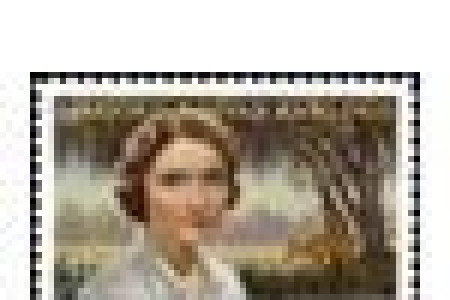
UW-Madison alumna featured on 2008 U.S. postage stamp
Pulitzer Prize-winning author Marjorie Kinnan Rawlings, a 1918 graduate of the University of Wisconsin–Madison, will be featured on a new stamp for the U.S. Postal Service's 2008 Commemorative Stamp Program.
Hot subjects—Music 319: Musical Ethnicities of Wisconsin
Most students are surprised to find on the timetable that a Wisconsin-focused class could fulfill their ethnic studies requirement. But music professor Susan Cook says her new class takes a broad view of both music and ethnicity, diving into the use of music in ethnic settlements in Wisconsin since the 1800s, such as the Swiss in New Glarus and Germans in Milwaukee. She will also explore the musical traditions of Native Americans and recent Hmong immigrants.
Program examines ‘Four Lakes’ cultural landscape
An upcoming presentation will examine the parallel developments of the state and university with consideration of the complex outcomes for the American Indian peoples and Indian nations of the Great Lakes.
Cinematheque begins semester of rarely seen films
In a culture that has people installing expensive home theaters to watch the latest Hollywood blockbuster in the basement of their suburban starter castle, UW–Madison’s Cinematheque might seem a sprocket or two off.
Political scientist named to panel studying pre-primary polling
Unraveling the mystery behind why pre-election polls in the New Hampshire presidential primary were so dramatically off-target is the mission of a select panel that includes Charles Franklin, a nationally known polling expert and political scientist at the University of Wisconsin–Madison.
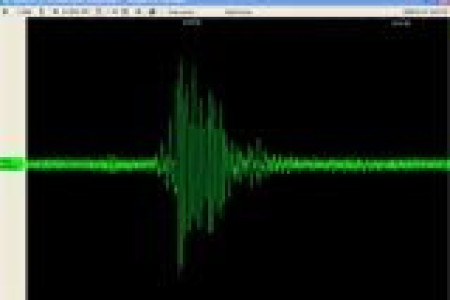
Photo, seismograph from Mendota ‘Ice Quake’ posted
The shaking felt Thursday afternoon in areas near Lake Mendota was most likely an ice quake, according to University of Wisconsin–Madison geologists. A tremor was recorded by a geology department seismometer at 12:50 p.m. Thursday, Jan. 31, 2008, and lasted approximately two or three seconds.
More than $100 million spent on presidential ads, little in Super Tuesday states
Presidential candidates spent $107 million on television advertising so far this season, with nearly all of it spent in the run-up to the earliest primaries and caucuses and almost none of it on Super Tuesday states, a University of Wisconsin–Madison study shows.
Curiosities: How can a tornado occur in January?
Tornadoes can happen whenever atmospheric conditions are suitable, says Steve Ackerman, professor of atmospheric science at UW–Madison. Over the years, Wisconsin has had…
Wisconsin Advertising Project to analyze 2008 political ads
All evidence points to 2008 being a record year for political ad spending. The University of Wisconsin–Madison's Wisconsin Advertising Project, will again lead a project to code and analyze nearly all of the political advertising that is aired in 2008 races across the country.
Nylon reveals its antibiotic powers
Nylon, we know, is incredibly versatile, strong and resilient. Now, it may be possible to add antibiotic powers to the list of qualities for the wonder synthetic material.
Computer programming team places first in regional competition
The UW–Madison computer programming team "Red No. 40" beat 198 other teams to place first in the North Central Regional Competition of the International Collegiate Programming Competition in early November, qualifying the team to compete in the World Finals in April.
Gifts establish ‘best ever’ UW–Madison music scholarships
Glen A. Skillrud and Winifred Skillrud of San Antonio, Texas, have made gifts to establish what are being called the two best undergraduate scholarships in the history of the University of Wisconsin–Madison School of Music.