Enlisting AI in the fight against drug-resistant bacteria
UW–Madison researchers identify new ways to address bacterial infections, which could accelerate alternatives to traditional antibiotics.
Biochemists at the University of Wisconsin–Madison are using AI to tackle one of modern medicine’s most pressing challenges: the rise of antibiotic-resistant bacterial infections.
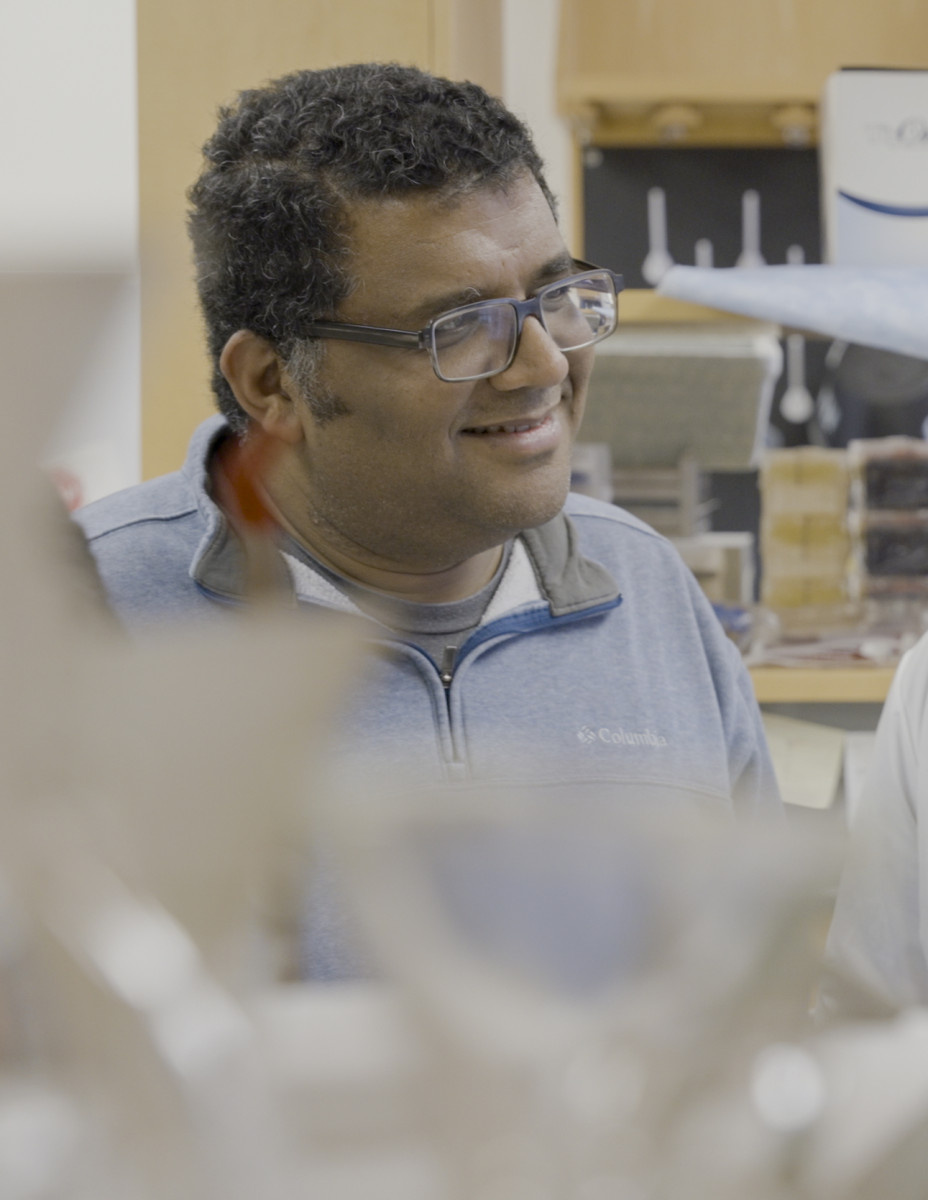
Using data collected in their lab, biochemistry professor Vatsan Raman and his team built an AI model to identify new possibilities for fighting bacteria with one of their natural enemies. Their findings, published in the journal Cell Systems, could help accelerate the development of alternatives to traditional antibiotic drugs.
For decades, antibiotics have been the frontline defense against diseases caused by bacteria such as strep throat and urinary tract infections. But bacteria evolve quickly, developing resistance to drugs faster than we can develop new treatments. The result is a slew of highly infectious diseases for which we have fewer effective treatments.
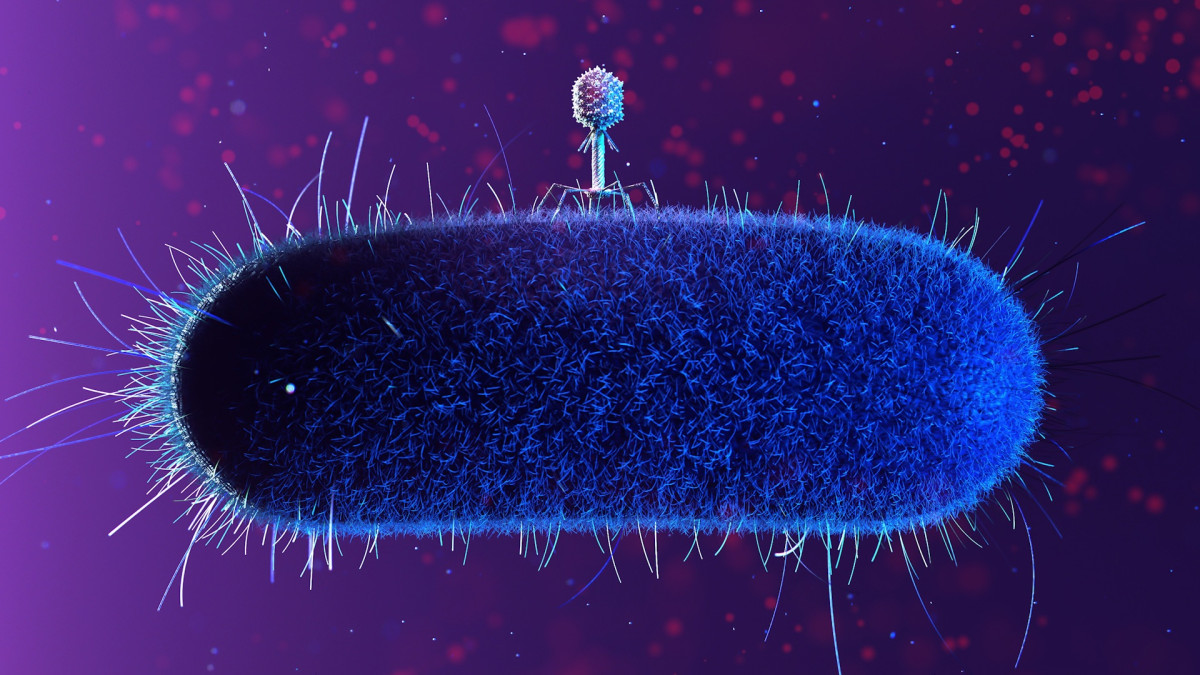
To address this growing threat, scientists are exploring new ways to target unwanted bacteria. One promising approach is phage therapy, which uses naturally occurring and engineered viruses known as bacteriophages, or phages, to infect and destroy specific bacteria.
“Phage therapy gives us an opportunity to look at the strategies that evolution has provided and harness them in new ways to be more effective at killing off bacterial infection,” says Raman.
But, this is no easy task. Treating a bacterial infection requires a therapeutic that can efficiently decimate the pathogen’s entire population. Natural phages, as Raman explains it, have evolved for mediocrity, not maximum lethality. If phages kill off an entire population of bacteria, they lose the hosts they need to survive and reproduce. Meanwhile, bacteria have also spent millions of years evolving alongside phages and have developed their own protective defenses to evade phage infections.
To design and engineer phages that overcome these evolutionary limitations, researchers in the Raman Lab developed an AI model that helps scientists identify phage mutations that have the greatest potential to improve efficiency at targeting and killing bacteria.
“The model can learn the rules by which phages evolve to be successful and can use those rules to engineer phages that are highly effective against pathogens,” says Raman.
To evaluate the model, the researchers presented it with several tests that mirror real-world obstacles facing phage therapy development. They then engineered phages carrying the AI-suggested mutations and evaluated phage performance in the laboratory.
The results were promising. Raman’s team identified phage mutations that enabled phages to infect their bacterial hosts up to six orders of magnitude more effectively than their naturally occurring counterparts. They also trained the AI model to pinpoint phage mutations that would target specific bacteria while sparing others, a key step toward treatments that could fight infection without disrupting beneficial microbial communities in the gut.
The AI model builds on years of foundational research in the Raman Lab. Using high-throughput experimental approaches to tackle large pools of data, the team has systematically explored how mutations affect key phage proteins that control the phage’s ability to recognize and infect bacterial hosts.
In a recent study published in Science Advances, the team investigated a protein that some phages use as a molecular drill to break through the protective sugar coating surrounding certain bacteria. Their work revealed which amino acids allow the phage to recognize the sugar coating and break through, as well as how changes to those amino acids alter the phage’s ability to infect its host.
Data from similar work examining a different phage protein provided the foundation for the new AI model. Scanning tens of thousands of mutations revealed how various patterns of amino acids impact the phage’s efficacy, information on which the AI model was trained. The model’s output of novel phage mutations is expected to lead the researchers to viable options for phage therapy more quickly and efficiently, including possibilities not yet attainable through previously available methods.
“Ultimately, we’d like to design phages to address real problems,” says Raman. “We have already begun moving in that direction, applying this approach to target pathogens responsible for urinary tract infections, bacteria associated with microbiome-linked diseases, and agricultural pathogens such as Salmonella in poultry. The goal is to be able to engineer effective therapeutic phages for many different bacterial pathogens.”
This research was supported by grants from the National Science Foundaiton (2237251), Department of Defense (HDTRA1-23-1-0023) and National Institutes of Health (R35GM143024 and T32GM135066).