A UW professor’s book tells the overlooked tale of a queer Black man who risked his life during WWII for love
Ethelene Whitmire’s ‘The Remarkable Life of Reed Peggram,’ who survived and escaped a Nazi concentration camp with his lover, has received national recognition since its release.
It was a chance afternoon meeting in Copenhagen a decade ago. UW–Madison historian and Professor Ethelene Whitmire was presenting research on the experiences of African Americans who have lived in Denmark. One of her subjects was Reed Peggram, a queer Black man who moved to Europe and survived Nazi internment during World War II. Whitmire knew little about him. But that was about to change. In the audience that night was a relative of Peggram, who told her about a trove of Reed’s letters he sent home to his grandmother.

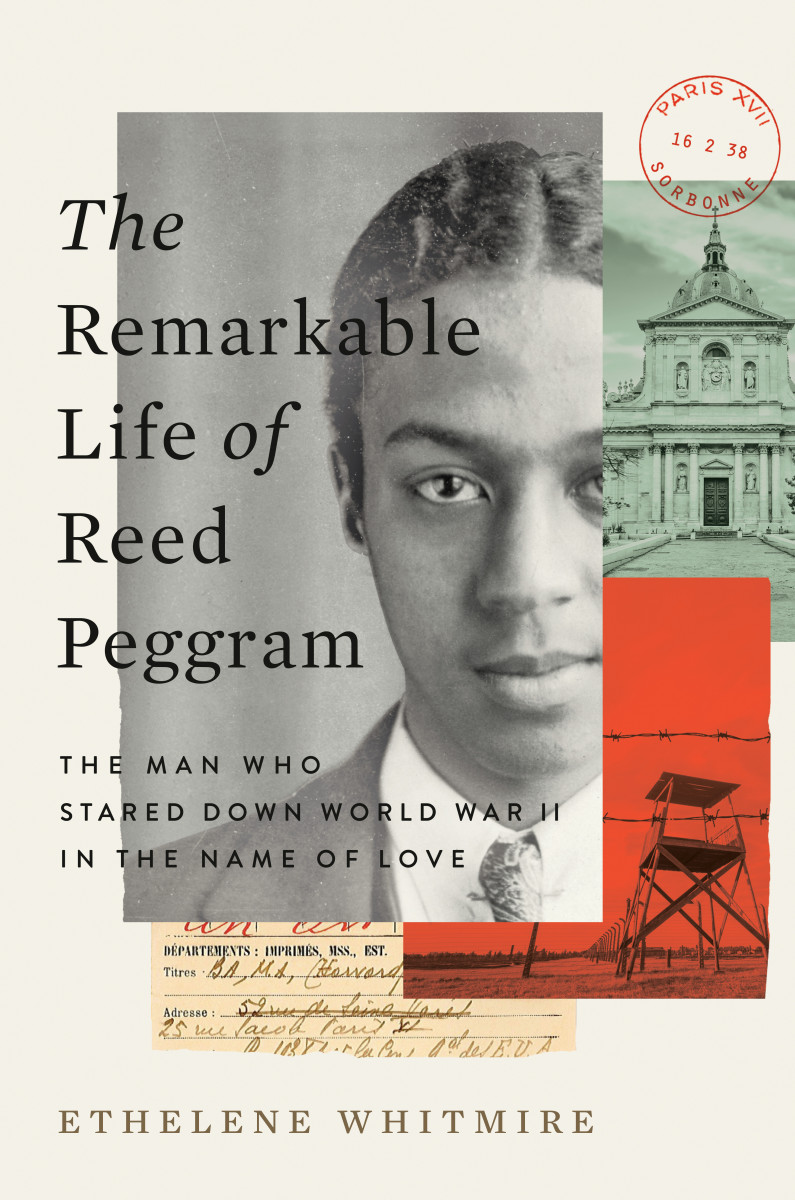
“The Remarkable Life of Reed Peggram: The Man Who Stared Down World War II in the Name of Love” is the book that was born of these letters.
Whitmire’s new account draws on her scholarship as a professor in the Department of African American Studies who once served as a visiting Fulbright Scholar at the University of Copenhagen. Published by Viking at Penguin Random House earlier this year, “The Remarkable Life of Reed Peggram” has garnered national attention, including a starred review in Publishers Weekly, selection as a Book of the Day by NPR, and coverage by People and Essence magazines.
“This is a World War II love story like you’ve never read one before,” wrote People magazine.
In a recent interview, Whitmire spoke about Reed’s life. And his remarkable grandmother.
Tell me about Reed’s grandmother.
I dedicated the book to her because I thought she was an extraordinary woman to come up North some 10 years before the Great Migration. And she wasn’t on her own; she brought along a little child, her daughter Mary, who would become Reed’s mother. With a third-grade education she worked hard enough as a cleaner to buy her own home and to send her grandson through school. I thought it was amazing.
I admired her, her pluckiness and her drive, especially at a time when it couldn’t have been easy for her to do this as a Black woman. And you could obviously tell in the letters that they were very close.
Reed graduated near the top of his class at the Boston Latin School, and he was Phi Beta Kappa at Harvard. And then, in 1939, Reed heads off to Paris. And from his letters, it seems like an obvious choice. He was idealistic and a hopeless romantic.
Yes, he was finishing his PhD at Harvard on decadence and 19th century French literature. And he was really enjoying life, even though war clouds were looming. He said, “I’m going to stay until the first bombs start falling.” He had a ball going off to Warsaw and hanging out with his friend, a count. He really had fun that first year.
Your book is a fascinating glimpse into WWII from a very different vantage point — a love story. Tell me about the relationship between Reed Peggram and Arne Hauptmann.
When I was reading the letters to his grandmother, you could tell Reed was kind of obsessed with Arne. And at some point, he starts talking about “we” instead of just “me.” Arne was just like Reed. He wanted to travel and be free. They both loved music and art, and they just fell for each other very hard and had a wonderful time in Europe.
But then WWII started. Hitler is advancing. Bombs and tanks. Death and destruction. How did he view the horrible things happening around him?
He still seemed just self-obsessed. He hinted in the letters that he was aware of what was going on, but he also seemed to be in denial about the war. He wanted to stay and hoped that everything would work out. He was very optimistic, hoping to go to Argentina at some point. He observed people gathering gas masks in Paris and also in London, but it still seemed like he was being unrealistic about the danger.
In one of his letters he calls WWII “just a silly old war” that put a “wrench” in his plans, and he refused to return to America.
I could imagine what his grandmother was thinking. “I don’t know Arne. I don’t know why you’re staying there during a war. Why don’t you come home?”
I talked to his nephew after the book came out, and he was so moved. He said Reed would have been so thrilled.
As a reader, I had two reactions to him at this point. One, he’s not taking the war around him seriously. Then another view is, good for him, right? Forget the war. He’s in love. He wants to drink wine and read poetry and travel Europe. How did you feel about him as you read those letters he sent home during the height of the war?
I admired him. But he also frustrated me. There were more than a dozen times where he could have escaped the war. Embassies and consulates and individuals reached out to him. All tried to evacuate him. But he said no and no again.
He didn’t want to leave Arne; he just didn’t want to leave him alone. He was in love and he knew there would be trouble and he wanted to help Arne. So, he stayed.
And so, their love story continues. It’s kind of beautiful, traveling Europe, dancing as the bombs fell. But the horrible reality of war finally catches up with them, and they both end up in a Nazi concentration camp in Italy. What happened?
Yeah, the records are scattered, and it’s hard to know exactly what happened when. At first, I didn’t think [the Nazis] knew they were gay until I got the records from Italy and found that they were discovered. They ended up in separate concentration camps. But surprisingly they ended up together again and eventually, in 1944, were able to escape.
They hid out in the mountains, and the partisans would help them. They would stay in barns during the day and at night would be walking out and about, not knowing whether Americans were coming or where the enemy was. And then finally, they encountered an all-African American regiment who were shocked to see Reed, as you can imagine.
And even more incredible was that this regiment had embedded reporters from a Black newspaper who wrote about Reed and Arne. And you can see these amazing photos of them.
Unfortunately, this story does not have a storybook ending. What happened to Reed and Arne after the war?
They went their separate ways. And they never got back together. It ends tragically for them both. Arne got married to a woman but got divorced. Reed was put in a mental institution, and it went downhill from there for him. In the end, Reed just ended up sitting in his home in Boston listening to music but never achieved what he wanted to as a college professor or as a writer.
I talked to his nephew after the book came out, and he was so moved. He said Reed would have been so thrilled. Reed died in obscurity, but, in the end, through this book, got some kind of recognition.