National biotechnology commission visits UW–Madison to explore research and innovation
From advances in agricultural science and sustainable bioenergy to medical breakthroughs to new automated technologies, UW–Madison is shaping the future of biotechnology.
On Friday, Oct. 23, the university welcomed the National Security Commission on Emerging Biotechnology (NSCEB) and U.S. Sen. Tammy Baldwin for a discussion about Wisconsin’s growing biotechnology industry and the role of university research in strengthening America’s economic competitiveness and national security.
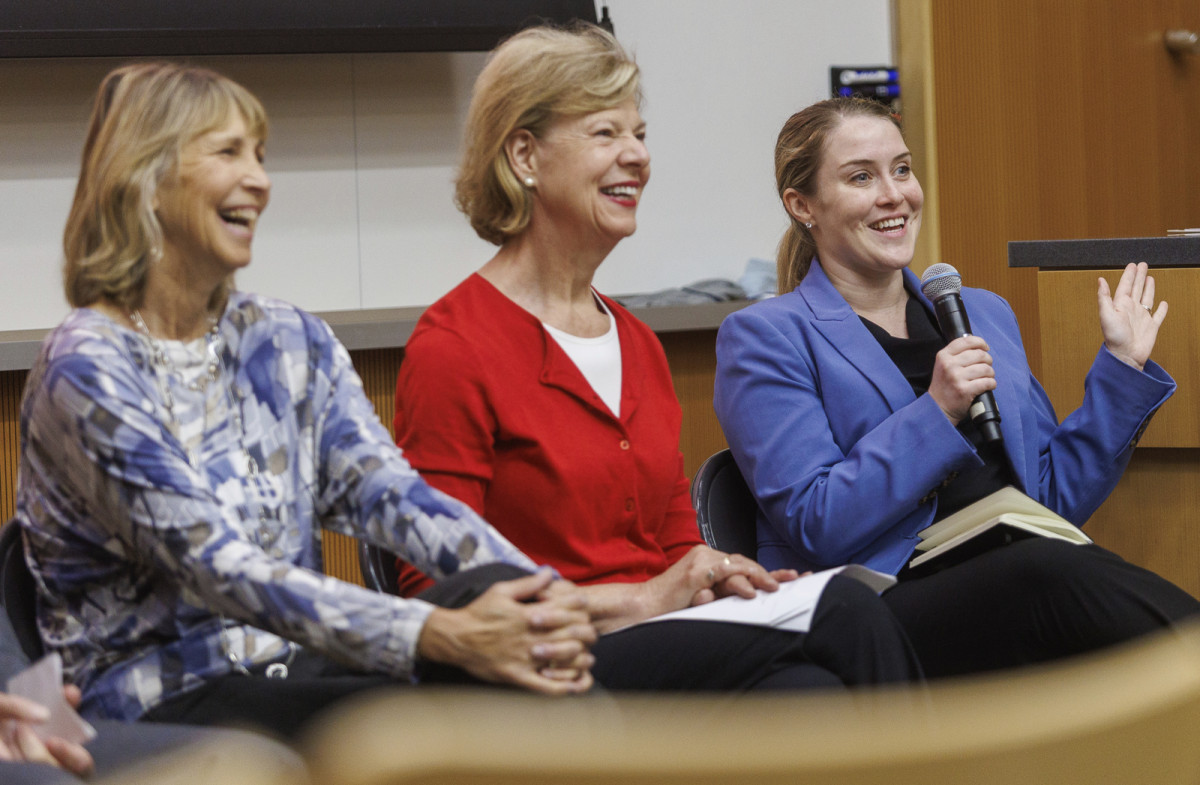
The visit was part of the commission’s national roadshow exploring how research institutions, businesses and government can work together to advance biotechnology in the United States. The commission’s work also extends beyond human health to agriculture, food security and energy independence.
“We have what it takes to lead in the industries of tomorrow,” Baldwin said, pointing to Wisconsin’s research universities, skilled workforce and advanced manufacturers.
Research that reaches beyond campus
In 2023, Wisconsin earned a federal Regional Technology and Innovation Hub designation for biohealth, recognizing the state’s existing strengths in personalized medicine, research, and new technologies. As Lisa Johnson, CEO of BioForward Wisconsin, noted during the panel, the state offers an environment where entrepreneurs can find support and turn promising ideas into successful businesses.
UW–Madison played a key role in securing the designation, building on decades of research and industry partnerships that have helped move discoveries from the laboratory into practical applications.
The university is also preparing the next generation of biotechnology leaders. Its Master of Science in Biotechnology program brings together science, business and policy to prepare graduates for careers in the industry, with many choosing to remain in Wisconsin.
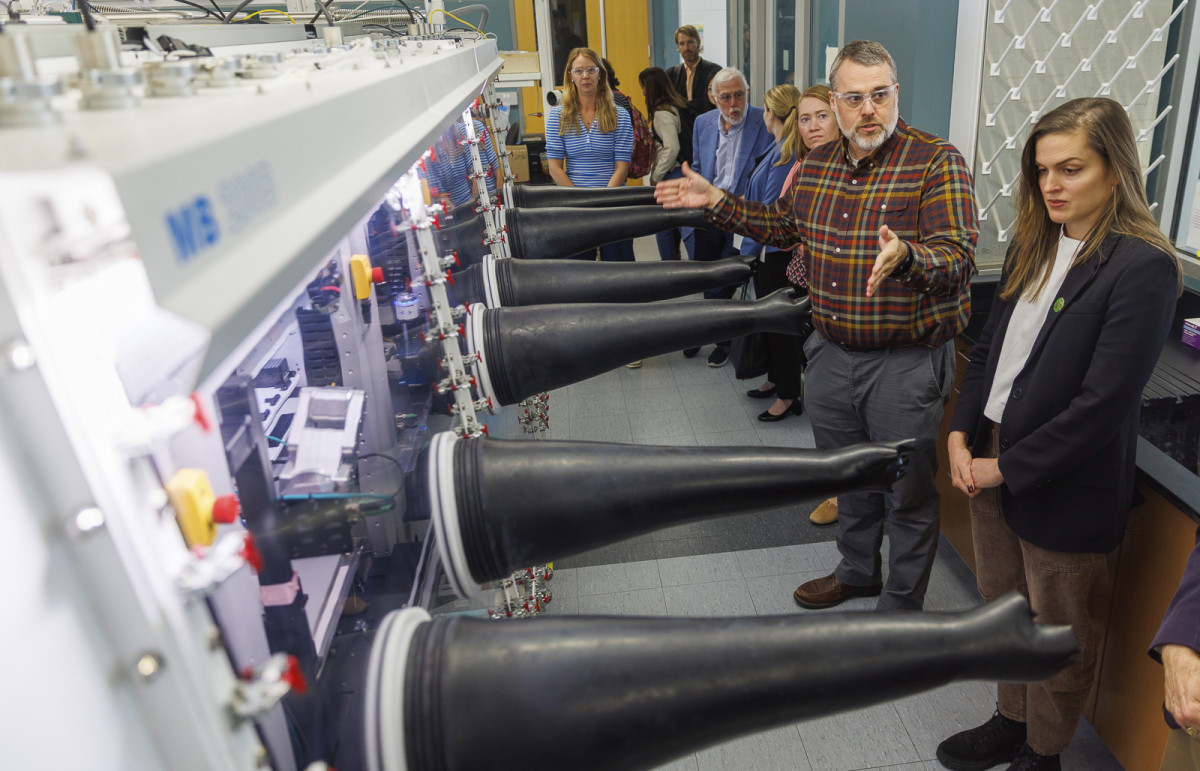
Among the technologies highlighted during the visit was Proteus, an autonomous laboratory at UW–Madison’s Great Lakes Bioenergy Research Center that uses robotics and artificial intelligence to conduct experiments and accelerate research. The facility supports research into microbes that can convert plant materials into sustainable fuels and chemicals Representatives from biotechnology company Ginkgo Bioworks pointed to the facility as an example of how emerging technologies could help strengthen American scientific innovation.
A history of discovery, a future of innovation
UW–Madison’s role in Wisconsin’s growing biohealth industry builds on more than a century of scientific discovery. That legacy includes the creation of the Wisconsin Alumni Research Foundation (WARF) in 1925, which continues to help bring university discoveries from the lab to the marketplace while reinvesting in research and innovation.
UW–Madison is also working with industry partners to expand its cyclotron capabilities, supporting the development of new approaches to cancer diagnosis and treatment.
For Baldwin, the goal is to build on the state’s momentum.
“I want the next big breakthrough in biotechnology to happen right here in Wisconsin, powered by Wisconsin workers leading the way,” she said.