
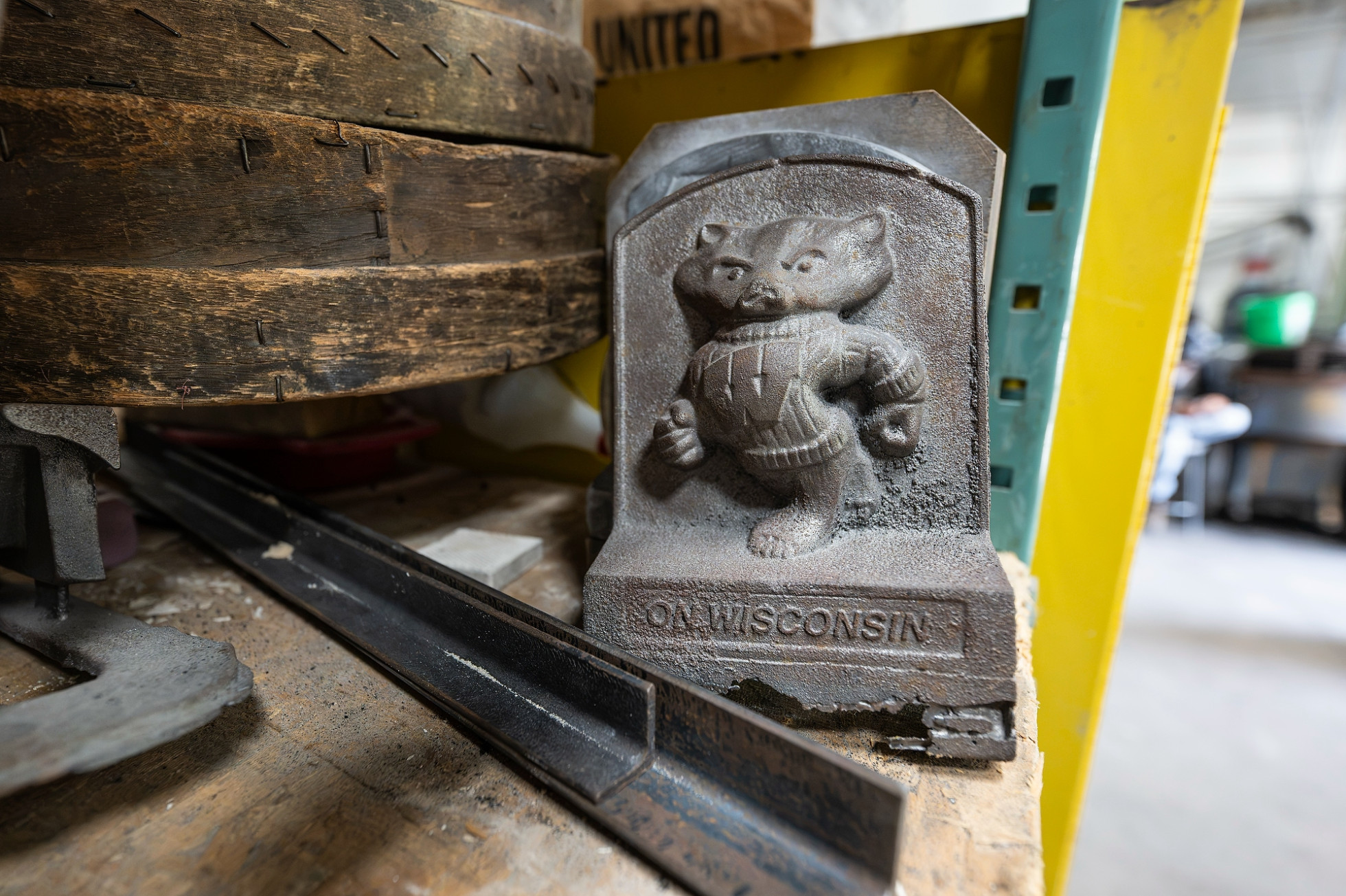
UW–Madison’s METAL bootcamp inspires interest in metalworking for fun — and a stronger national future
The four-day training sessions introduce participants to metalworking through online and in-person training.
Michael De Cicco checked the temperature a few times.
Clad in a silver heat-reflective suit, De Cicco, a mechanical engineering teaching faculty member at the University of Wisconsin–Madison, peered through his helmet’s drop-down visor at a high-temperature thermometer. Beside him, PhD student Rogelio Herrera had just dipped a sensor into a crucible filled with incandescent molten metal.
“That’s 970 degrees,” De Cicco told the 12 participants gathered around the grated floor in the middle of the foundry in the UW–Madison Art Lofts. “Celsius.”
That’s 1,778 degrees Fahrenheit.
It was day three of the second Metallurgical Engineering Trades Apprenticeship & Learning, or METAL, bootcamp at UW–Madison, held in late August 2026. Hosted by the UW–Madison College of Engineering in partnership with IACMI – The Composites Institute, the bootcamps introduce participants to metalworking through online and in-person training.
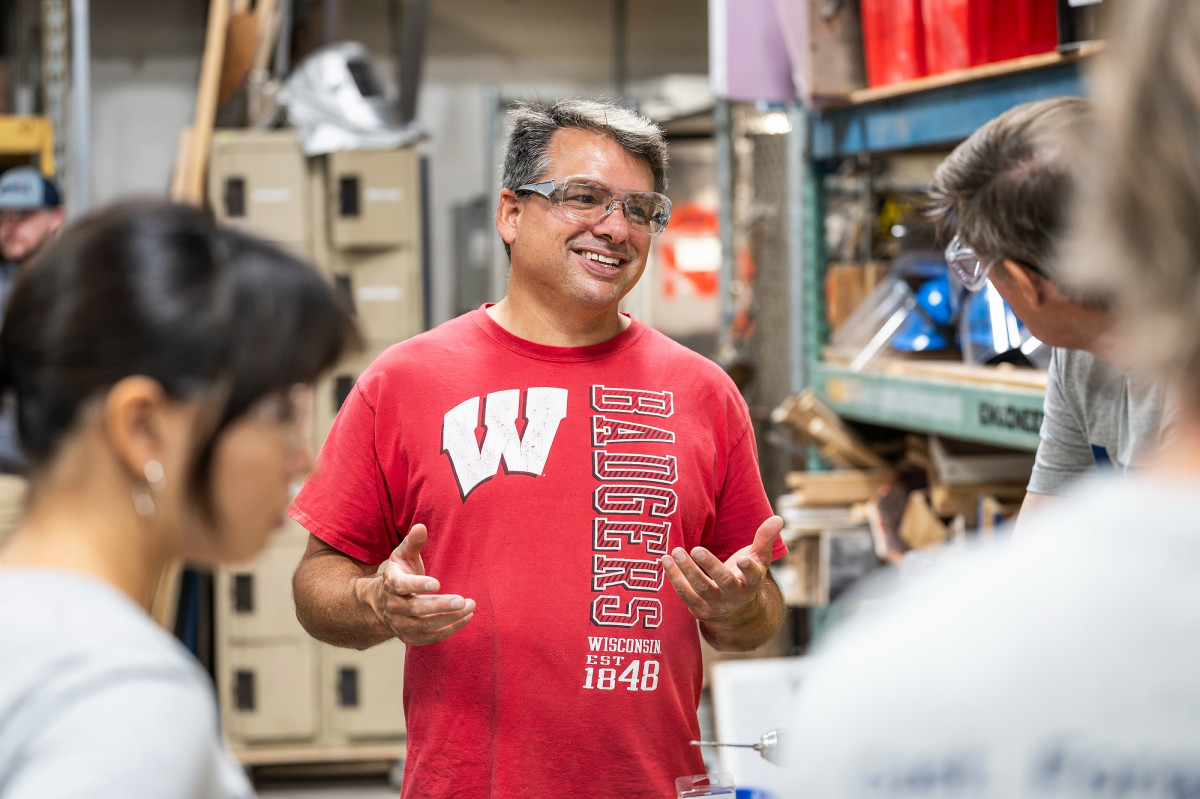
UW–Madison is one of 17 institutions in a growing national METAL network, which is expanding access to casting, forging and manufacturing training in an effort to develop a skilled workforce and secure the nation’s defense industrial base.
Consisting of nearly 120 foundries and employing 18,000 people in communities across the state, metalworking contributes more than $11 billion to Wisconsin’s economy, and the industry supports mining, construction, transportation, consumer products and military applications, according to the Wisconsin Cast Metals Association. This breadth, along with UW–Madison’s strengths in manufacturing and materials engineering, makes the university a strong fit for the program.
Inspiring people to pursue careers in metal casting and forging continues a longstanding tradition in Wisconsin, which has the most foundries per capita of any state in the United States, says Frank Pfefferkorn, a UW–Madison professor of mechanical engineering who leads the university’s METAL program. “Anyone who is interested can participate in the hands-on experiential bootcamps — no prior knowledge or experience is required,” he says.
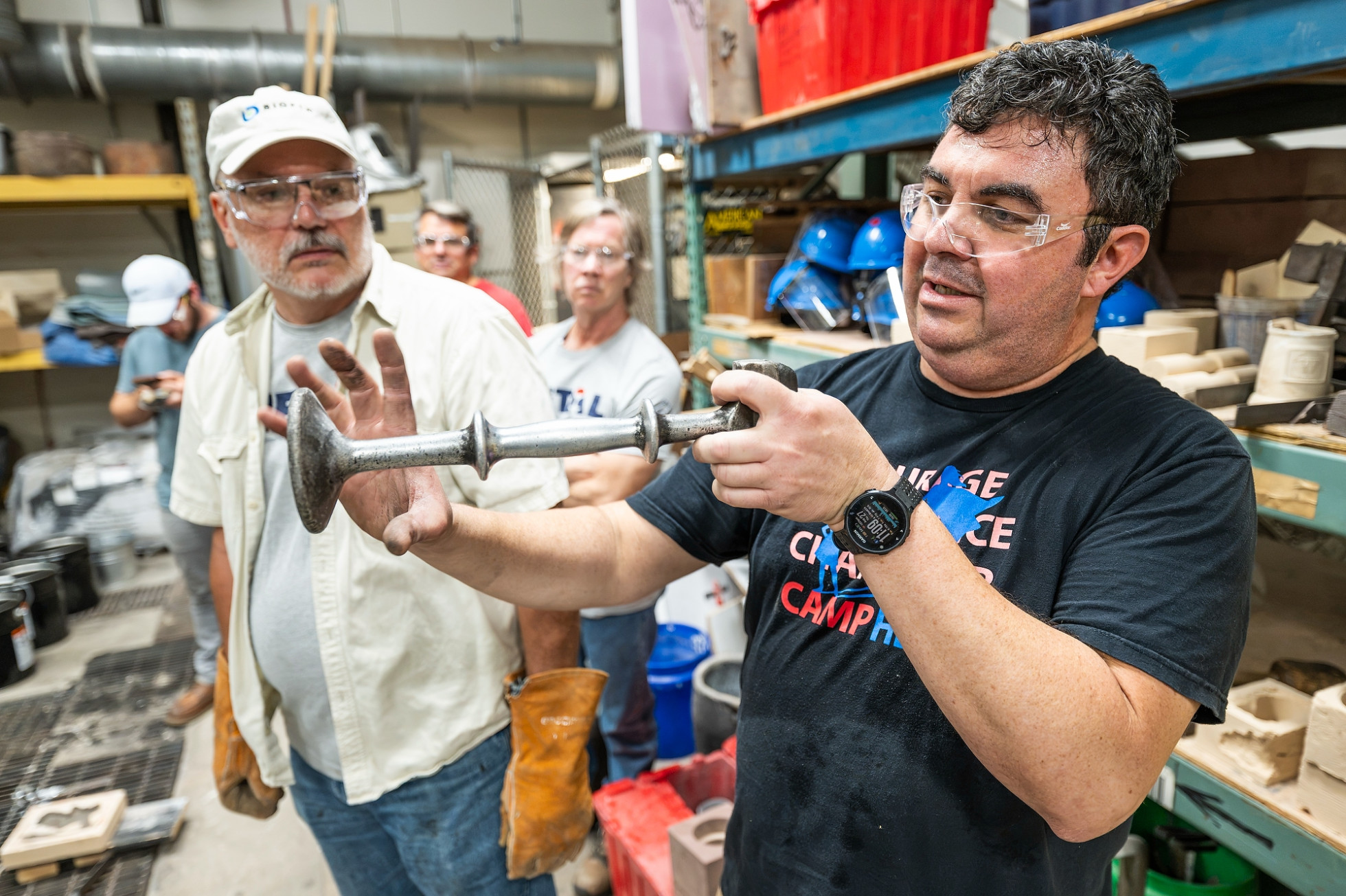
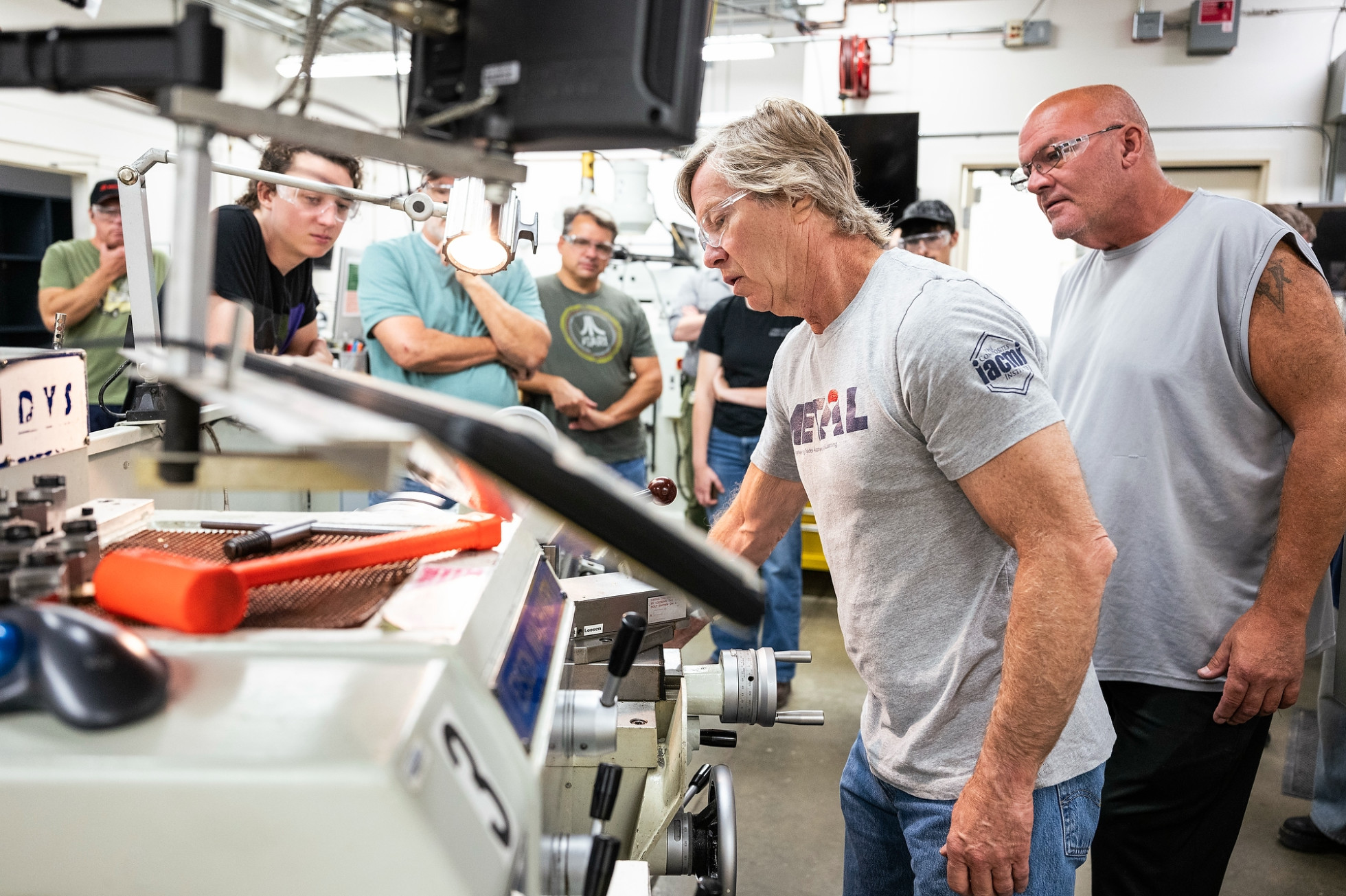
Rogelio Herrera (right), a PhD student in mechanical engineering and bootcamp instructor, explains why casting a bench ram tool in aluminum is more cost-effective and material-efficient than CNC machining the piece.
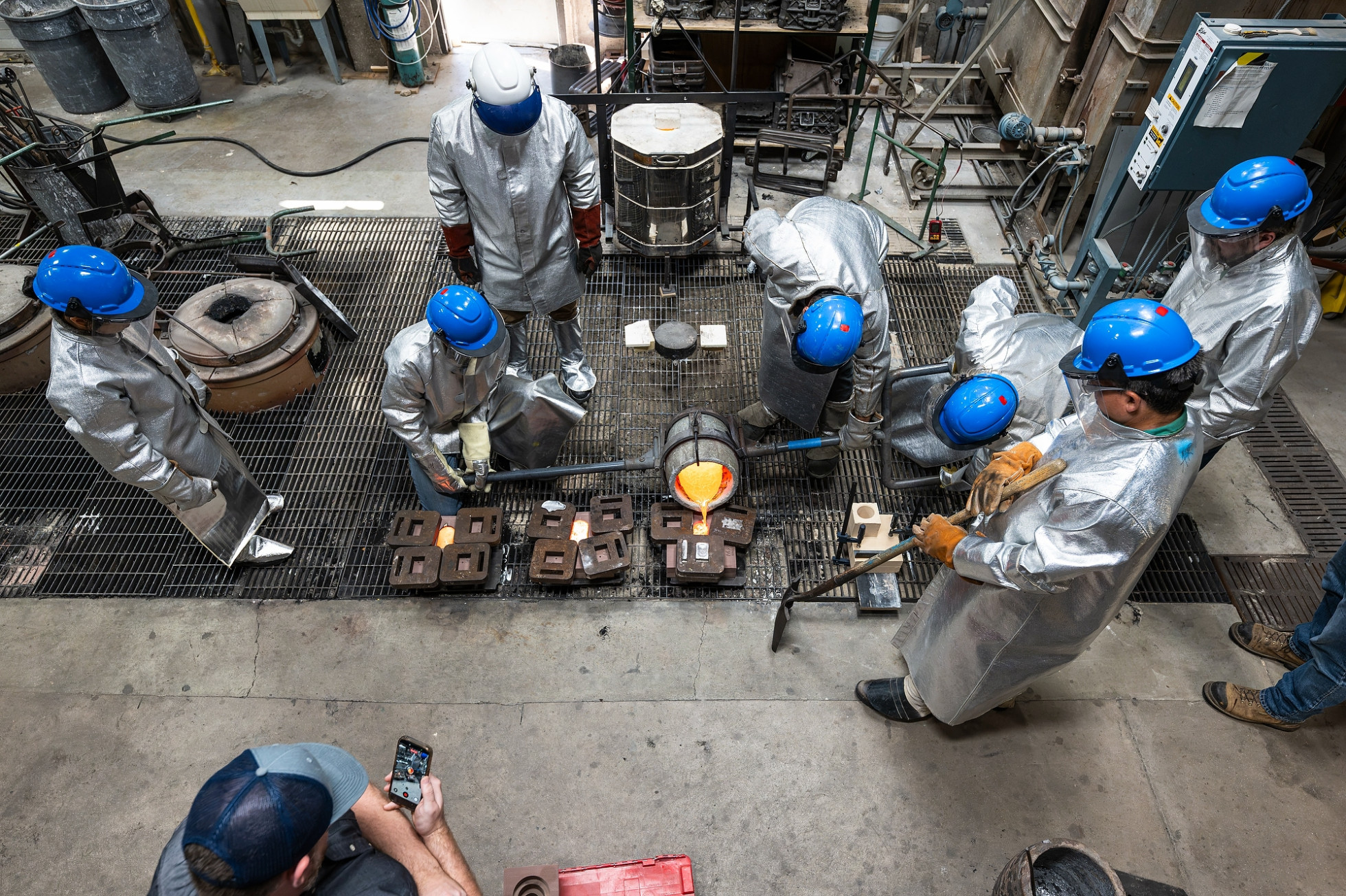
Participants were also introduced to proper safety gear as they practiced pouring a crucible of molten silicon brass into a mold.
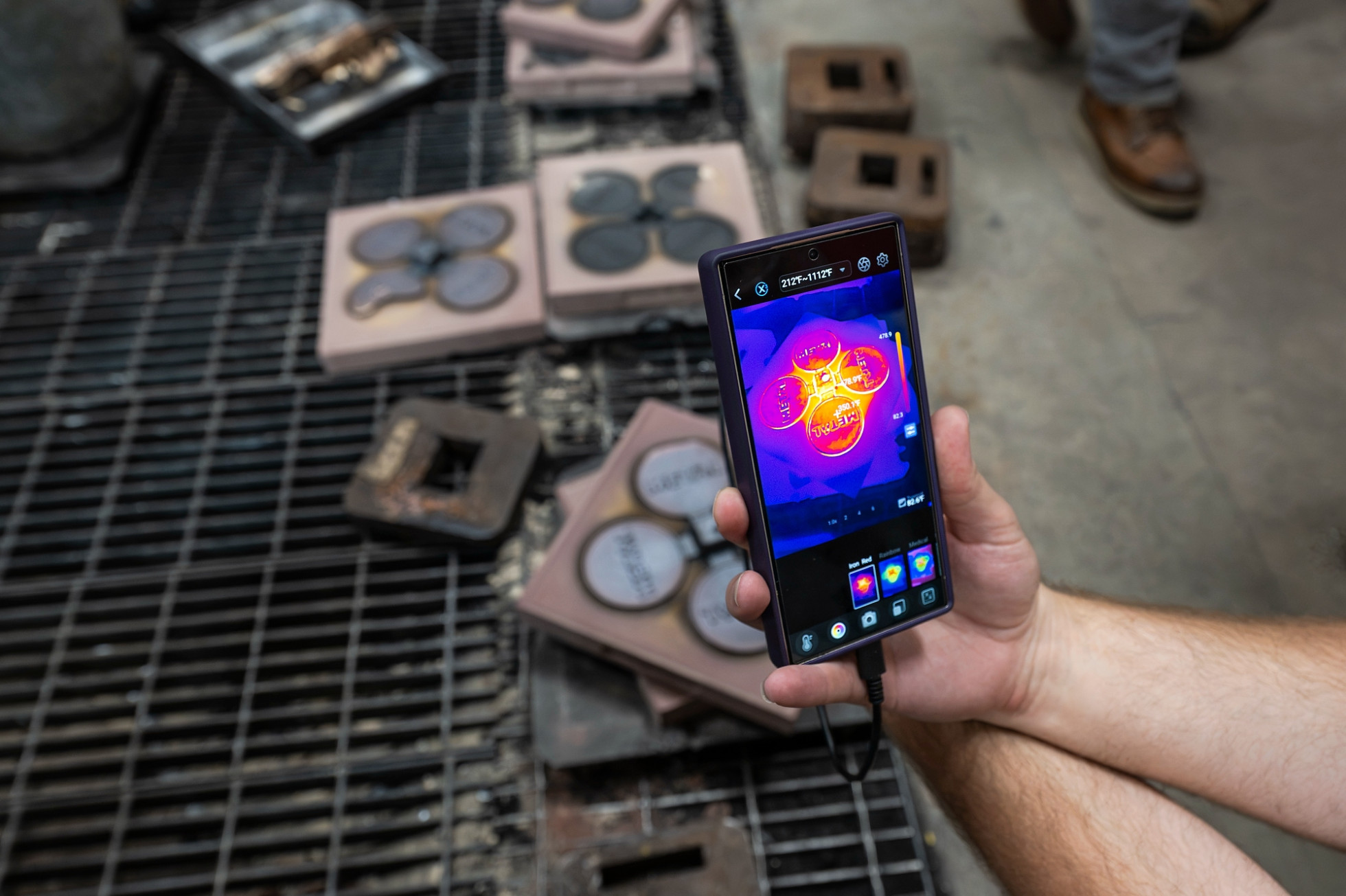
A heat sensor paired with a smartphone app displays the temperature range of cast silicon brass medallions as they cool after a pour.
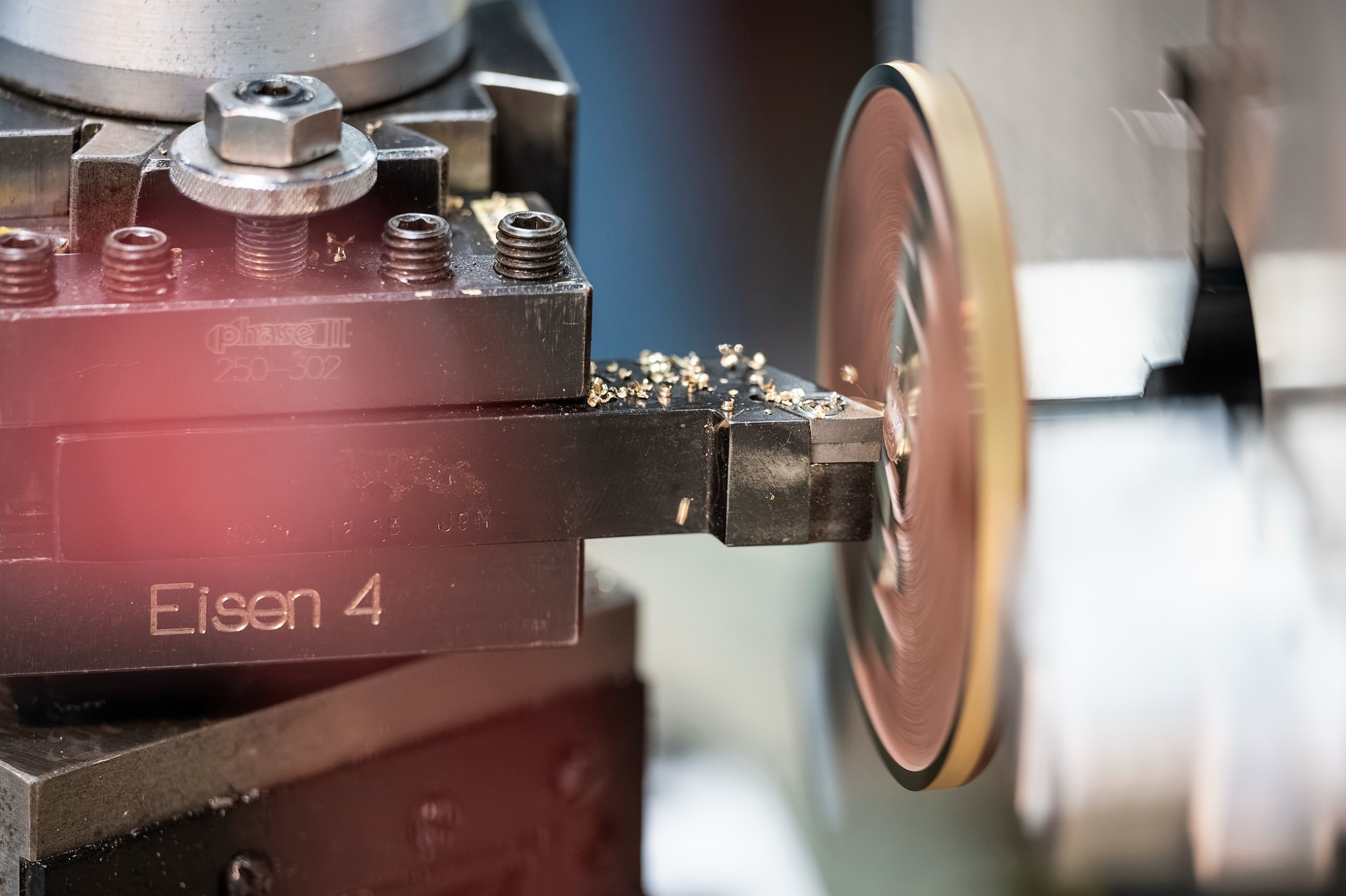
Lathe machines were one of the many tools participants used to cast and finish brass medallions during the bootcamp.
The bootcamp’s lessons included forging and casting methods; modeling, heat treating and measuring the properties of differently processed alloys; pouring aluminum and brass medallions; and polishing finished pieces on the final day. Castings took place in the Art Lofts foundry, a facility shared by the UW–Madison Art Department and the College of Engineering.
With the temperature confirmed, De Cicco and Herrera led three bootcamp participants through pouring brass from the crucible into medallion molds lined up on the grated foundry floor. They moved as a team, with one participant at each end of the two-person crucible shank. The other participant and Herrera stayed close to each end as backups. De Cicco guided the effort from the center, directing the team from pour to pour.
They poured silicon brass, a mix of copper, zinc and about 4% silicon, into molds that would produce four medallions each. About a half hour later, the group broke the cooled castings out of the sand molds and discussed the results with the instructors.
From start to finish, the pour took about four minutes. Bootcamp participant Jeff Wagner, a retired Madison resident who was carrying the crucible, was sweating by the time he peeled out of his protective suit.
“It was hot,” Wagner said. “I poured aluminum earlier in the camp, which was about 400 degrees cooler. That made a big difference when we were pouring, and the aluminum was lighter, too. The brass was much heavier.”
Wagner isn’t new to metalworking. He’s done blacksmithing and welding and has been interested in metal art and sculpture for 30 years. The METAL boot camp offered him a chance to learn a new method of metalwork, and he said the intensity is part of the appeal.
“It’s great,” he said. “There’s a steep learning curve with a lot of information, but there’s a lot of hands-on learning. The instructors have been really great at communicating at an introductory level, given the depth of knowledge that they have in this field.”
In addition to the bootcamps, the College of Engineering is modifying its course ME 431: Metal Casting to align with METAL Level 1 training. Students who complete the metal casting course will receive a METAL Level 1 Credly badge and certificates. The college is also hosting two job fairs with local companies from the casting, forging, plate rolling and machining sectors.
UW–Madison plans to host at least 10 additional METAL bootcamps, which are open to the public regardless of prior metalworking experience. The current partnership with METAL runs for three years, and Pfefferkorn intends for the program to reach at least 160 participants.
The program also involves K-12 outreach, including at least seven workshops intended to reach at least 150 students. Pfefferkorn will work with local middle schools, high schools and community colleges to integrate METAL training into their curricula.
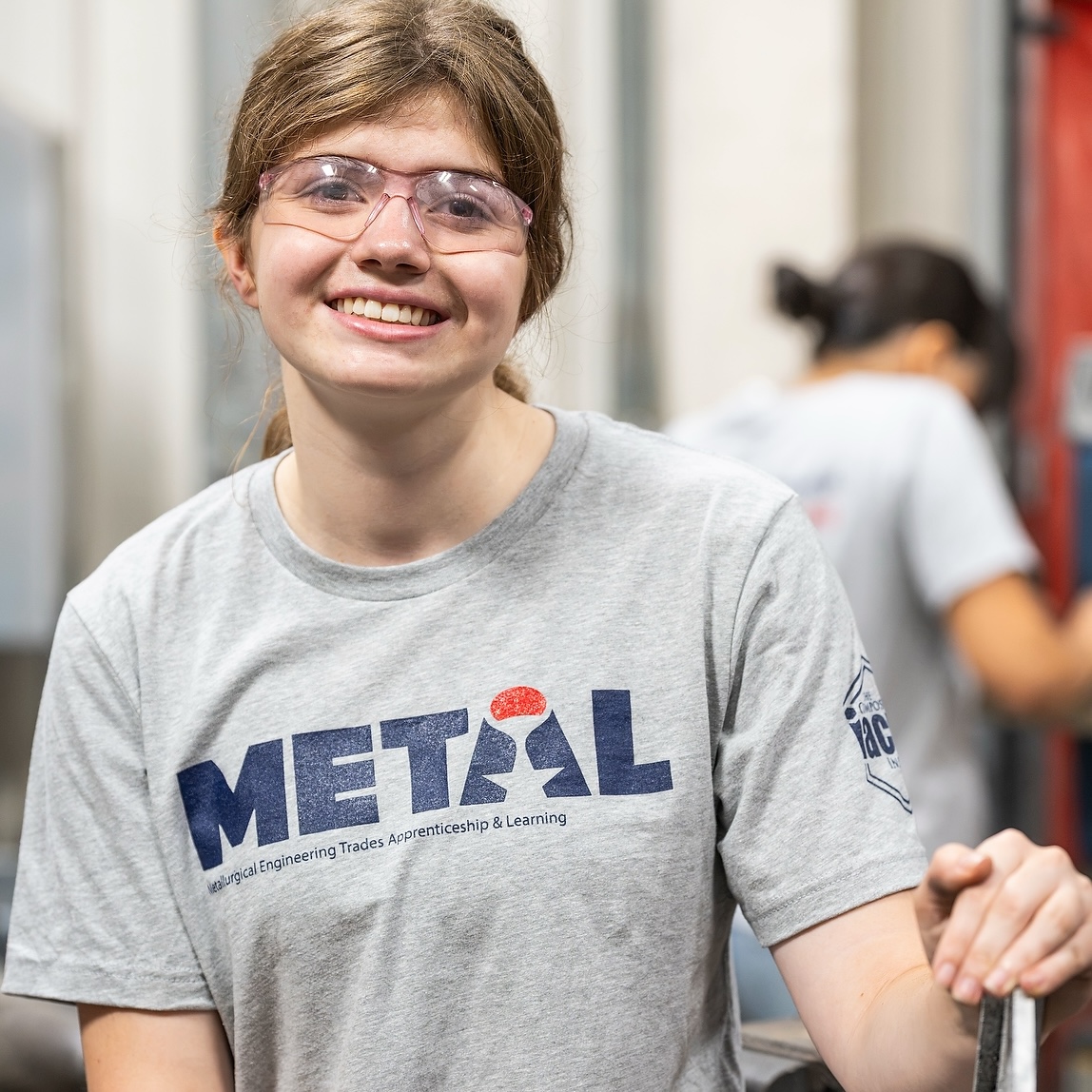
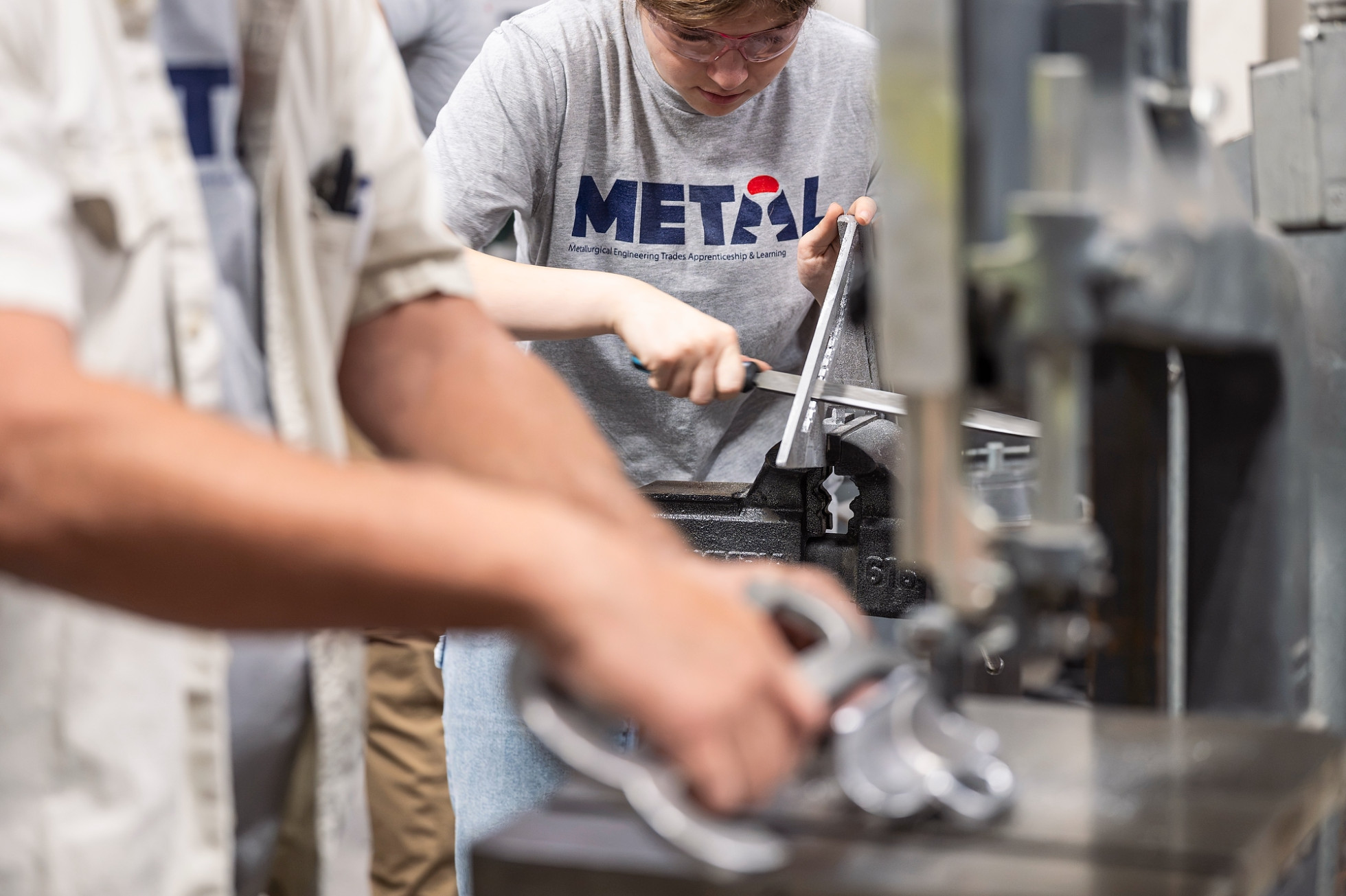
Upon completing online and in-person bootcamp training, participants can enter a stacked curriculum that offers a menu of specialized training opportunities within METAL — allowing them to tailor their learning experience and even focus on automation in the casting and forging industry.
“Foundry jobs are good jobs that pay well,” says Jeffery Ledington, a communications specialist with IACMI. “Even with automation, with our partner institutions like UW–Madison, we’re training the workers who will be using those automated tools to really push forward with smart manufacturing. Part of the goal of the METAL program is not only to train qualified people who can go into industry, but also to make sure people know these jobs are out there.”
The United States Department of Defense’s Office of Industrial Base Policy funds the METAL program.