Bioblitz participants explore the Lakeshore Nature Preserve in search of the species that make the urban oasis thrive.
Photos by Taylor Wolfram
At the Lakeshore Nature Preserve, life is everywhere. Hundreds of different species call the 300-acre property home. In its woodlands, prairies and shoreline you can witness pollinators fertilizing native plants, birds scouting their next meal and even see a fungus that, until last year, was unknown to the science community.
You just need to know where to look.
That’s the idea behind the Preserve Bioblitz, a daylong nature scavenger hunt that brings together UW and Madison community members to find and document as many living species as possible across the preserve.
During the annual event, which just completed its second year, participants explore the natural area and record their observations along the way. No experience is necessary, just a curious eye — and a phone equipped with some helpful apps. Each observation adds to a growing picture of the biodiversity that makes up the preserve.
“There is so much to discover at the Lakeshore Nature Preserve,” says Director Brad Herrick. “The Preserve Bioblitz is an ideal way to engage volunteers to help catalogue the biodiversity found in their ‘backyard’ and it demonstrates the importance of preserving and restoring urban natural areas.”
The preserve represents about one-third of the total acreage of the main UW–Madison campus; it serves as a living classroom lab that supports the university’s teaching and research.
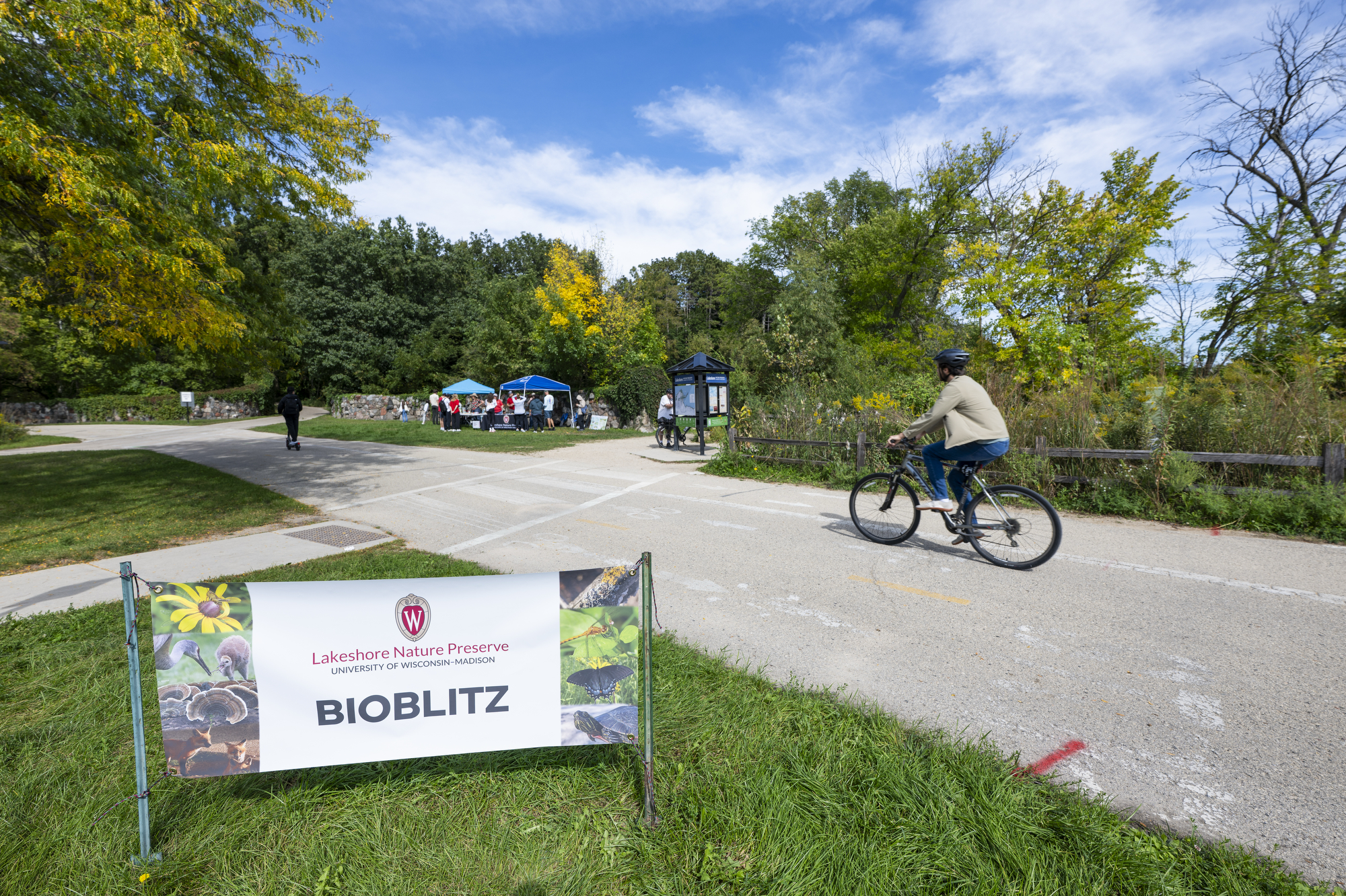
September 26, 2026, marked the second annual Bioblitz at the Lakeshore Nature Preserve, which spans hundreds of acres on the west side of the UW–Madison campus. Participants met at the Picnic Point entrance for a day of nature observing and recording. Photo: Taylor Wolfram / UW–Madison
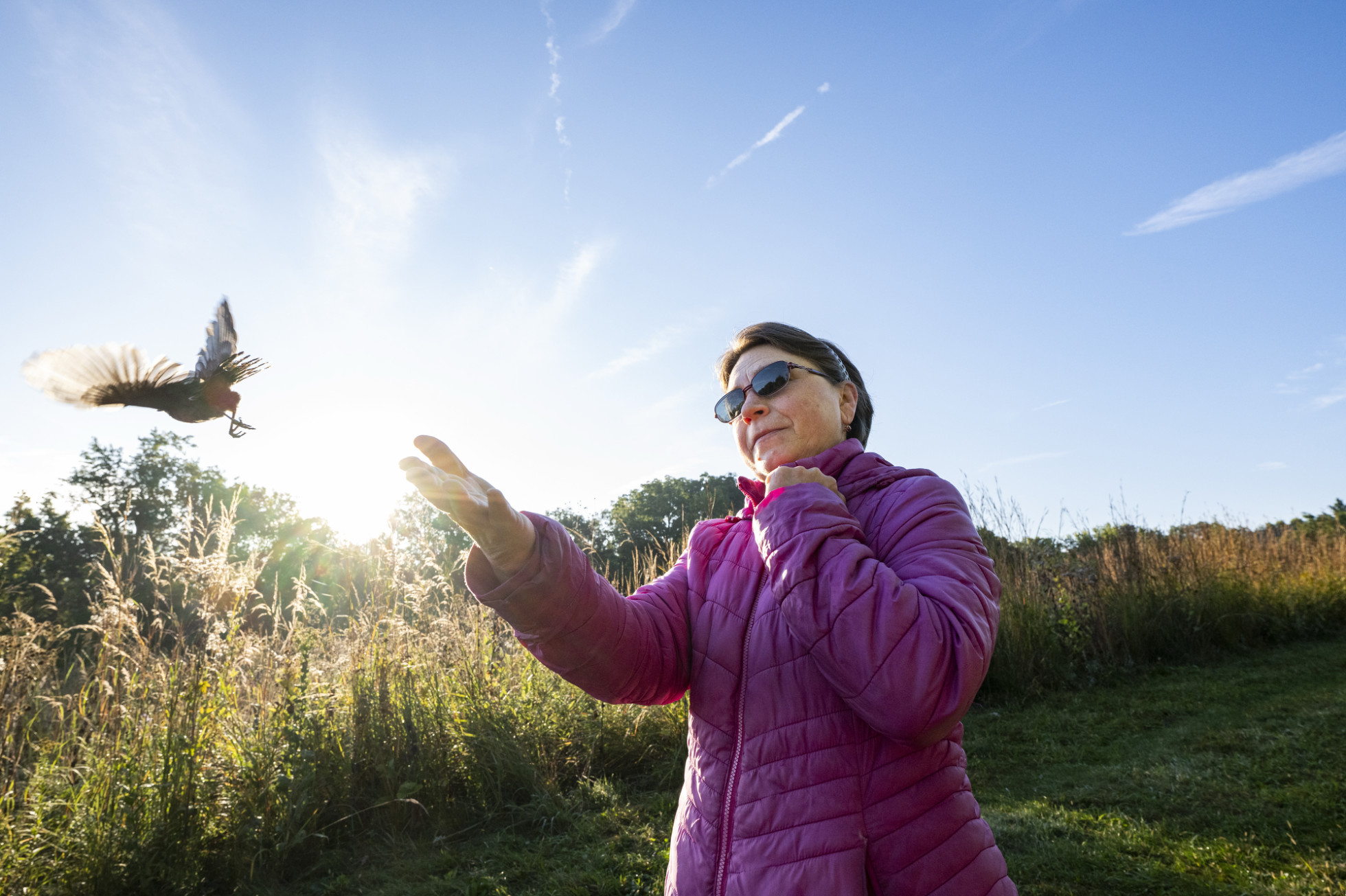
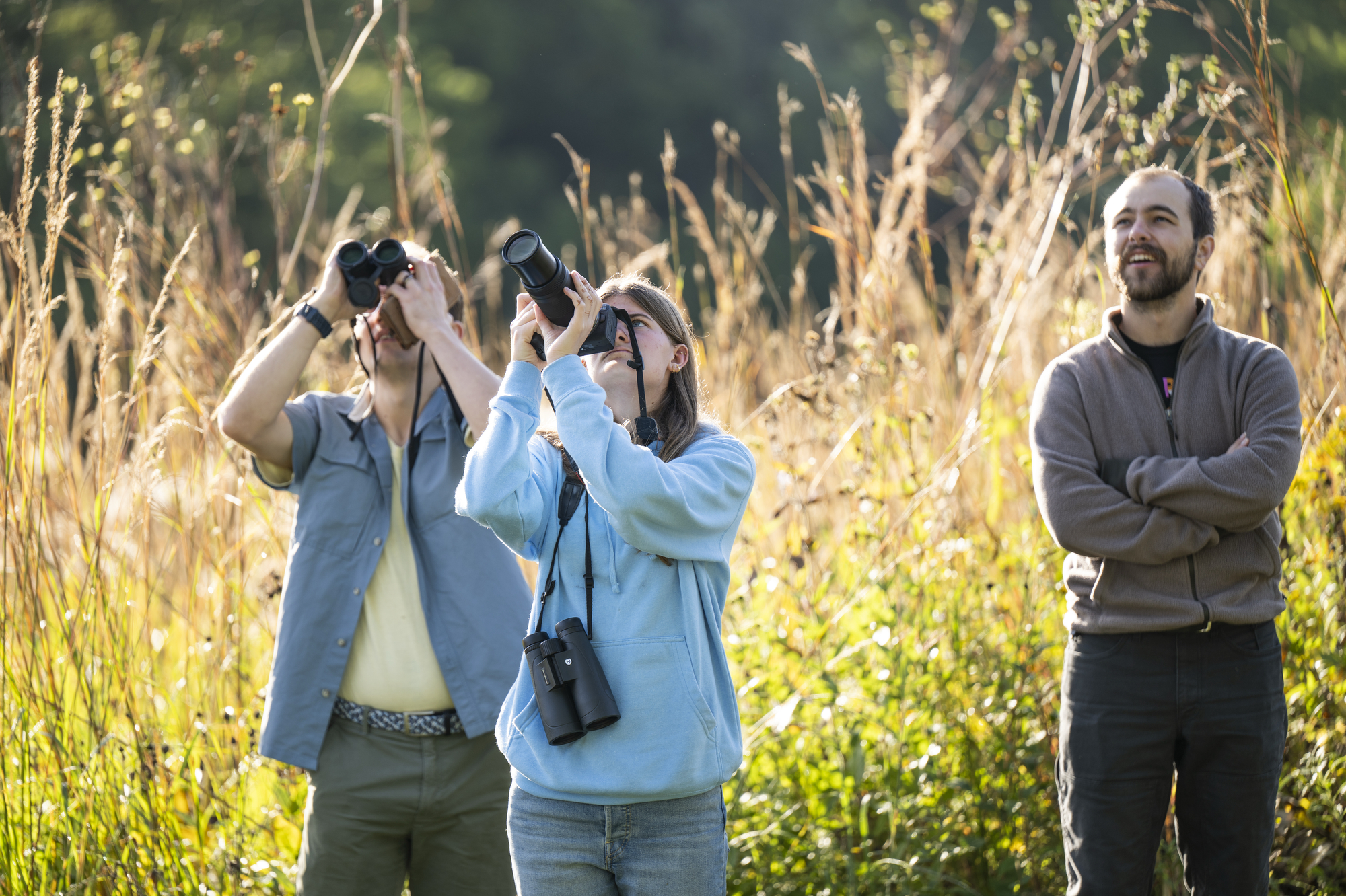
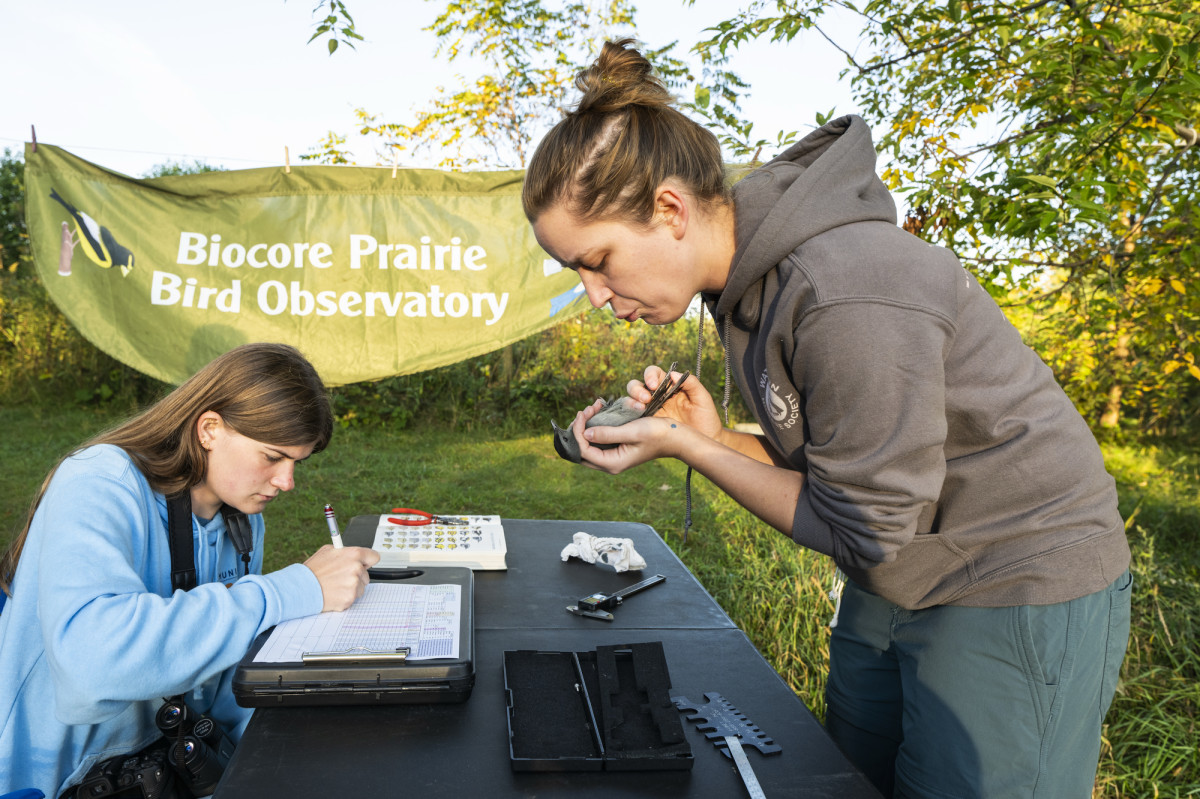
Birders flocked to the Biocore Prairie Bird Banding Observatory for a closer look at some of the birds that call the preserve home. Bird banding was one activity of many that took place over the course of the Bioblitz. Photo: Taylor Wolfram / UW–Madison
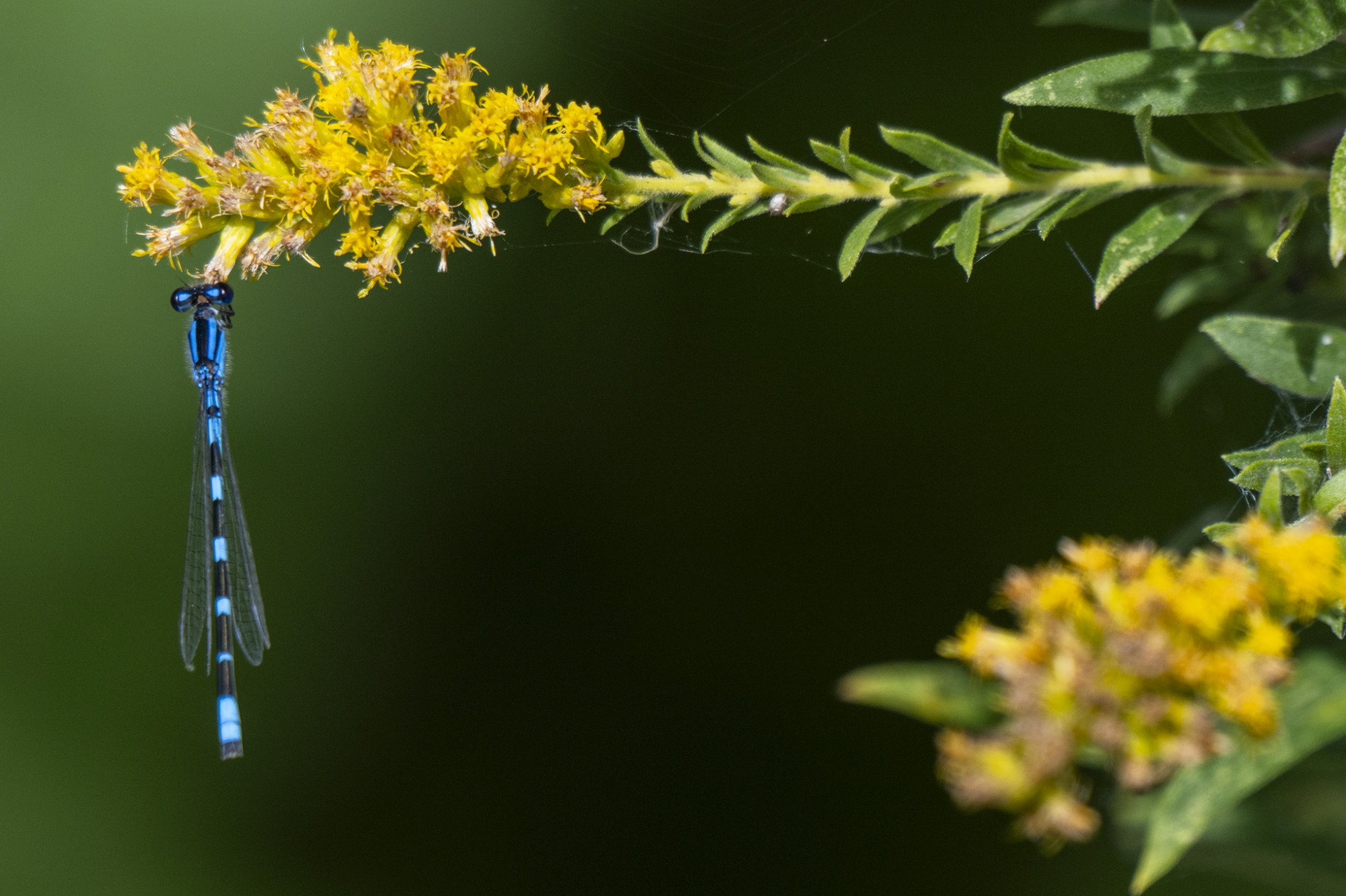
A blue damselfly hangs from a goldenrod stalk during a ‘Dragonfly and Damselfly Walk’ led by Jessie Seiders, a board member of the Wisconsin Dragonfly Society. Photo: Taylor Wolfram / UW–Madison
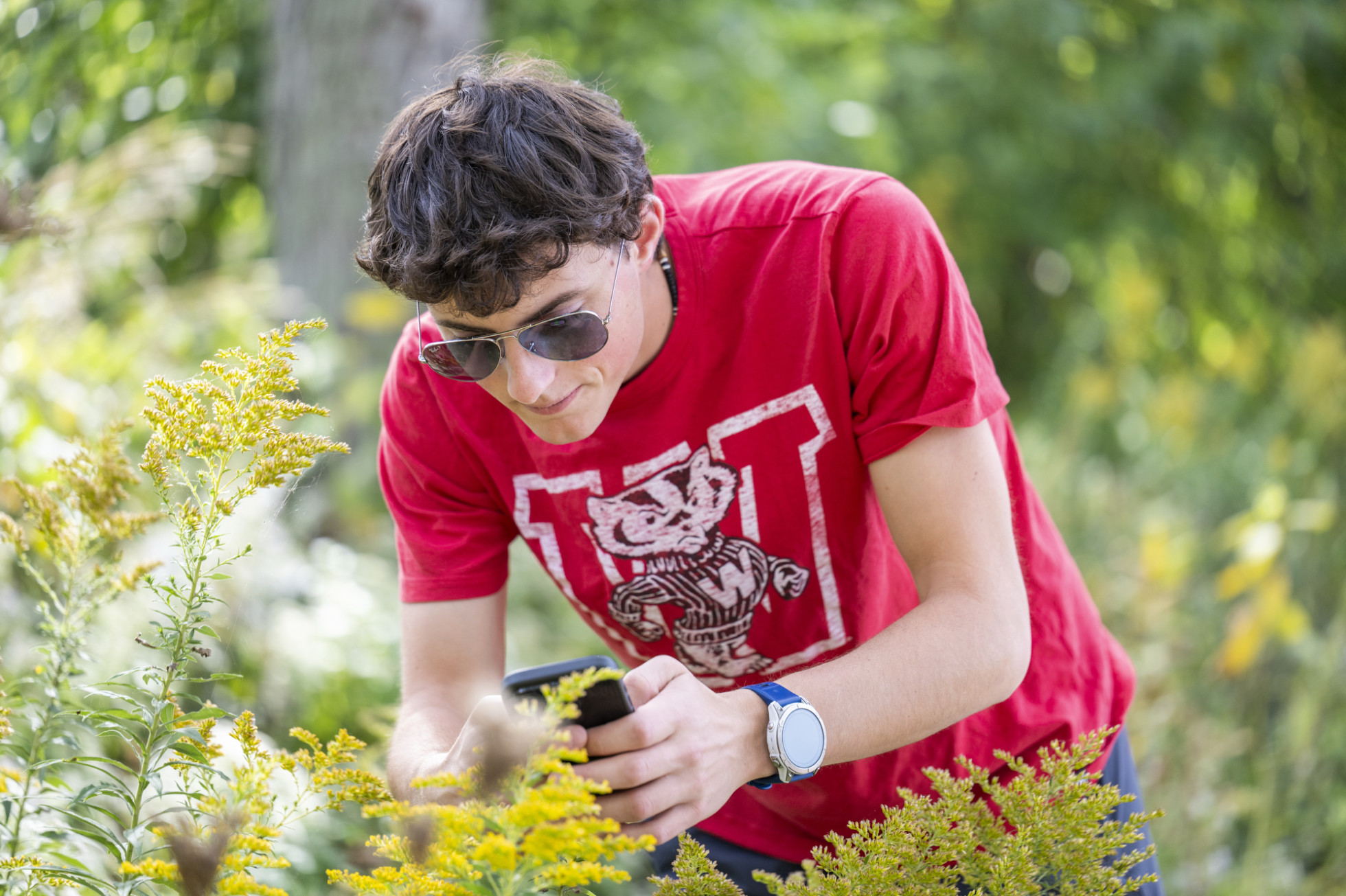
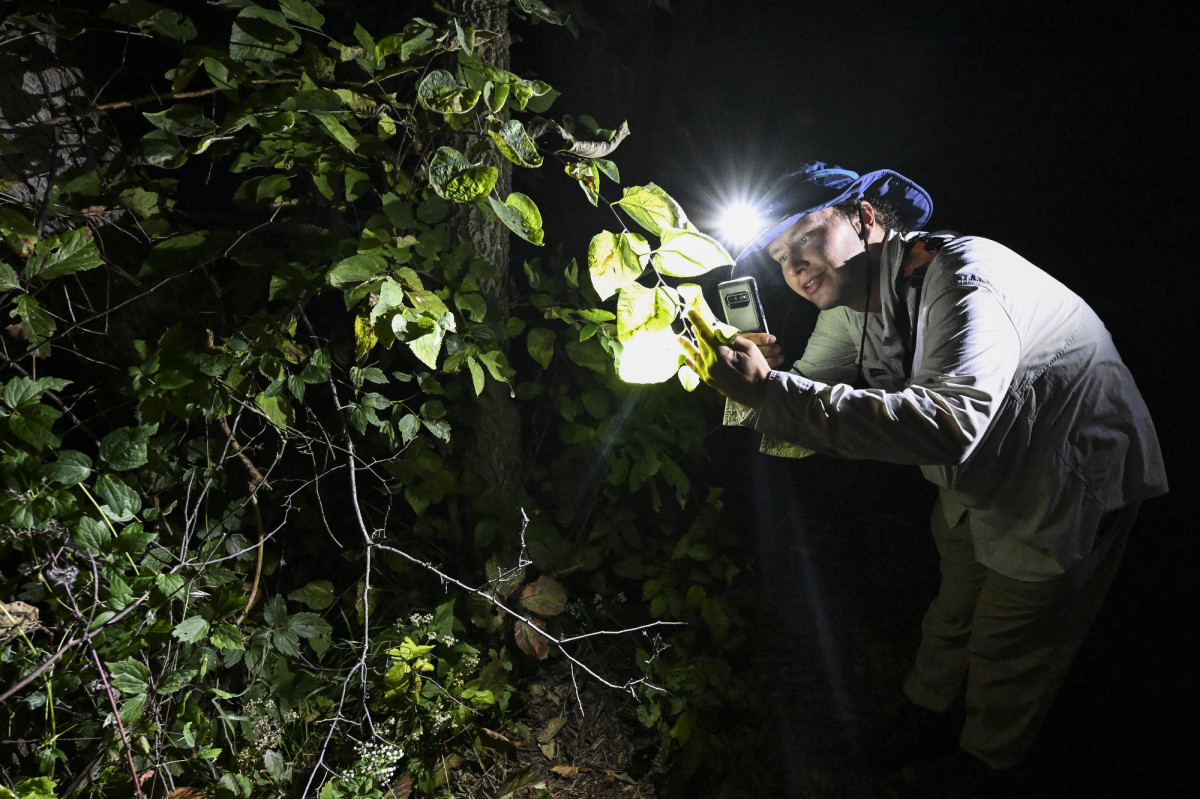
Second-year undergraduate student Jason Lin, who’s studying economics, documents an inchworm in the iNaturalist app. Photo: Taylor Wolfram / UW–Madison
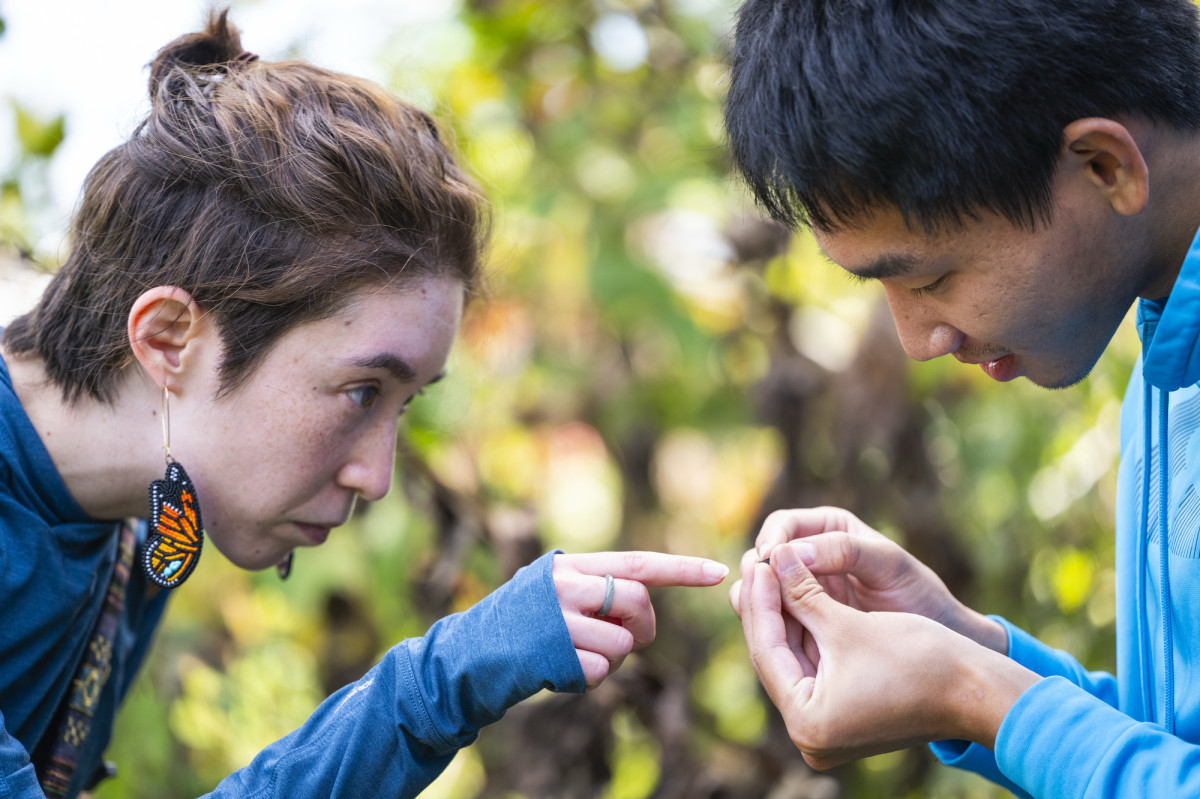
Undergraduate biology student Brian Yao (right) works with Sean Radcliffe (left), a Wisconsin Master Naturalist, to identify a larva found on a nearby plant during the insect-observing activity ‘InvisiBugs on Plants: Galls, Leafminers, and More.’ Photo: Taylor Wolfram / UW–Madison
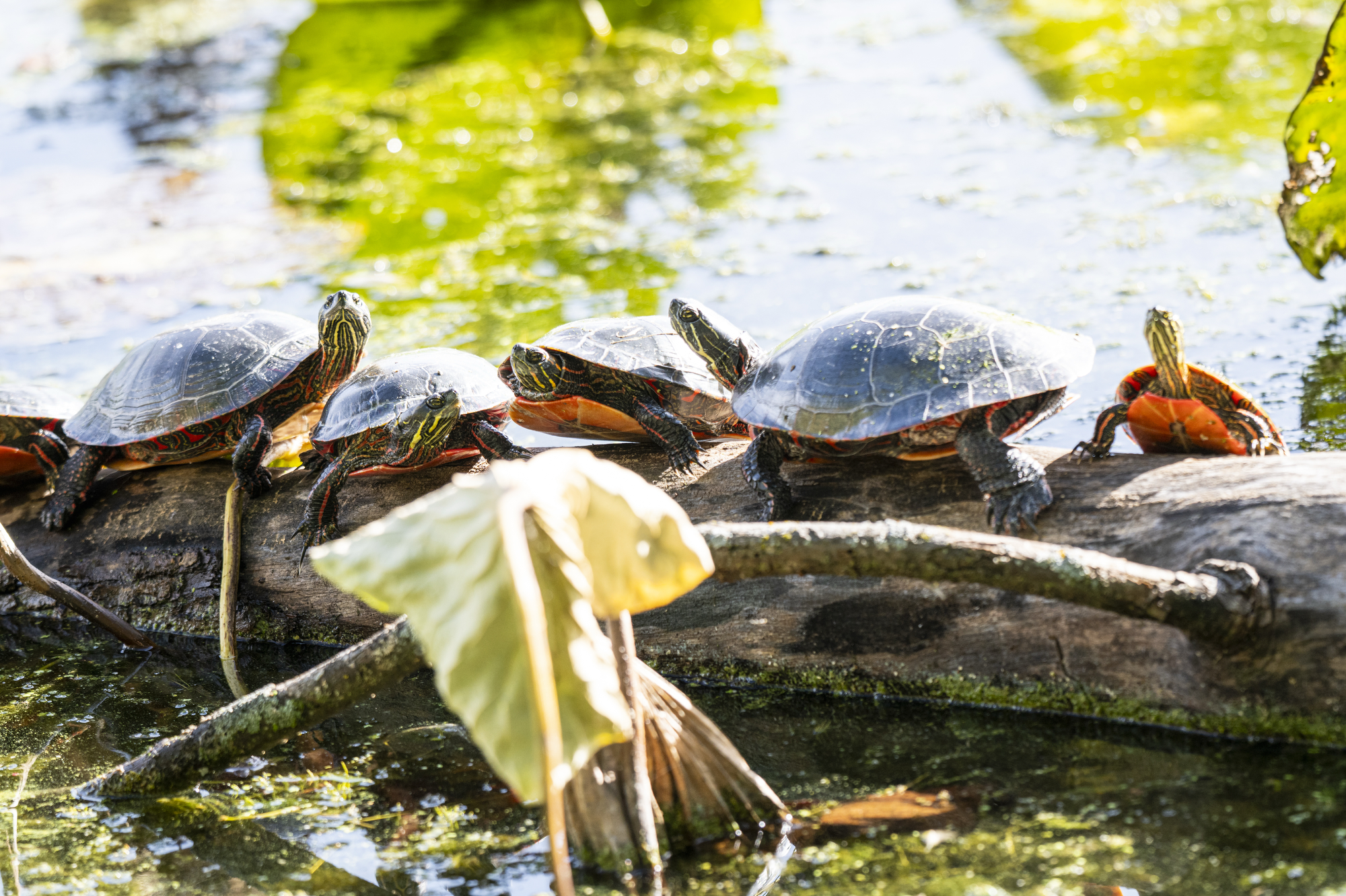
Painted turtles bask in the sun on a log in Lake Mendota, oblivious to, or perhaps showing off for, Bioblitz observers. Photo: Taylor Wolfram / UW–Madison
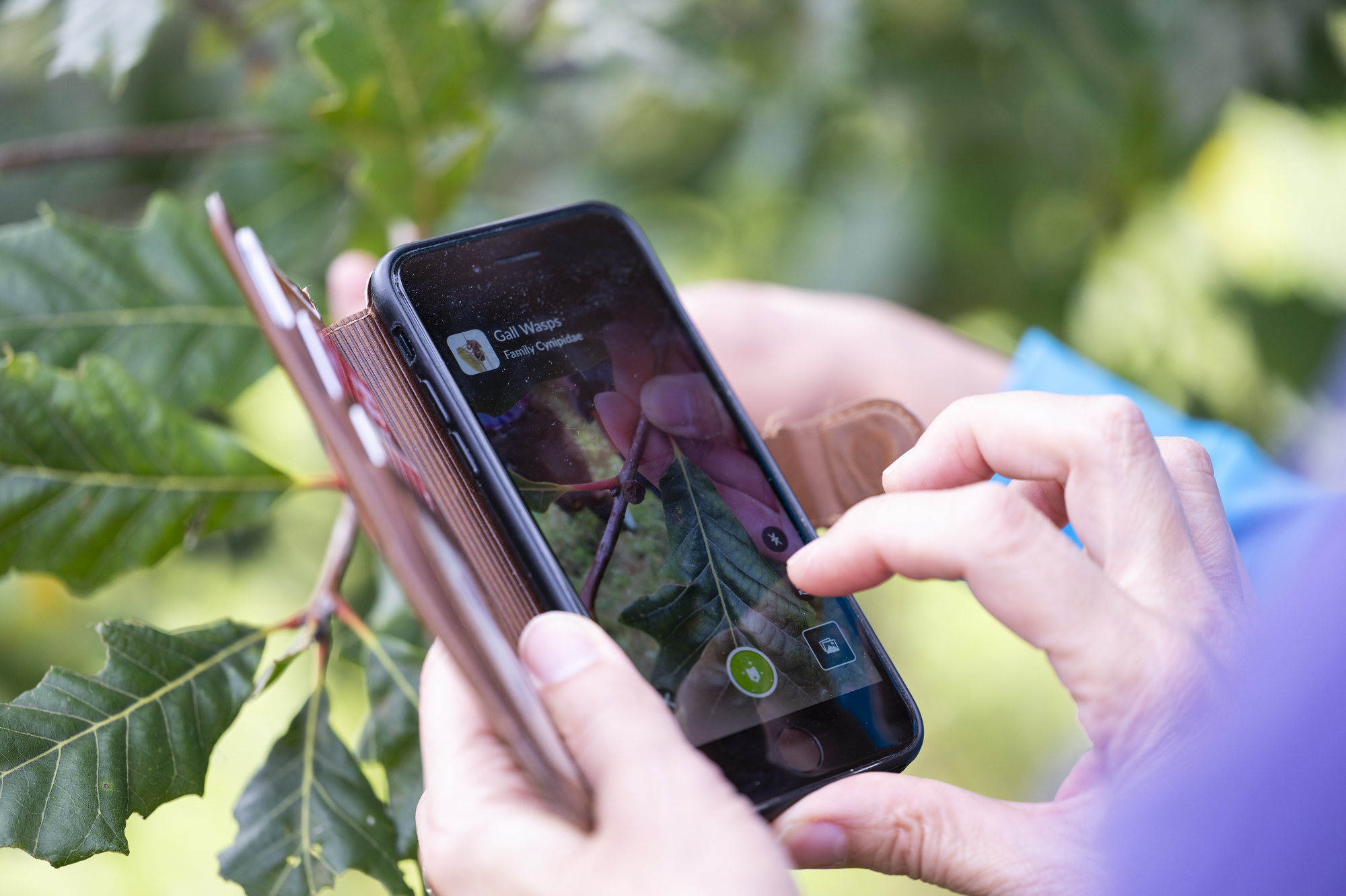
Yao uses iNaturalist to record a gall wasp resting on an oak tree. The app helps record and categories the species observed throughout the day. Photo: Taylor Wolfram / UW–Madison
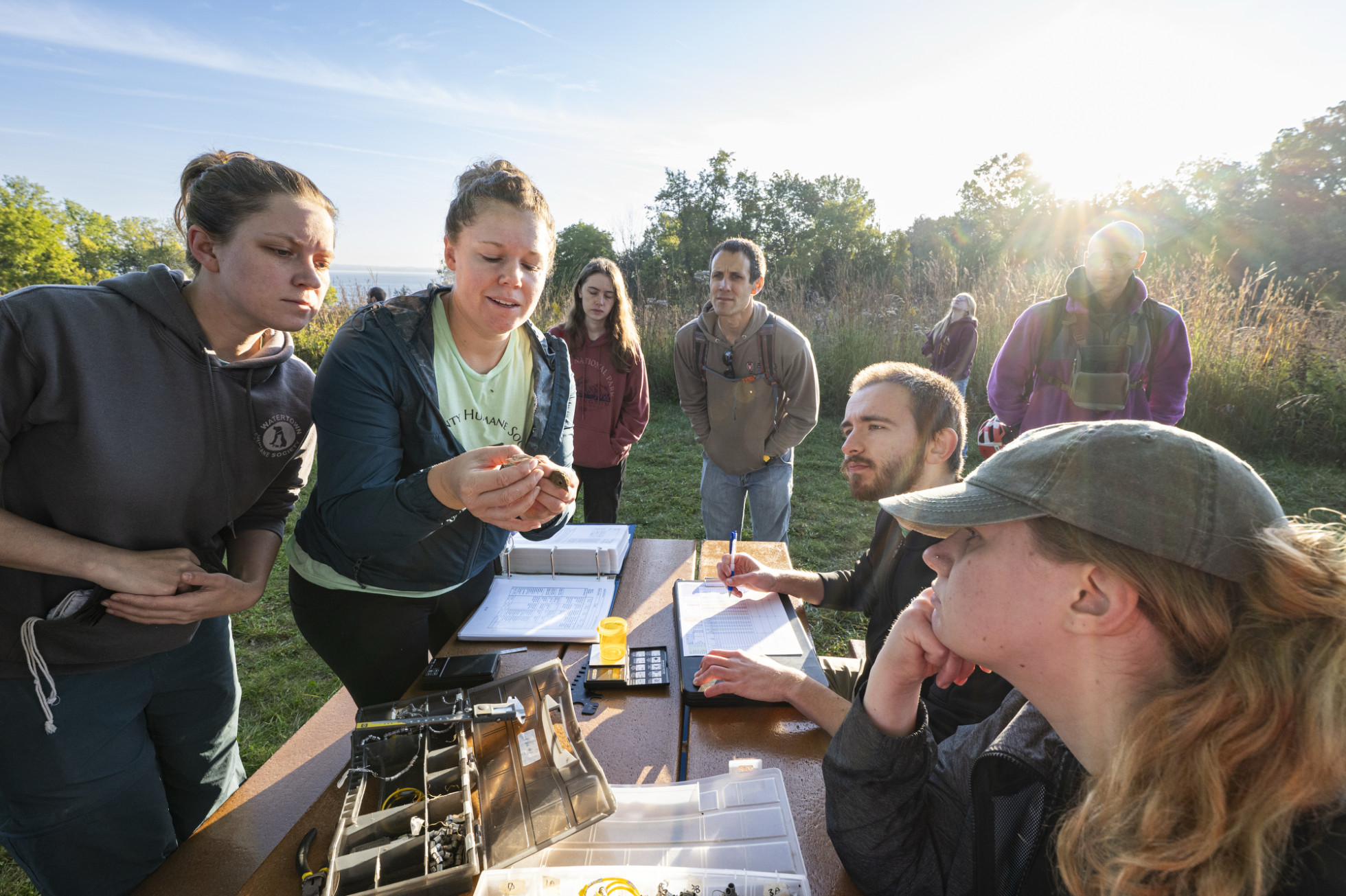
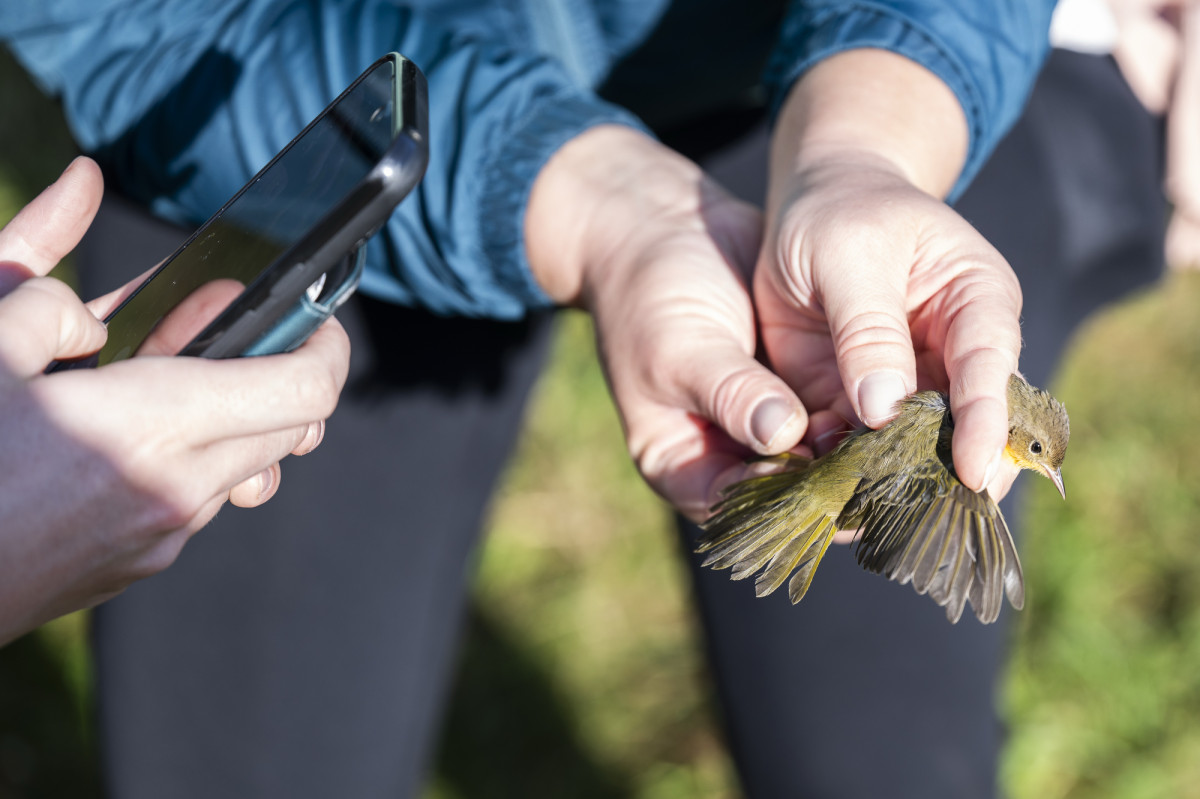
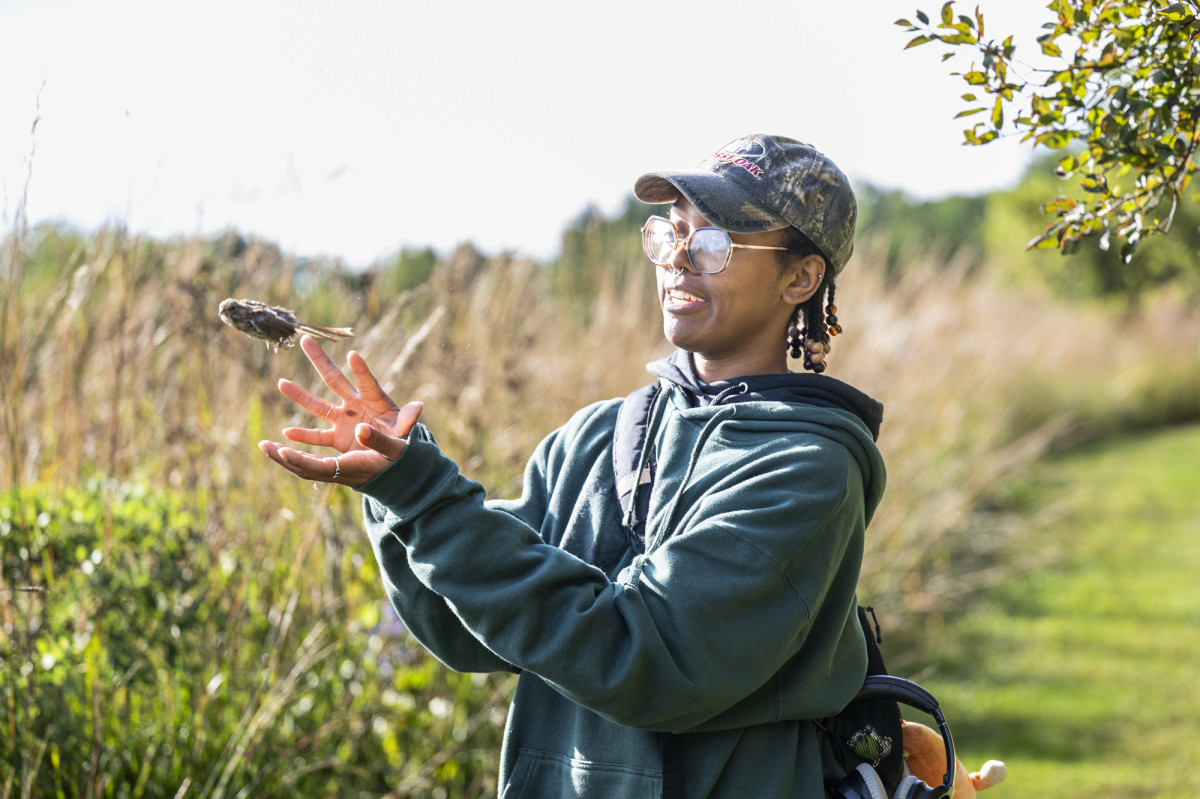
Jackie Edmunds (center), wildlife program manager at Dane County Humane Society and a two-time UW–Madison alum, shows characteristics of a bird’s wings to volunteers during a bird banding activity. Data from banded birds are submitted to and managed by the North American Bird Banding Program. Photo: Taylor Wolfram / UW–MadisonEach bird is caught in a mist net, carefully removed and measured for weight, age, sex and other traits before it is banded and released. Bird banding volunteer Brittany Stern (above left) blows on a gray catbird’s breast feathers to assess its fat reserves, while wildlife ecology undergrad Briunna Smith, who was on hand to support the banding, releases a bird.
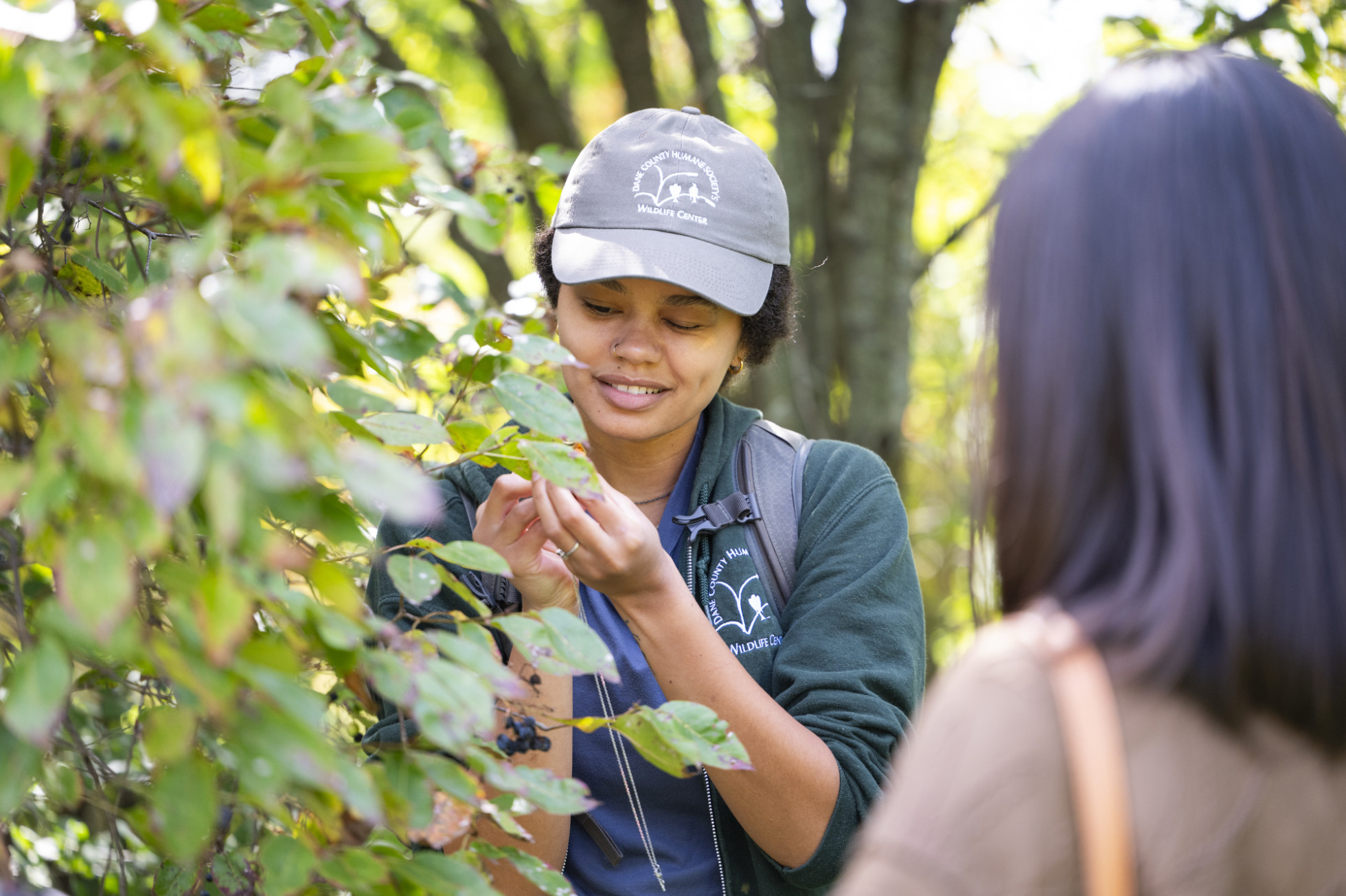
First-year graduate student Makeela Magomolla examines a tree for powdery mildew during ‘InvisiBugs on Plants: Galls, Leafminers, and More.’ Photo: Taylor Wolfram / UW–Madison
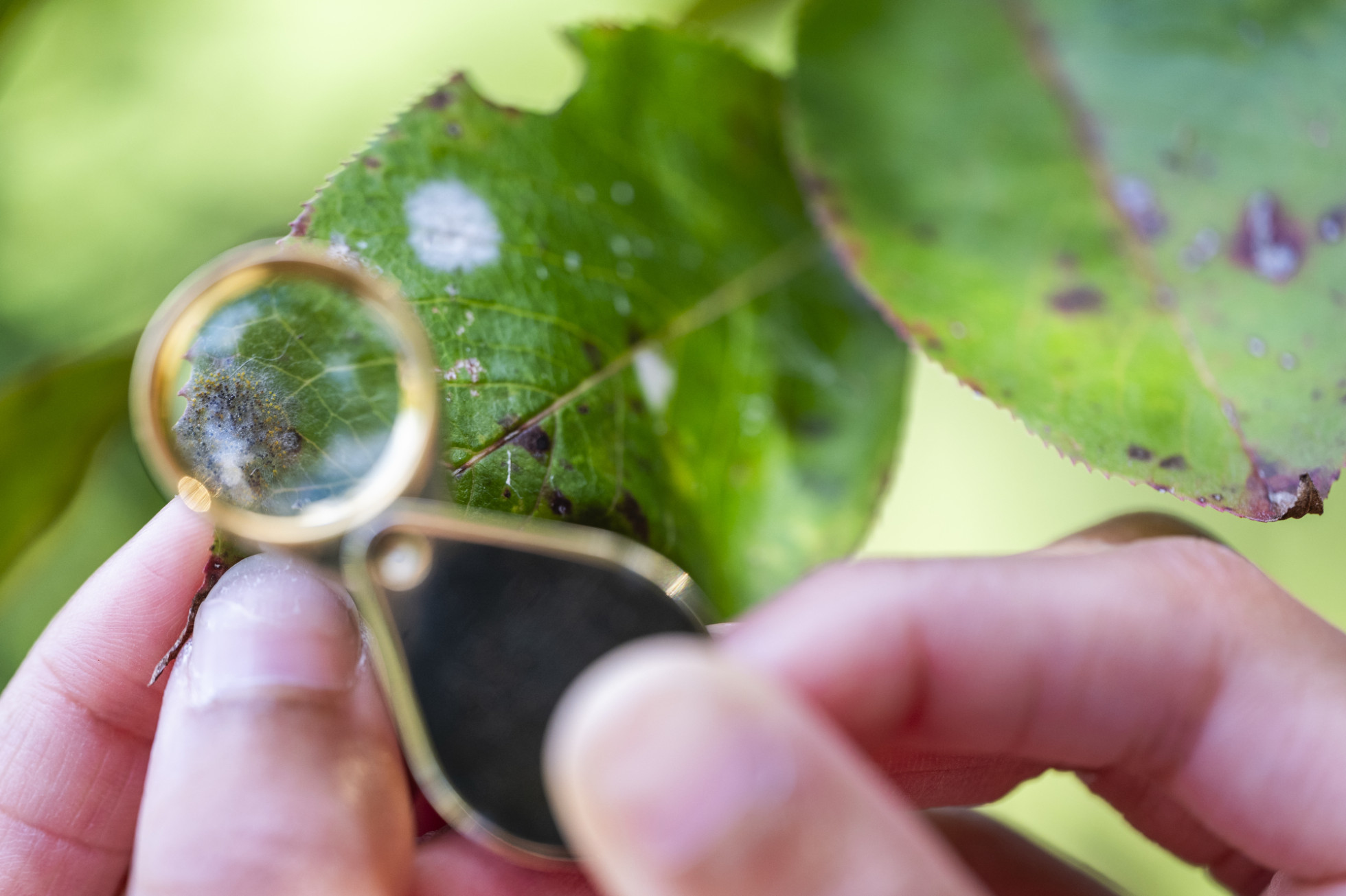
Powdery mildew, as seen on a leaf in the nature preserve, is characterized by white or gray spots. Photo: Taylor Wolfram / UW–Madison
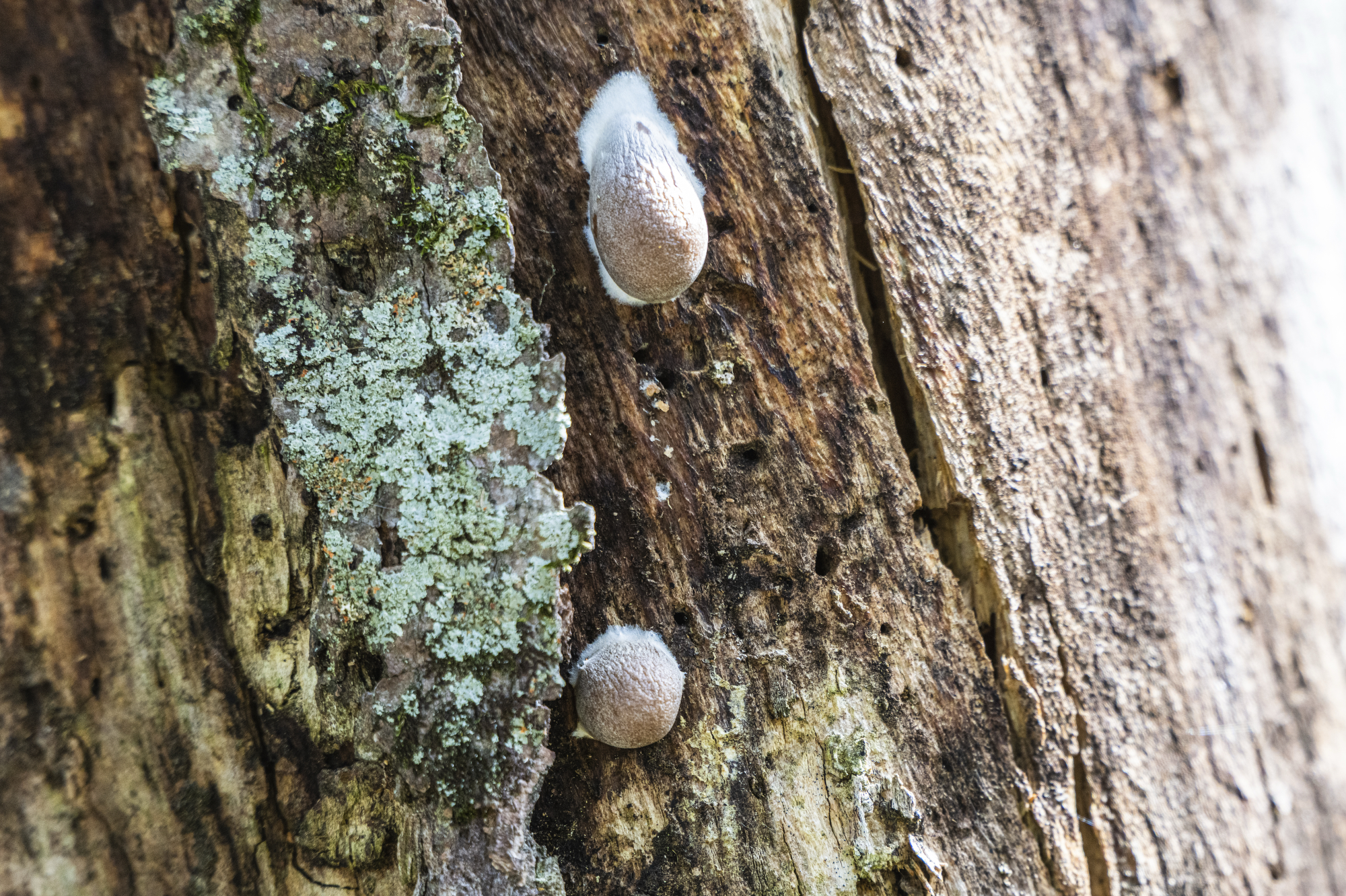
Contrary to its name, slime mold (pictured above on a tree trunk) is neither slimy nor a mold. It’s a hidden gem of the Lakeshore Nature Preserve, as slime mold can quickly evolve to make unique patterns. Photo: Taylor Wolfram / UW–Madison
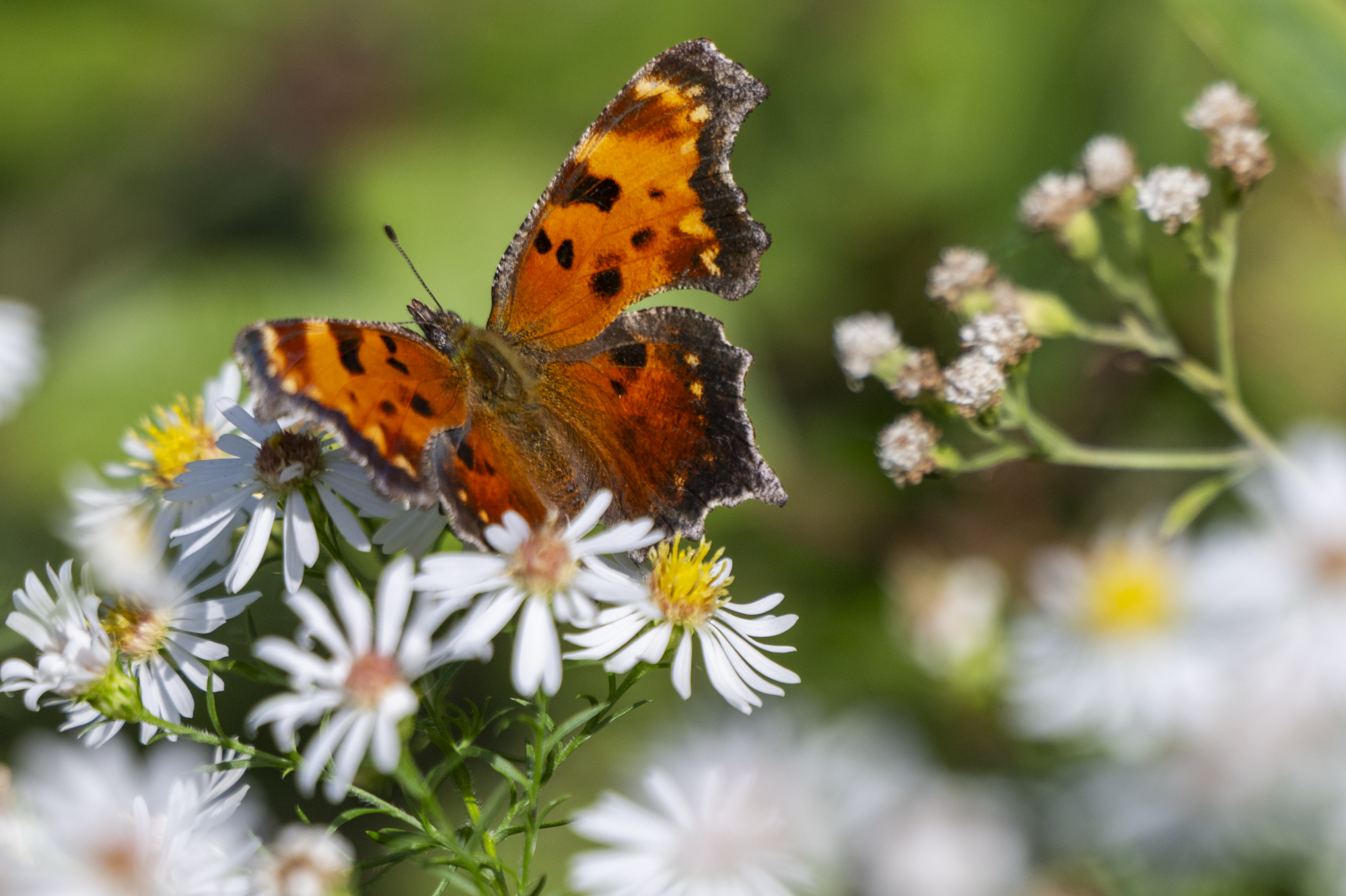
A polygonia comma (the Eastern Comma Butterfly) sits on an aster, one of the many herbaceous plants that breathe seasonal color into the preserve. Photo: Taylor Wolfram / UW–Madison
When the sun sets, some insects rest. Others spring to life and create a unique opportunity for tracking nocturnal life in the preserve. Photo: Taylor Wolfram / UW–Madison
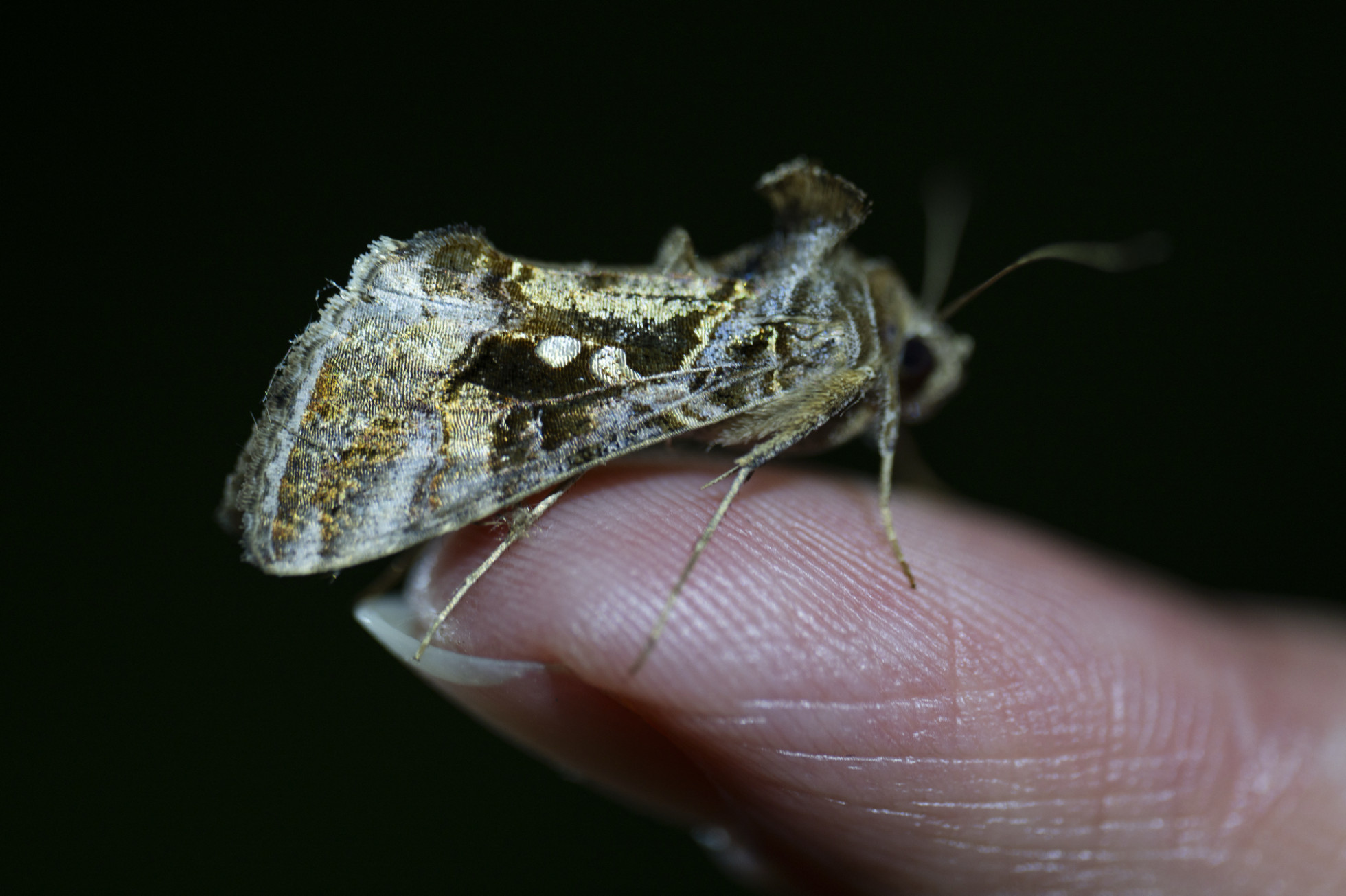
The ‘Nocturnal Insects’ demonstration brought out winged creatures like the soybean looper moth, whose presence in Wisconsin usually peaks in September. Photo: Taylor Wolfram / UW–Madison
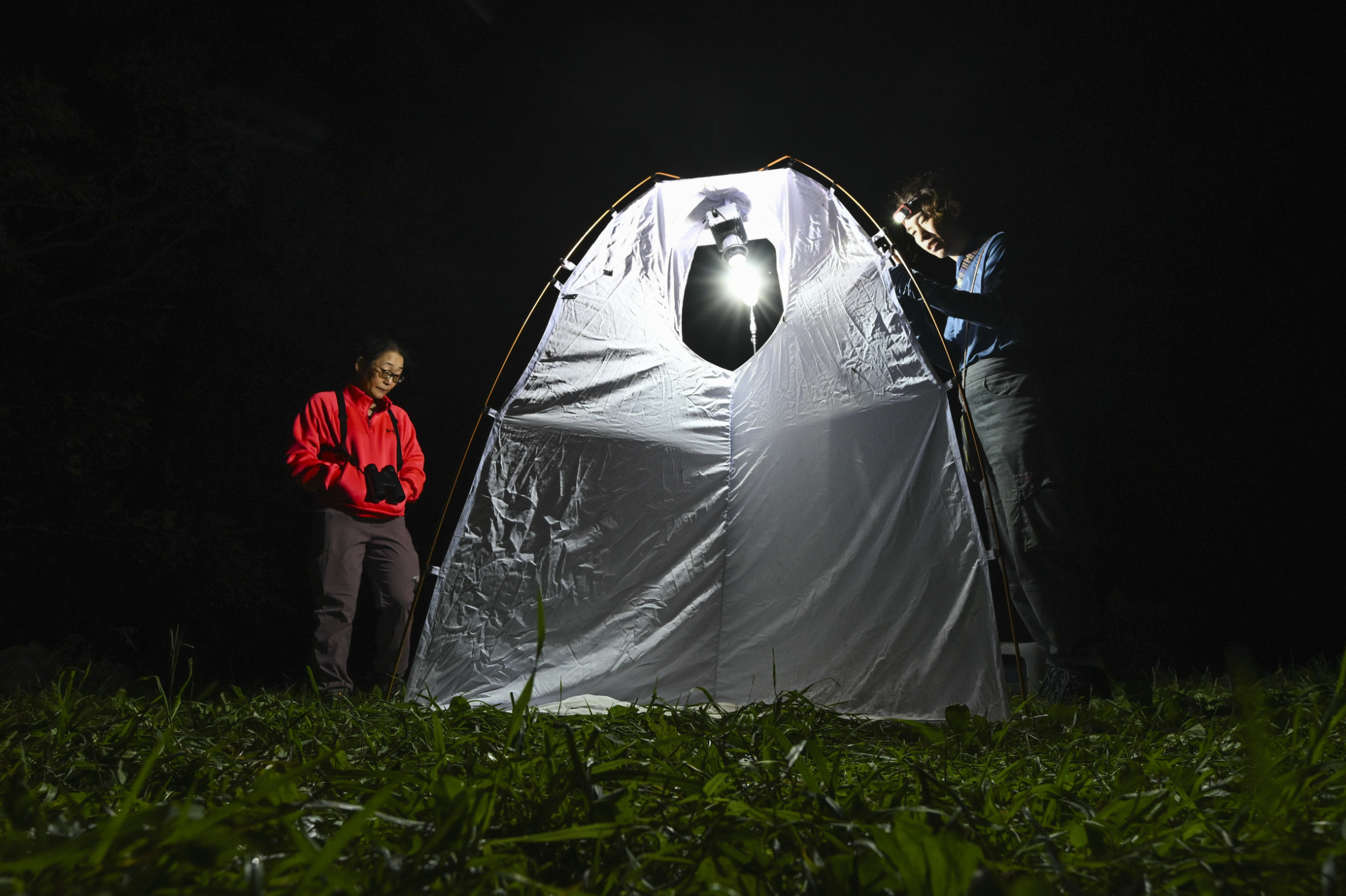
Madison community member Kana Rolle (left), who was encouraged to return to this year’s Bioblitz after recording the most species on iNaturalist last year, joins Radcliffe (right) for a look at nocturnal insects attracted to a lit-up tent. Photo: Taylor Wolfram / UW–Madison