UW–Madison graduate programs ranked among the nation’s best by U.S. News
Nearly 20 programs ranked in their respective Top 10 lists, shining a light on the breadth and depth of the university’s graduate offerings.
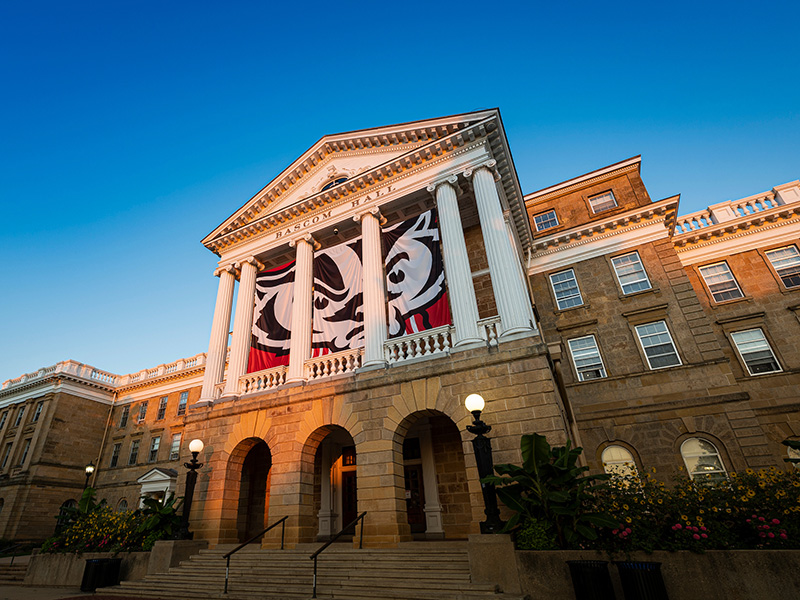
University of Wisconsin–Madison graduate programs are once again highly ranked among the nation’s best in the 2026 edition of U.S. News & World Report’s “Best Graduate Schools.”
Highlights include high marks in several specific rankings — with nearly 20 ranking in their respective Top 10 lists — shining a light on the breadth and depth of the university’s overall graduate offerings.
“We have top-ranked graduate programs across the breadth of our campus, reflecting our research excellence and the world-class education we offer,” says John Zumbrunnen, provost and executive vice chancellor for academic affairs. “Students come to our outstanding programs from across the nation and around the world, and they leave those programs prepared for success and leadership in a wide range of fields.”
UW–Madison’s 2026 Top 10 Best Graduate Schools Rankings by U.S. News and World Report
1st
Education
Educational psychology (two-way tie)
Rehabilitation counseling
Speech-language pathology (two-way tie)
Tier 1
Primary care medicine
2nd
Elementary teacher education
3rd
Curriculum and instruction
Nuclear engineering (two-way tie)
Real estate (three-way tie)
Secondary teacher education
6th
Clinical psychology (three-way tie)
Educational administration and supervision
Education policy (two-way tie)
Industrial/manufacturing/systems engineering (three-way tie)
Pharmacy (two-way tie)
Veterinary medicine (three-way tie)
7th
Special education
9th
Chemical engineering (three-way tie)
Student counseling and personnel services (two-way tie)
The University of Wisconsin School of Medicine and Public Health, for instance, ranked as a Tier 1 medical school for primary care, placing it among the top 16 in the nation.
“This is the first time our medical school has been recognized as Tier 1 for primary care, reflecting our commitment to addressing critical physician workforce shortages,” says Nita Ahuja, dean of the School of Medicine and Public Health and vice chancellor for medical affairs at UW–Madison. “Out of Wisconsin’s 72 counties, about half contain federally-designated primary care shortage areas. We must close that gap to meet our vision of healthy people and healthy communities.”
For a third year in a row, the School of Education ranked No. 1 in the nation. School of Education programs also ranked highly, including first in educational psychology, first in rehabilitation counseling, second in elementary teacher education, third in curriculum and instruction, and third in secondary teacher education.
“It’s exciting to see our academic excellence highlighted across education, health fields, and the arts,” says School of Education Dean Marcelle Haddix. “Although the U.S. News rankings are but one measure of our School, they reinforce our commitment to leading nationally on pressing issues. From our ongoing efforts to address Wisconsin’s teacher workforce challenges to impactful research, meaningful engagement on topics like literacy, AI and the future of education, and student mental health — we remain dedicated to shaping a better future for all.”
The School of Education’s high marks, like with all the programs on this list, is a testament to the hard work of faculty and staff and to the caliber of its graduate students.
“Highly ranked graduate programs shine a spotlight on the dedication and expertise of the university’s faculty and staff,” says William J. Karpus, Dean of UW–Madison’s Graduate School and Vice Provost for Postdoctoral Affairs. “Preparing students for success is a shared endeavor, and I’m immensely proud of the community that makes it possible.”
Chancellor Jennifer Mnookin notes that the success of the university’s graduate programs not only affects students at UW–Madison but leaves a high-water mark far beyond the borders of the university.
“This year’s rankings reinforce UW–Madison’s international reputation for offering strong, high-quality educational opportunities,” Mnookin says. “Even more impressive is the wide variety of highly ranked graduate programs represented in the rankings, from education to veterinary medicine, demonstrating that Badgers across disciplines are committed to advancing the public good.”
UW–Madison graduate programs ranked in 2026
U.S. News and World Report does not rank all programs each year. View the most recent UW–Madison graduate program rankings for each department.
Audiology
12th
overall
three-way tie
Biological Sciences
30th
overall
five-way tie
Biostatistics
11th
overall
two-way tie
Business
48th
overall for full-time MBA
three-way tie
Full-time MBA: 48th (three-way tie)
Part-time MBA: 26th (four-way tie)
Executive MBA: 29th (three-way tie)
Real estate: 3rd (three-way tie)
Ranked specialties:
Accounting: 16th (10-way tie)
Marketing: 22nd (three-way tie)
Productions operations: 23rd (four-way tie)
Business analytics: 25th (seven-way tie)
Finance: 28th (three-way tie)
Management: 30th (eight-way tie)
Entrepreneurship: 33rd (five-way tie)
Supply chain management: 33rd (four-way tie)
Chemistry
14th
overall
three-way tie
Clinical Psychology
6th
overall
three-way tie
Computer Science
15th
overall
four-way tie
Ranked specialties:
Programming language: 11th
Systems: 12th
Earth Sciences
18th
overall
two-way tie
Education
1st
overall
Educational psychology: 1st (two-way tie)
Elementary teacher education: 2nd
Curriculum and instruction: 3rd
Secondary teacher education: 3rd
Educational administration and supervision: 6th
Education policy: 6th (two-way tie)
Special education: 7th
Student counseling and personnel services: 9th (two-way tie)
Higher education administration: 12th
Engineering
27th
overall
Ranked specialties:
Nuclear engineering: 3rd (two-way tie)
Industrial/manufacturing/systems engineering: 6th (three-way tie)
Chemical engineering: 9th (three-way tie)
Biological/agricultural engineering: 12th
Computer engineering: 13th (three-way tie)
Materials engineering: 14th (four-way tie)
Electrical/electronic/communications engineering: 15th (seven-way tie)
Mechanical engineering: 16th (four-way tie)
Civil engineering: 17th (seven-way tie)
Environmental/environmental health engineering: 17th (five-way tie)
Biomedical/bioengineering engineering: 18th (seven-way tie)
Fine Arts
14th
overall
five-way tie
Law
26th
overall
four-way tie
Ranked specialties:
Clinical training: 24th (five-way tie)
Constitutional law: 24th (two-way tie)
Law schools with most grads in public interest law: 33rd (four-way tie)
International law: 34th (five-way tie)
Criminal law: 35th (10-way tie)
Tax law: 37th (seven-way tie)
Contracts/commercial law: 42nd (nine-way tie)
Business/corporate law: 47th (eight-way tie)
Intellectual property: 47th (14-way tie)
Legal writing: 48th (nine-way tie)
Environmental law: 51st (eight-way tie)
Health care law: 55th (nine-way tie)
Trial advocacy: 105th (16-way tie)
Mathematics
16th
overall
five-way tie
Medicine
Tier 1
overall primary care
Tier 2
overall research
Ranked specialties:
Most graduates practicing in rural areas: 18th
Most graduates practicing in primary care: 48th
Most graduates practicing in medically underserved areas: 63rd
Nursing
74th
overall
among schools offering a Doctor of Nursing practice
Ranked specialty:
Adult gerontology (acute care): 20th (five-way tie)
Occupational Therapy
15th
overall
five-way tie
Pharmacy
6th
overall
two-way tie
Physical Therapy
25th
overall
six-way tie
Physics
22nd
overall
six-way tie
Public Affairs
25th
overall
six-way tie
Ranked specialties:
Social policy: 6th (four-way tie)
Health policy: 9th (two-way tie)
Public policy analysis: 23rd (three-way tie)
Public Health
39th
overall
10-way tie
Rehabilitation Counseling
1st
overall
Speech-Language Pathology
1st
overall
two-way tie
Statistics
12th
overall
four-way tie
Veterinary Medicine
6th
overall
three-way tie