Practicing what we preach on viewpoint diversity
At the Pluralism in Practice Workshop, participants learned from leading experts and modeled ways to promote civil dialogue on campus.
There were opinions laid out, viewpoints explained and definitely a few minds opened. But at the University of Wisconsin–Madison’s Pluralism in Practice Workshop, one of the most impressive scenes was a group of strangers quickly learning and deploying a technique for discussing a controversial topic in a productive, nonconfrontational manner.
The process, known as “Structured Academic Controversy,” encourages participants to model various points of view rather than try to win a debate with preexisting opinions. It was on display as part of a March 23 campus workshop designed to foster a culture where diverse opinions and open conversations are welcomed. Close to 125 students, faculty, staff and other community members attended the four-hour event at Union South hosted by the Wisconsin Exchange, a campuswide initiative launched last fall to enhance viewpoint diversity and promote civil dialogue.
“This is deeply important work, because democracy has always depended on our collective ability to wrestle with difference.”
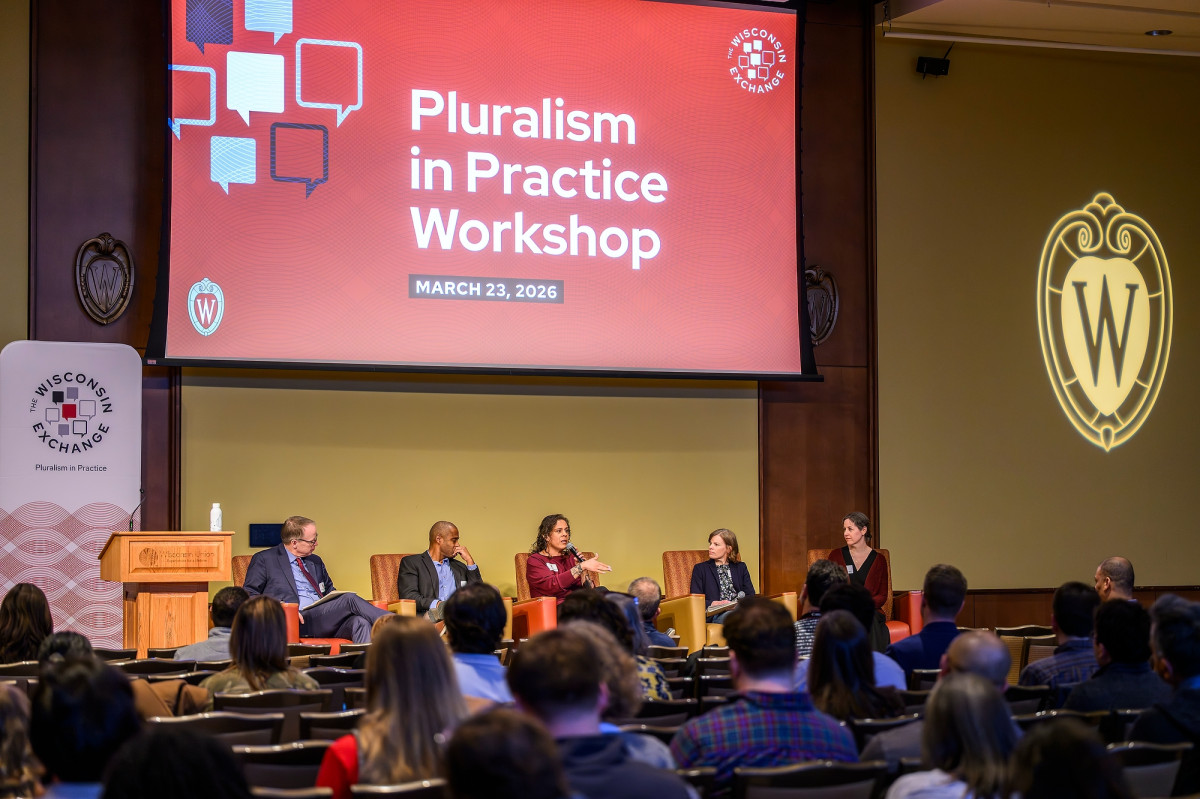
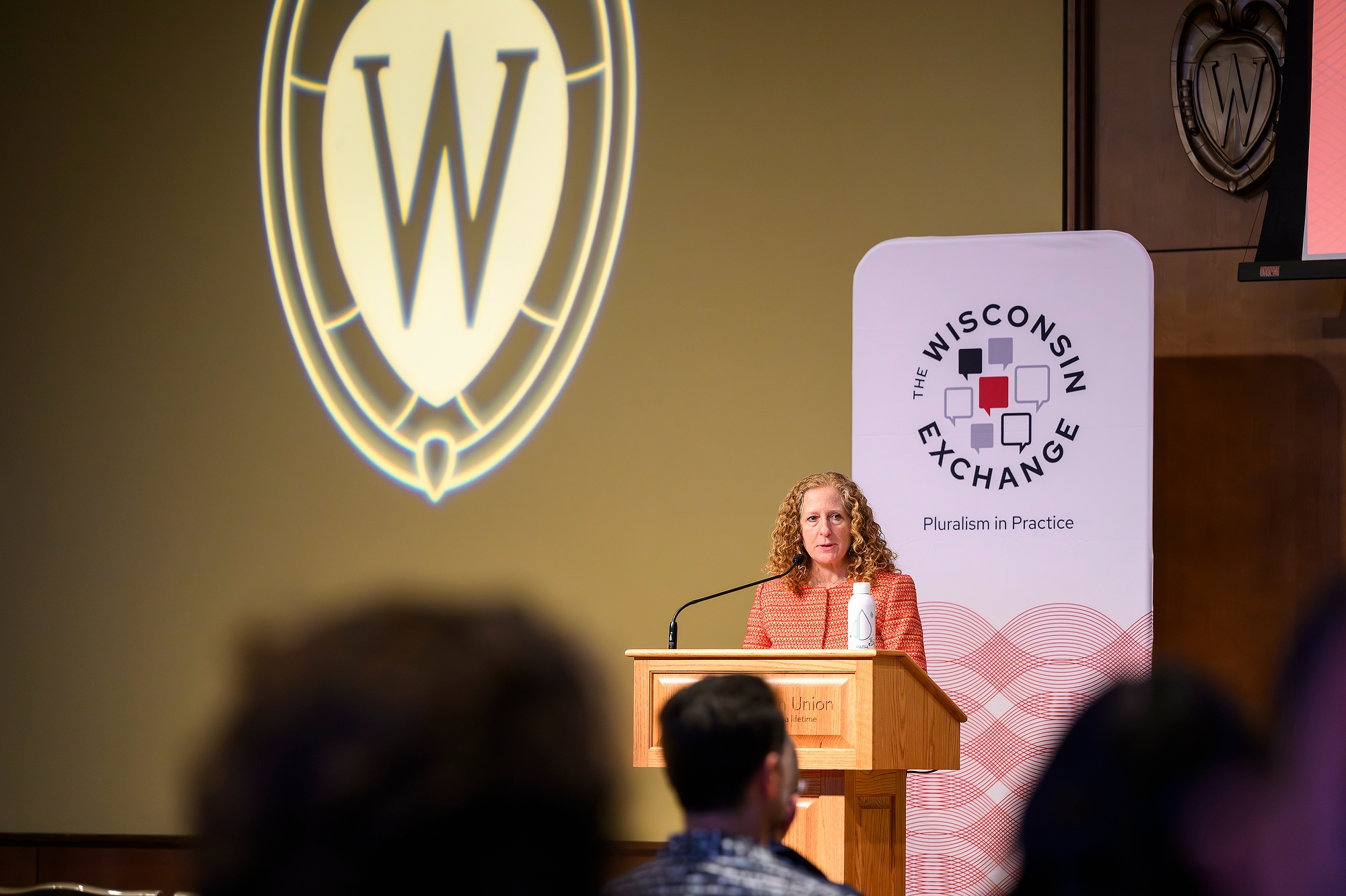
The Wisconsin Exchange was designed to create “more opportunities for students, faculty and staff to engage thoughtfully and constructively across differences,” explained UW–Madison Chancellor Jennifer Mnookin in her opening remarks for the afternoon’s activities, which would be capped off by a special talk with Colleen Shogan, who served as the 11th archivist of the United States.
“This is deeply important work, because democracy has always depended on our collective ability to wrestle with difference,” Mnookin said.
The program kicked off with a panel discussion by four members of the Wisconsin Exchange steering committee, who shared their own thoughts on what pluralism means, why it matters and what role higher education can play to cultivate it. Percival Matthews of the School of Education described pluralism as a sort of “connective tissue” across different perspectives.
“I’m hearing ‘pluralism’ as a flourishing of different points of view, and also a way of engaging those different points of view,” said moderator and Provost John Zumbrunnen, summing up the comments made by Matthews and fellow panelists Amber Wichowsky of the La Follette School of Public Affairs, Cecelia Klingele of UW Law School and Fernie Rodriguez of Student Affairs.
‘Learn to discuss’
The panel discussion was followed by breakout sessions. One examined constitutional perspectives on presidential power. Another contemplated our society of “monocultures” — social circles defined by relatively homogenous perspectives.
Facilitator Barry Burden, a political science professor and member of the Wisconsin Exchange steering committee, offered advice on how to break out of monocultures and challenge one’s own assumptions in an increasingly polarized world. One participant shared his experience teaching ROTC students during his time in the military and the techniques he used to encourage them to consider different perspectives — an important instinct for their future service.
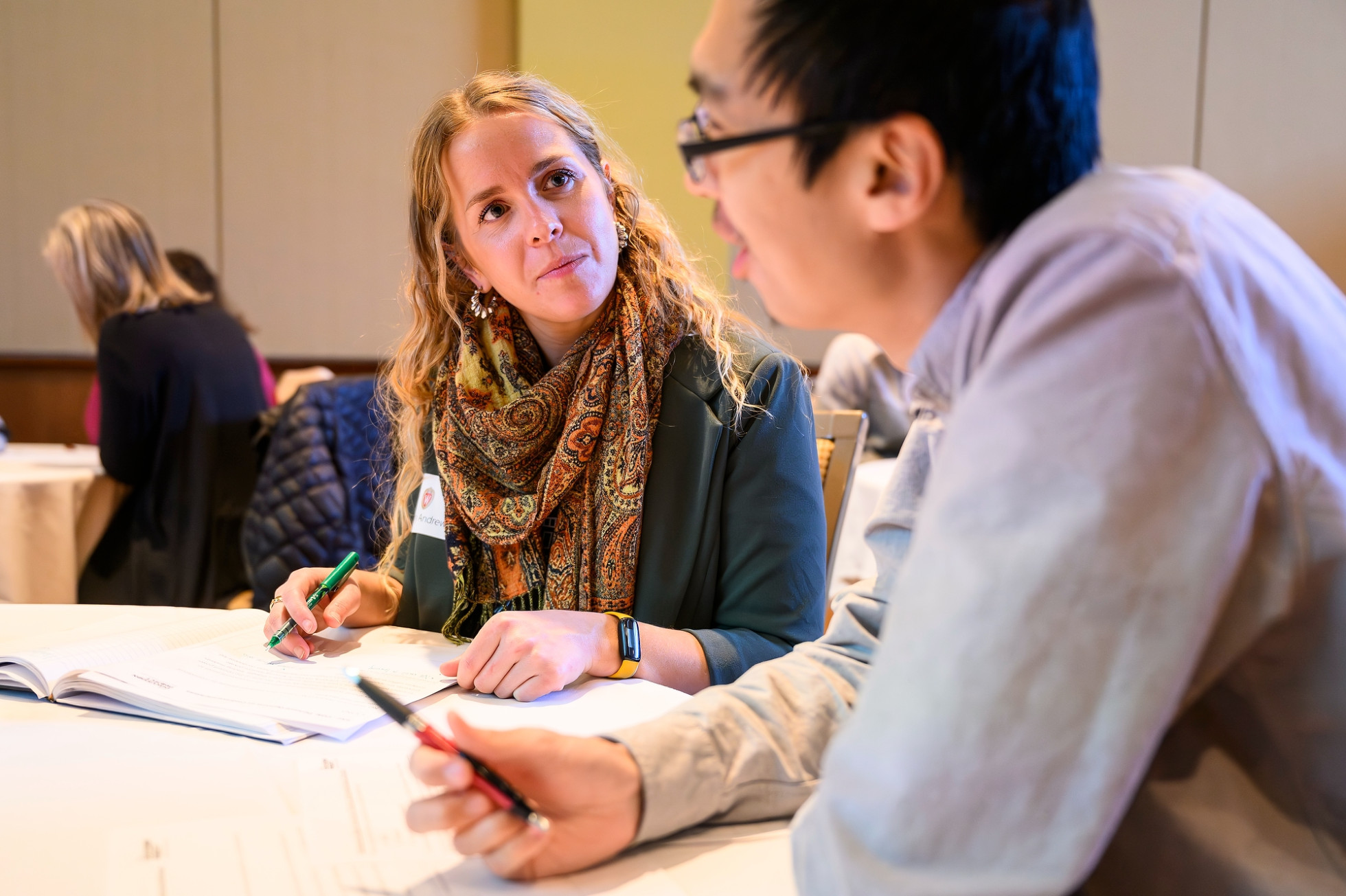
A third breakout session was a hands-on workshop from the Discussion Project, a professional development program from the School of Education. Participants practiced the Structured Academic Controversy process and high-quality discussions that instructors and students can bring to the classroom.
Facilitators Lynn Glueck, program director for the Discussion Project, and Emma Cabrera, project manager for the student-centered Deliberation Dinners, shared the project’s tagline: “Learn to discuss / Discuss to learn.”
Seated four to a table, the session participants were split into pairs and then assigned a point of view — either pro or con — regarding a particular topic. The open question in this instance: “Should instructors disclose their political opinions?”
The pairs had short, timed periods to prepare their arguments. Then the “pro” side had two minutes to present its arguments, followed by a one-minute opportunity for the “con” side to re-tell the arguments the “pro” side had just shared. The process then flipped.
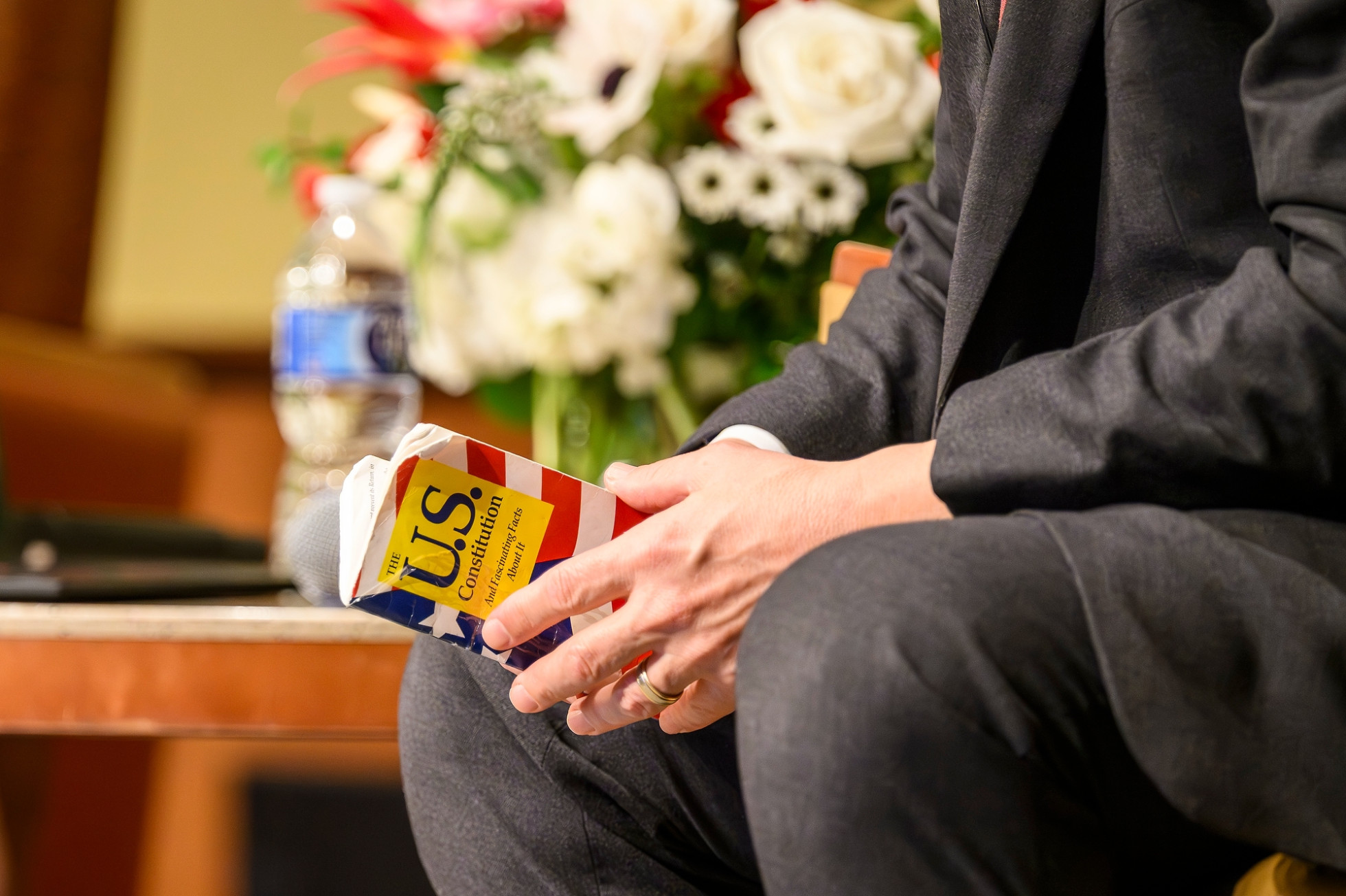
Dan Tokaji, dean of UW Law School, held his copy of the U.S. Constitution during a breakout session that examined constitutional perspectives on presidential power.
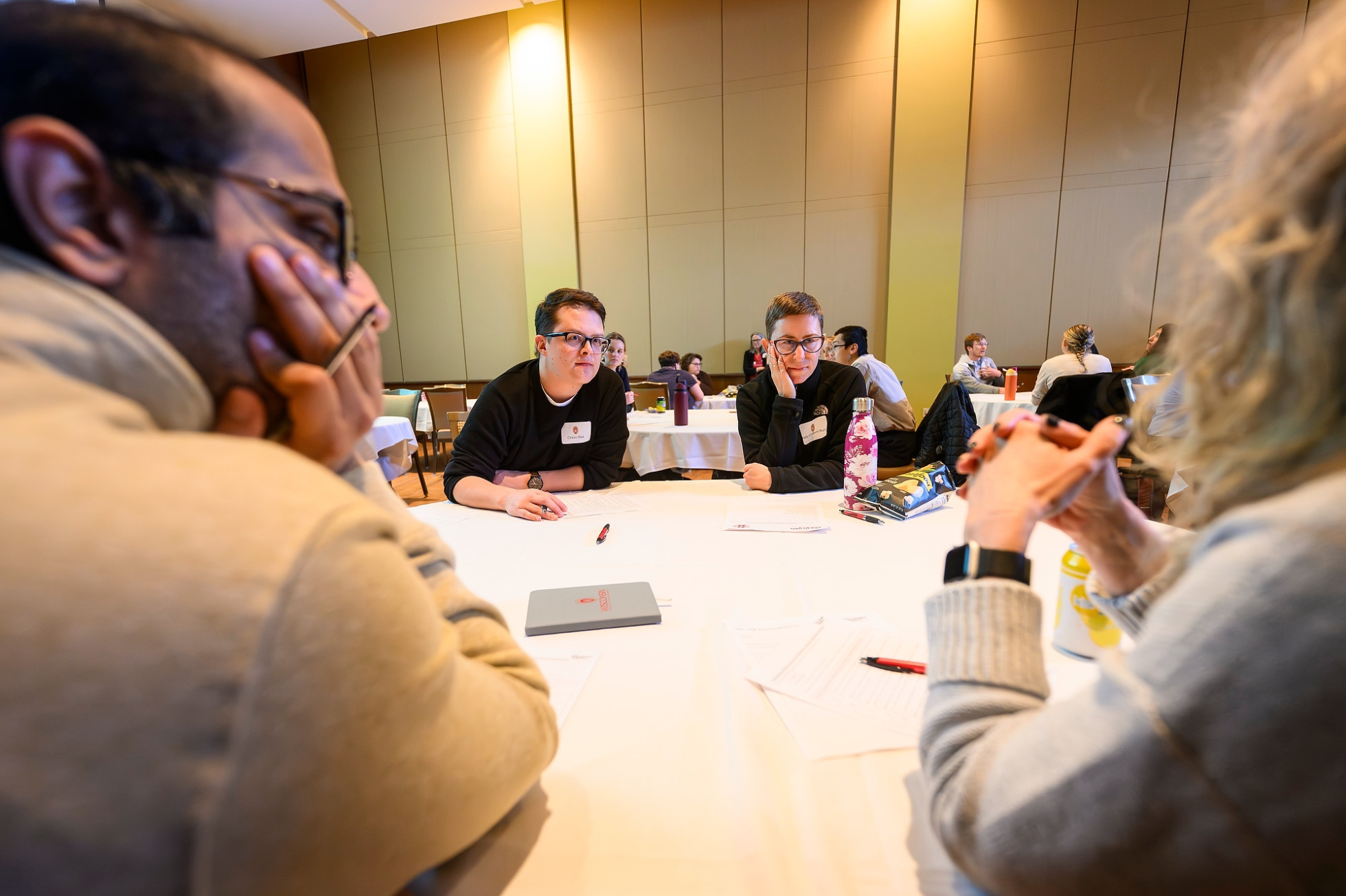
Participants practiced the Structured Academic Controversy process during the Discussion Project breakout session.
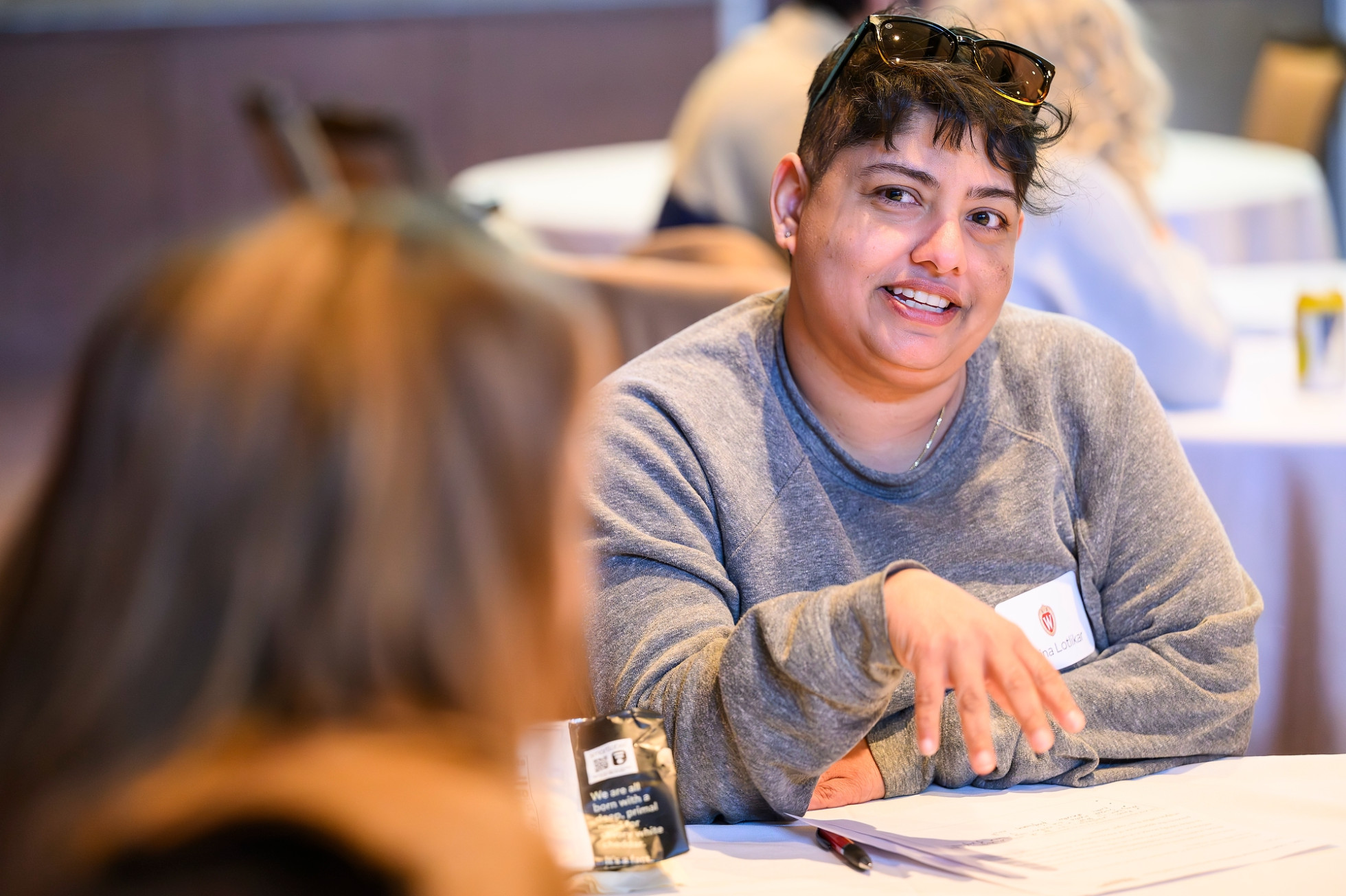
Sarina Lotlikar, communications manager for Student Affairs, worked through the Discussion Project’s question of the day: “Should instructors disclose their political opinions?”
“In our culture, we don’t like listening. We are always waiting for our rebuttal. I think listening is really key.”
A 10-minute open discussion followed, where the four participants at each table could voice their own feelings on the topic. Afterward, Glueck asked for feedback from the entire group.
“I was pretty strongly ‘pro’ at the beginning, and I wouldn’t say I changed my mind per se,” one participant said. “But I’m open to a lot more context. One of the arguments from the ‘con’ side was that students should do the heavy lifting” and explore a topic on their own to develop their own points of view. “While I’m still a ‘yes,’ I have a lot more perspectives on the ‘cons’ and why those might be applicable in certain situations.”
“What I like about these Structured Academic Controversies is listening,” said another participant. “In our culture, we don’t like listening. We are always waiting for our rebuttal. I think listening is really key.”
A talk with Colleen Shogan
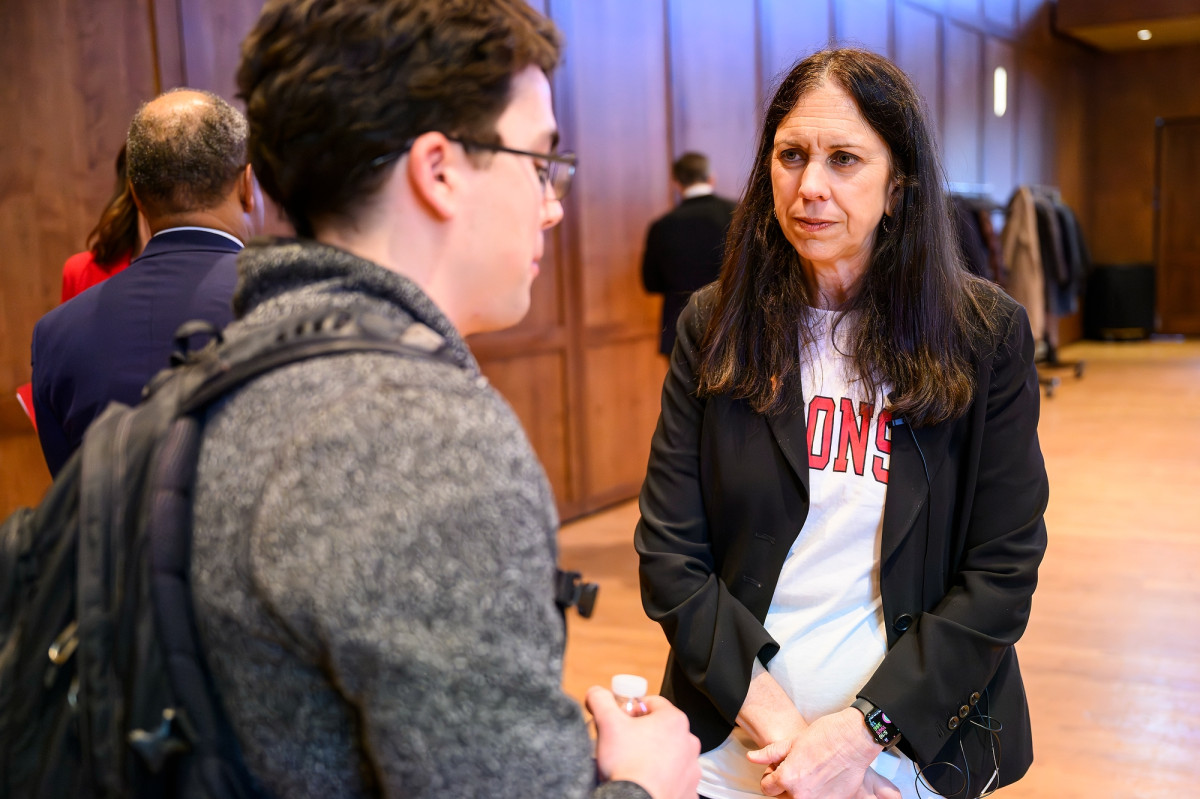
In a fireside chat with communication arts professor Allison Prasch, Colleen Shogan — author, political scientist and the first woman to lead the National Archives and Records Administration — praised UW–Madison’s efforts to focus on pluralism.
“I think you’re doing a pretty good job at the University of Wisconsin with the Wisconsin Exchange,” she said, noting the “reasonable, rational” conversations that flowed throughout the day.
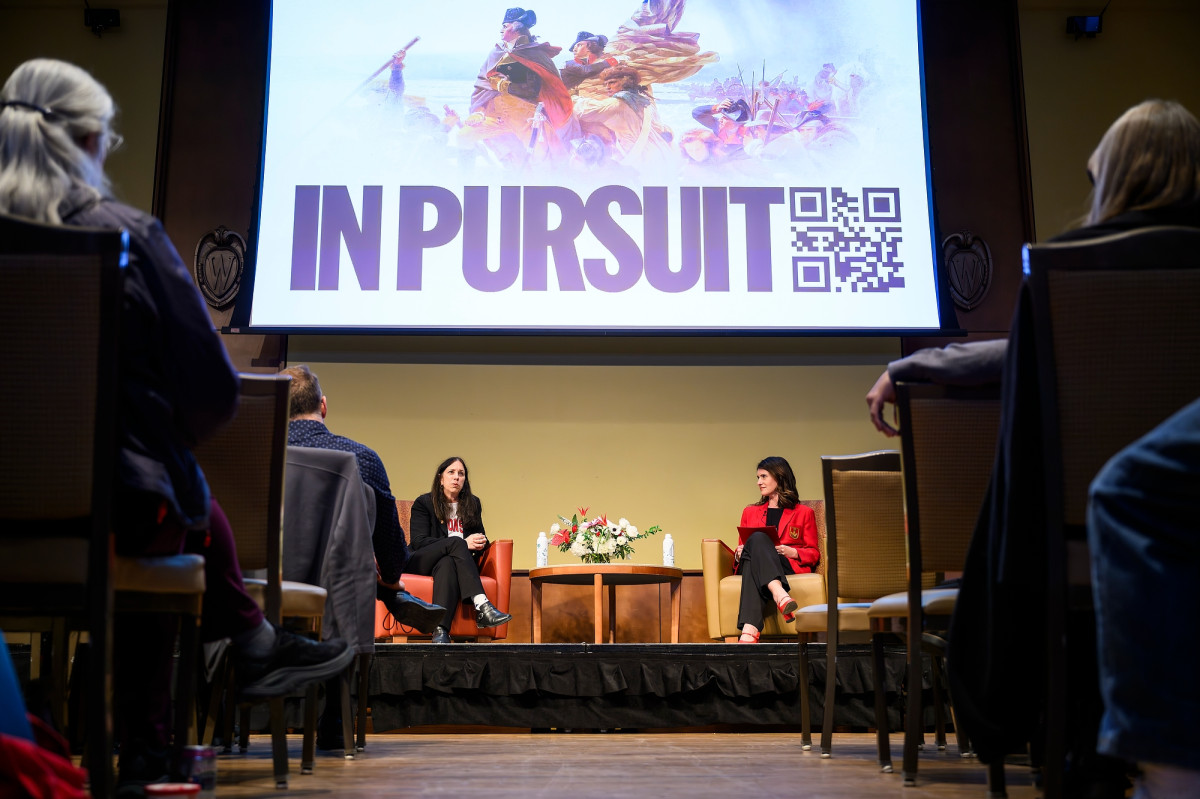
Shogan’s former role as national archivist centered on a mission to “protect, preserve and share our nation’s archives,” which consists of more than 13.5 billion records spread across some 40 locations throughout the U.S.
“The archives is really a place where pluralism isn’t just a practice. It is really the way that archives function,” Shogan said. “Because the job of the national archives is to share those records with as many Americans as possible. It is not to tell Americans what to think about those records.
“A record for one person might give them great satisfaction, great national pride. For another person, it might move them to have another very different emotional response, because it depends how that record affects you and affects your own story as a citizen.”
Today, Shogan is helping to build In Pursuit, an online collection of short essays written by distinguished historians and journalists, as well as by America’s former presidents and first ladies about their peers. The first essay in the series, written by former President George W. Bush and published on Presidents’ Day, focuses on George Washington.
Shogan calls the project “accessible history.” The goal of In Pursuit is to be nonpartisan “and to welcome as many Americans as possible,” she said.
“Not that we have to all agree with what (the authors) have written or agree with the lessons. … But we can have a rational dialogue, in conversation, about these individuals and American history.” ■
The Wisconsin Exchange: Pluralism in Practice is a campuswide initiative to enhance viewpoint diversity at UW–Madison, to promote vigorous discourse and debate, and to intensify our campus culture of civil dialogue across many backgrounds, viewpoints, identities, religions, political perspectives, and ideas. Upcoming events can be found on the Wisconsin Exchange website.