
Tag School of Medicine and Public Health
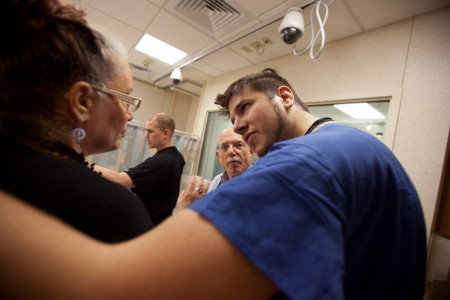
Whose ER response is better? Medical faculty, residents compete in ‘Sim Wars’
In one room of the simulated emergency department, Assistant Professor of Medicine Mary Westergaard futilely applies chest compressions to a child manikin. The script says the boy hasn’t had a pulse since he arrived in the Med Flight helicopter and that gray matter leaking from his brain indicates a severe head injury.
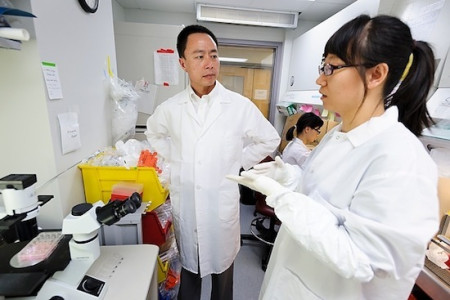
Waisman scientists model human disease in stem cells
Many scientists use animals to model human diseases. Mice can be obese or display symptoms of Parkinson's disease. Rats get Alzheimer's and diabetes. But animal models are seldom perfect, and so scientists are looking at a relatively new type of stem cell, called the induced pluripotent stem cell (iPS cell), that can be grown into specialized cells that become useful models for human disease.

Morgridge Institute taps biomedical innovator as chairman
The trustees of the Morgridge Institute for Research at the University of Wisconsin–Madison have named Fred Robertson as chairman, replacing outgoing chairman Ernie Micek, whose term as chair has ended and who will remain on the board.
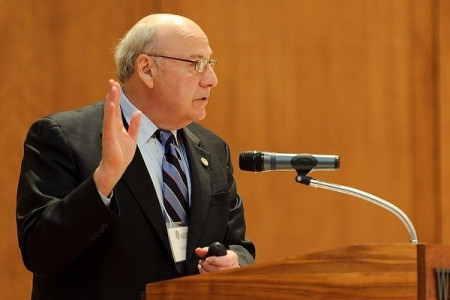
DeLuca to step down as provost, return to medical physics faculty
University of Wisconsin–Madison Provost and Vice Chancellor for Academic Affairs Paul M. DeLuca Jr. announced today (June 12, 2013) that he will step down as the university's chief academic officer and return to the faculty.
Ned Kalin – revealing disorders of the brain
Dr. Ned Kalin, chair of the Department of Psychiatry, is an accomplished biological psychiatrist whose research focuses on anxiety. Through imaging studies and understanding the genetic and environmental components of mental illness, his lab is working toward discoveries that can form the basis of early interventions to treat children who are at risk of developing long-term anxiety and related psychiatric disorders.
UW service-learning project wins United Nations award
An award from the United Nations is honoring the work of Araceli Alonso, a senior lecturer in Gender and Women's Studies and a faculty associate at the School of Medicine and Public Health at the University of Wisconsin–Madison.
Stem cell transplant restores memory, learning in mice
For the first time, human embryonic stem cells have been transformed into nerve cells that helped mice regain the ability to learn and remember.
Expanded Science Expeditions opens doors to UW–Madison research
Ana Garic spends her days in a University of Wisconsin–Madison lab studying a public health problem with real impact in Wisconsin communities — which is why it feels so good to invite the public onto her turf for the campus’ annual Science Expeditions open house to be held April 5-7.
Counties’ healthiness ranked by UW institute
Ozaukee County residents are among the healthiest in Wisconsin, according to the 2013 County Health Rankings released today by the University of Wisconsin Population Health Institute (UWPHI) and the Robert Wood Johnson Foundation (RWJF).
Transplanted brain cells in monkeys light up personalized therapy
For the first time, scientists have transplanted neural cells derived from a monkey's skin into its brain and watched the cells develop into several types of mature brain cells, according to the authors of a new study in Cell Reports. After six months, the cells looked entirely normal, and were only detectable because they initially were tagged with a fluorescent protein.
School of Medicine and Public Health responds to MSC fire
The following message was sent to School of Medicine and Public Health students, faculty and staff in the wake of a fire on Feb. 28, 2012. No one was injured, but the building was damaged.
UW Students invited to shake it for charity this Friday
The fifth annual Wisconsin Dance Marathon this Friday will raise money for the patients and families of American Family Children’s Hospital.
Technique moves practical Alzheimer diagnosis one step closer to reality
Researchers at the University of Wisconsin–Madison School of Medicine and Public Health are moving closer to a significant milepost in the battle against Alzheimer's disease: identifying the first signs of decline in the brain.
Chance finding reveals new control on blood vessels in developing brain
Zhen Huang freely admits he was not interested in blood vessels four years ago when he was studying brain development in a fetal mouse.
Combination pill could be cost effective in preventing heart disease
A single combination pill could reduce cardiovascular disease and stroke in Latin Americans by up to 21 percent at a cost of about $35 per quality adjusted life year gained, according to a study led by a University of Wisconsin School of Medicine and Public Health research team.
Registration open for Cycle for Sight fundraiser
Fight blinding diseases and get some exercise in the middle of Wisconsin winter! You can do both by registering an indoor cycling team for the annual Cycle for Sight Fundraiser.
Increased medical and social support needed to reduce black infant mortality
The mortality rate for black and white infants in Dane County was just about equal from 2004 until 2007. However, black infant deaths rose from 2008 to 2010 while the mortality rate for white babies remained steady.
New form of cell division found
Researchers at the University of Wisconsin Carbone Cancer Center have discovered a new form of cell division in human cells.
Shared medical appointments: multiple benefits for patients, doctors
Micah Chan, clinical chief of nephrology at the University of Wisconsin School of Medicine and Public Health, began conducting shared medical appointments for people with kidney disease two years ago. All groups have at least five patients and remain together from the first meeting.
Telephone talks with nurse can reduce hospital re-admissions
Weekly telephone contact with a nurse substantially reduced hospital re-admissions for high-risk patients, according to results of a University of Wisconsin School of Medicine and Public Health study.