
Tag College of Letters & Science

Journalism project on water quality wins national grant
An ambitious journalism project with UW–Madison School of Journalism and Mass Communication students collaborating with each other and partner organizations to report on the quality and supply of Wisconsin water has earned a $35,000 grant through the Online News Association.

Haberman to talk about the power of storytelling in UW–Madison lecture
For thousands of years, storytelling has endured as a form of sharing experiences and shaping lives, in real time and across generations.
UW-Madison journalism school celebrates alumni achievements
The winners of this year's University of Wisconsin–Madison's School of Journalism and Mass Communication's alumni awards demonstrate the many ways the school's graduates translate their skills to a range of careers.
Economics graduate to discuss strategies for balanced Sino-American relations
After three decades in which China achieved record economic growth in part by feeding the insatiable U.S. appetite for consumer of goods, Wall Street economist Stephen Roach ('68 BA, economics) sees an unhealthy codependency that could easily spiral out of control into a new trade war and other doomsday scenarios.
Six appointed to WARF professorships
Six members of the UW–Madison faculty have been appointed to Wisconsin Alumni Research Foundation named professorships in 2014.
2014 Shadid Award recipients announced
The Center for Journalism Ethics at the University of Wisconsin–Madison will honor reporter Adam Goldman and the Associated Press with the 2014 Anthony Shadid Award for Journalism Ethics.
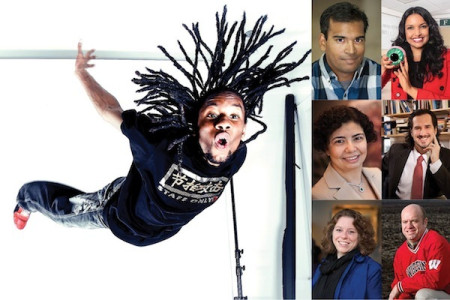
Forward under 40 Awards honor seven UW–Madison alumni
The Wisconsin Alumni Association (WAA) has recognized seven young alumni of the University of Wisconsin–Madison for their contributions in a wide variety of fields to the global community.

Awards honor excellence by teaching assistants
The work of 15 teaching assistants at the University of Wisconsin–Madison will be recognized in the 10th annual College of Letters and Science Campuswide Teaching Assistant Awards on Tuesday, Feb. 25.
Oldest bit of crust firms up idea of a cool early Earth
With the help of a tiny fragment of zircon extracted from a remote rock outcrop in Australia, the picture of how our planet became habitable to life about 4.4 billion years ago is coming into sharper focus.
Center for Jewish Studies presents Semester of the Arts
The Mosse/Weinstein Center for Jewish Studies is pleased to announce its first ever Semester of the Arts in Spring 2014.
World premiere taps Pro Arte Quartet’s Belgian roots
Belgian composer Benoît Mernier writes music he says communicates with audience members in a variety of ways. He believes firmly that there is no single right way to experience music - providing audience members are open to its messages.
Cancian nominated assistant secretary for children and families
President Barack Obama has nominated Maria Cancian, an associate dean and professor in the College of Letters & Science, for assistant secretary for children and families (family support) in the U.S. Department of Health and Human Services.
Remembering ‘forgotten’ presidents on Presidents Day
Two words: Millard Fillmore. Who? He was president of the United States from 1850-1853, yet you won't find him carved on Mount Rushmore. Turns out, not all American presidents have legacies - or even names - that are as familiar as George Washington.
Tess Hauser was ‘heart and soul’ of Wisconsin Longitudinal Study
Taissa S. “Tess” Hauser, a key scientific figure in one of the longest and most respected sociological studies ever undertaken, passed away in Washington D.C. last month.
Anthony Shadid Award will recognize ethical journalism
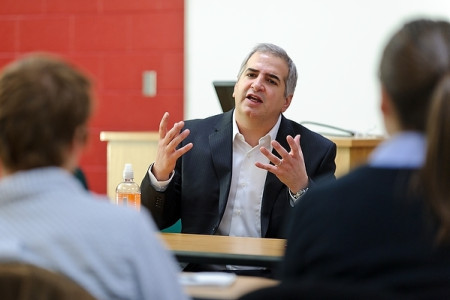
The University of Wisconsin–Madison Center for Journalism Ethics is seeking applications for the first national Anthony Shadid Award for Journalism Ethics.
War on Poverty anniversary leads to release of national poverty report card
Income inequality is on the rise, according to a national report card co-authored by Timothy Smeeding, director of the Institute for Research on Poverty at the University of Wisconsin–Madison.
Fish forced into the ‘foraging arena’ when lakes lose their trees
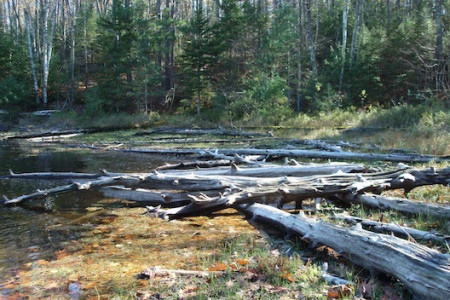
In attempts to predict what climate change will mean for life in lakes, scientists have mainly focused on two things: the temperature of the water and the amount of oxygen dissolved in it. But a new study from University of Wisconsin researchers is speaking for the trees - specifically, the dead ones that have toppled into a lake's near shore waters.
UW professor’s best-selling book adapted for PBS documentary on poisoning
Once upon a time in America if you wanted to get away with murder, poison was the way to go.