State commission approves nearly 1,700 new UW–Madison student beds as enrollment hits record high
The approval advances a proposal for two new residence halls expected to open in fall 2029.
The State Building Commission on Thursday approved plans for nearly 1,700 new student beds and a 400-seat dining hall at the University of Wisconsin–Madison, a major step toward easing a campus housing shortage as the university welcomes its largest-ever class of first-year Wisconsin students.
The approval advances a proposal for two new residence halls that UW–Madison expects to open in fall 2029. The nearly $338 million project would be financed through University Housing revenues, without tuition or taxpayer funding. The proposal now moves to the Legislature’s Joint Committee on Finance for final review.
“Wisconsin students and families are choosing UW–Madison in record numbers, and we’ve been using every lever at our disposal to make sure there is a place for them to live,” said Craig Thompson, UW–Madison vice chancellor for University Relations.
“This project is a major step toward meeting that demand,” Thompson added. “We’re grateful to the entire State Building Commission for their support, and to Governor (Tony) Evers, the Department of Administration, Board of Regents and the Universities of Wisconsin for their partnership in moving this project forward.”
Demand exceeds supply
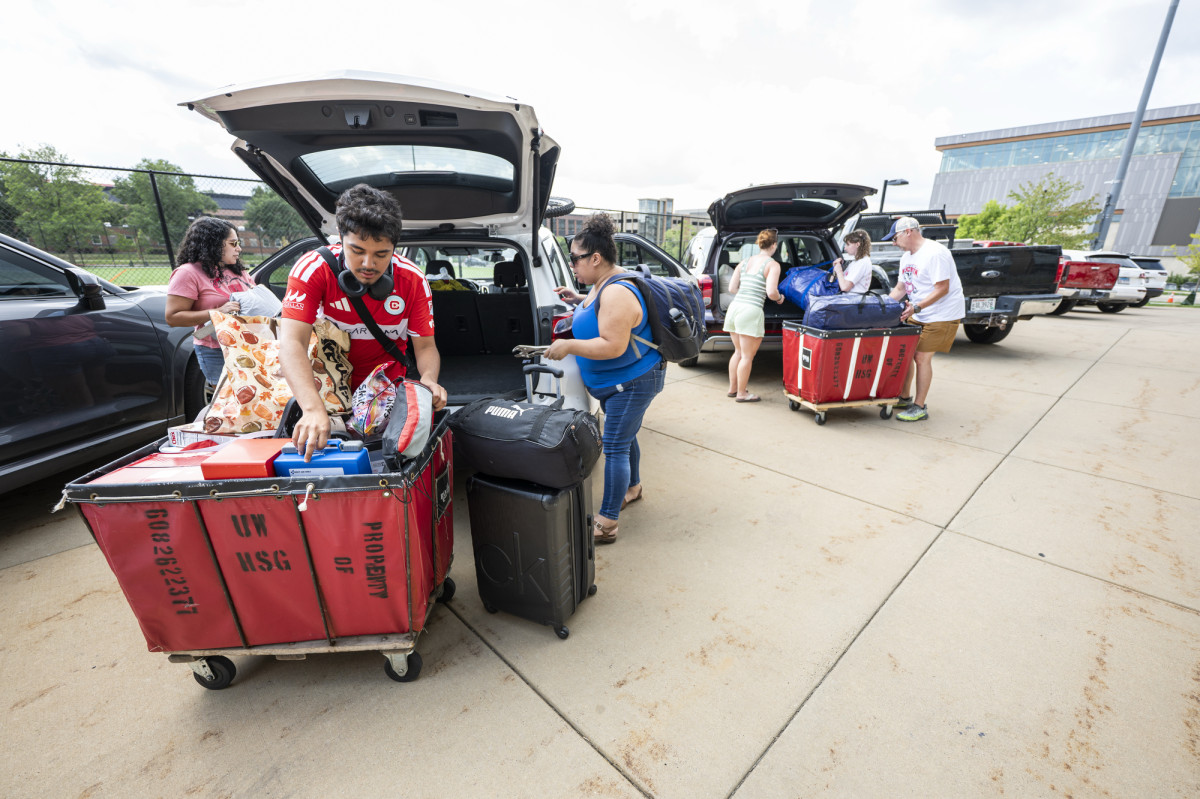
UW–Madison welcomed 3,920 Wisconsin residents in its fall 2026 first-year class, the most in university history. With more than 93% of first-year students choosing to live on campus, demand for on-campus university housing has exceeded supply.
University Housing is currently operating at approximately 115% of its designed capacity, accommodating more than 1,100 students by adding beds to existing rooms and converting common spaces. Limited space has also meant roughly 1,000 fewer housing offers to returning, transfer and exchange students.
The new residence halls would help ease that pressure, making room for more students to live on campus, and allowing study and social spaces currently being used for housing to return to their original purposes.
Projected savings, earlier construction
The project would be developed through a public-private partnership. According to the Department of Administration, that model expects to deliver housing about two years sooner than the traditional state budget process, saving an estimated $55 million.
One residence hall, which would include the new dining facility, would replace the existing Merit Hall near Park and West Dayton streets. The second would be built on the site of a university parking lot at North Mills and West Dayton streets. UW–Madison would continue to manage and operate both residence halls and the dining facility.
Expanding campus housing is part of UW–Madison’s broader commitment to making a high-quality education accessible to Wisconsin students and families. The university recently ranked fourth nationally in U.S. News & World Report’s Best Value Schools for In-State Students category.
Pending approvals, construction is expected to begin in summer 2027.