Now a Truman Scholar, UW junior Miranda Garcia-Dove’s dedication to public service is driven by curiosity and kindness
One of the top academic awards for undergraduate students, Truman Scholarships support the next generation of leaders
What did Miranda Garcia-Dove do after first learning she had been selected for one of the most prestigious undergraduate honors in the country? Call her parents, of course.
“They were both so happy and proud,” says the University of Wisconsin–Madison junior and recipient of a 2026 Truman Scholarship. “And me? I was just really excited!”
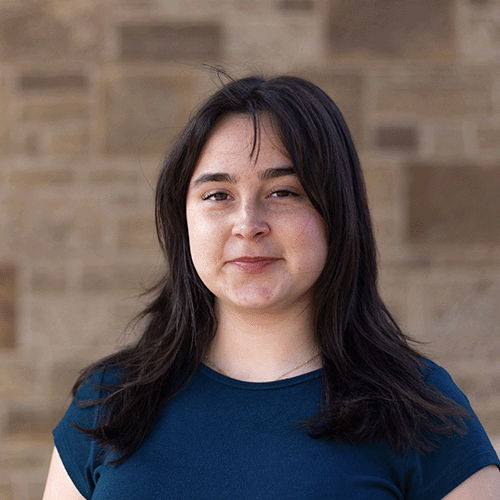
Garcia-Dove is one of 55 new Truman Scholars in the country this year. She was selected for her outstanding achievements out of 781 candidates nominated by 305 colleges and universities. Each winner will receive a $30,000 scholarship toward graduate school and the opportunity to participate in professional development programming.
UW–Madison Chancellor Jennifer L. Mnookin had the honor of breaking the news to Garcia-Dove.
“Being named a Truman Scholar is a wonderful achievement that equally reflects Miranda’s academic excellence and her deep commitment to public service and leadership, both of which she has exemplified during her time on campus. She’s made her mark here in a variety of ways, and I’ve seen firsthand her tremendous commitment to bringing her peers together to meaningfully and thoughtfully engage across their differences,” says Mnookin. “Whatever comes next for Miranda, I know she will make a positive impact.”
Garcia-Dove, who grew up in Madison, Wisconsin, is studying political science and information science and pursuing a certificate in public policy. She’s also considering adding a geospatial data science certificate before graduating next year.
Her motivation to study political science started as early as middle school. Since then, immigration issues have caught her eye, and her heart. Garcia-Dove’s father is an immigrant to the United States from Spain, and in both countries she has observed how immigrants have been treated differently.
“I spent a lot of time in a rural town in Spain when I was younger, visiting family and friends, and I always was aware there of how immigrants [from Northern Africa] were treated differently, and I became really curious in what motivated people to leave.” She adds, “So with my political science degree, I am hoping to not only find out who is leaving and where they are going, but also understand the reasons they are leaving in the first place.”
Garcia-Dove is spending this semester as an intern at the Amica Center for Immigration Rights in Washington D.C., working with detained immigrant adults who don’t have legal representation. “It’s exciting to know that I can make a positive impact on a lot of people right now,” but she adds, “the work has been really difficult.”
She reflects that her internship has opened her eyes to the world outside of the theoretical. “It’s different when you speak to people who are detained and are actively in the process, versus when you just read news articles about what’s happening.”
On campus, Garcia-Dove has also found value in connecting directly with her fellow students. As part of the College of Letters & Science Dean’s Ambassador Program, she helps the college keep in touch with its undergraduates. She meets monthly with fellow ambassadors and volunteers for a variety of activities while learning how L&S and the university work.
“Miranda’s been a great Dean’s Ambassador,” says L&S Dean Eric Wilcots. “To think about her level of involvement and engagement and principles and values all wrapped up in one package is incredible. She inspires me to think bigger and better about things. I’m thrilled she got this because she’s so deserving.”
In 2024, along with fellow UW–Madison student Abby Grabowski, Garcia-Dove started BridgeMadison, the UW chapter of BridgeUSA, a nationwide student organization with a mission to create space for students with different beliefs to talk about disagreements in a structured and moderated space. The goal is to listen, not debate.
“I think our campus is particularly divided, and it’s not a space where everyone feels welcome to really share what they think,” Garcia-Dove explains.
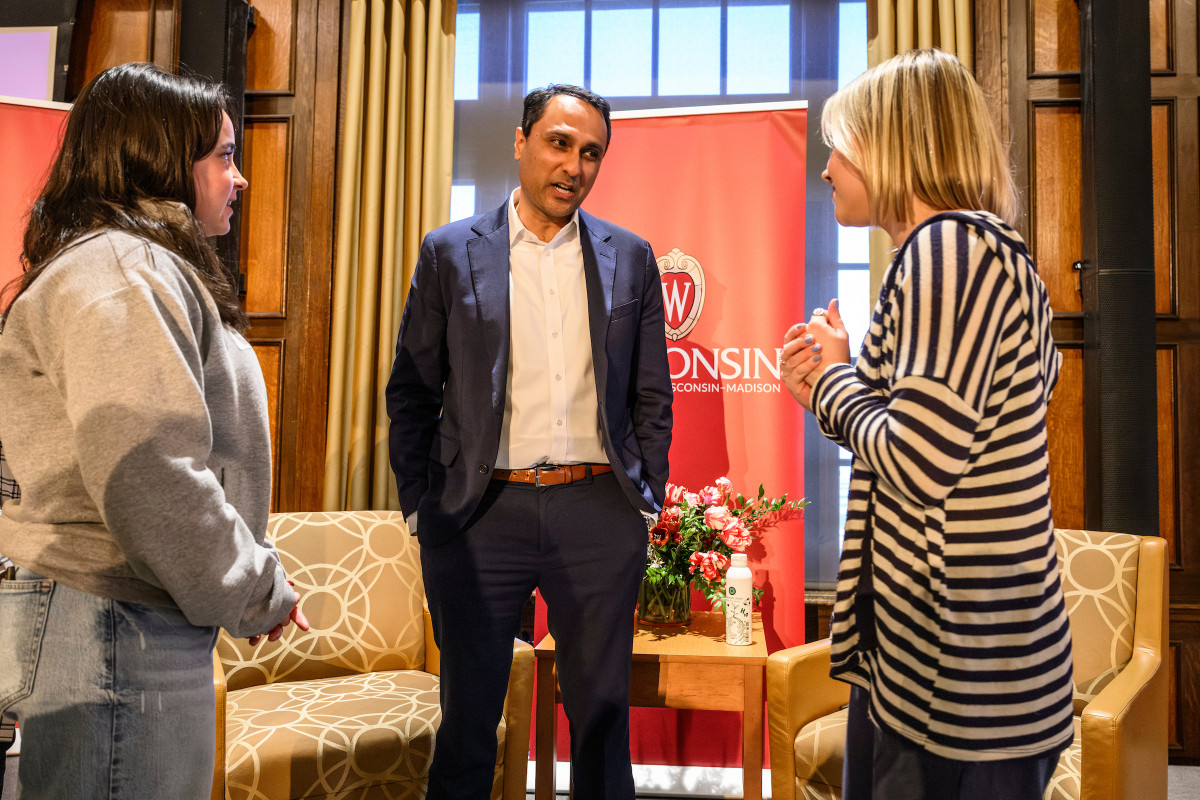
Amy Gangl is the director of undergraduate studies in the department of political science. She is also the faculty advisor for BridgeMadison. Gangl stressed Garcia-Dove’s “carefulness of thinking” when starting BridgeMadison.
“She didn’t want echo chambers. She didn’t want people just showing up to voice their opinion. She wanted meaningful discussion, and it just blows me away. She really impressed me both in her drive and her ambition.”
That careful thinking comes across when Garcia-Dove talks about what she personally is getting out of BridgeMadison. “I think the biggest thing that I’ve taken away from my peers who I disagree with is that there’s context and stories behind people’s beliefs. There are actually a lot of shared values that we all hold. And so, understanding where people are coming from not only makes you a better person but puts you in a better position to make good policy.”
To John Zumbrunnen, provost and executive vice chancellor for academic affairs, Garcia-Dove’s role in forming and leading BridgeMadison is not surprising (although still very impressive). He experienced her ability to reach out to peers while leading a UW study abroad “Summer Launch” program that took Garcia-Dove and a group of fellow incoming first-year UW students to Dublin, Ireland for three weeks.
“Two things about Miranda stood out right away. First, her enthusiasm for learning and her genuine curiosity about new people, places and topics,” says Zumbrunnen. “Second, her leadership. Traveling abroad with 20 people you’ve just met and who’ve come from a variety of places and backgrounds can be challenging. She was a natural leader for the group, helping students connect with one another and navigate in productive ways the inevitable differences of experience and perspective that emerge.”
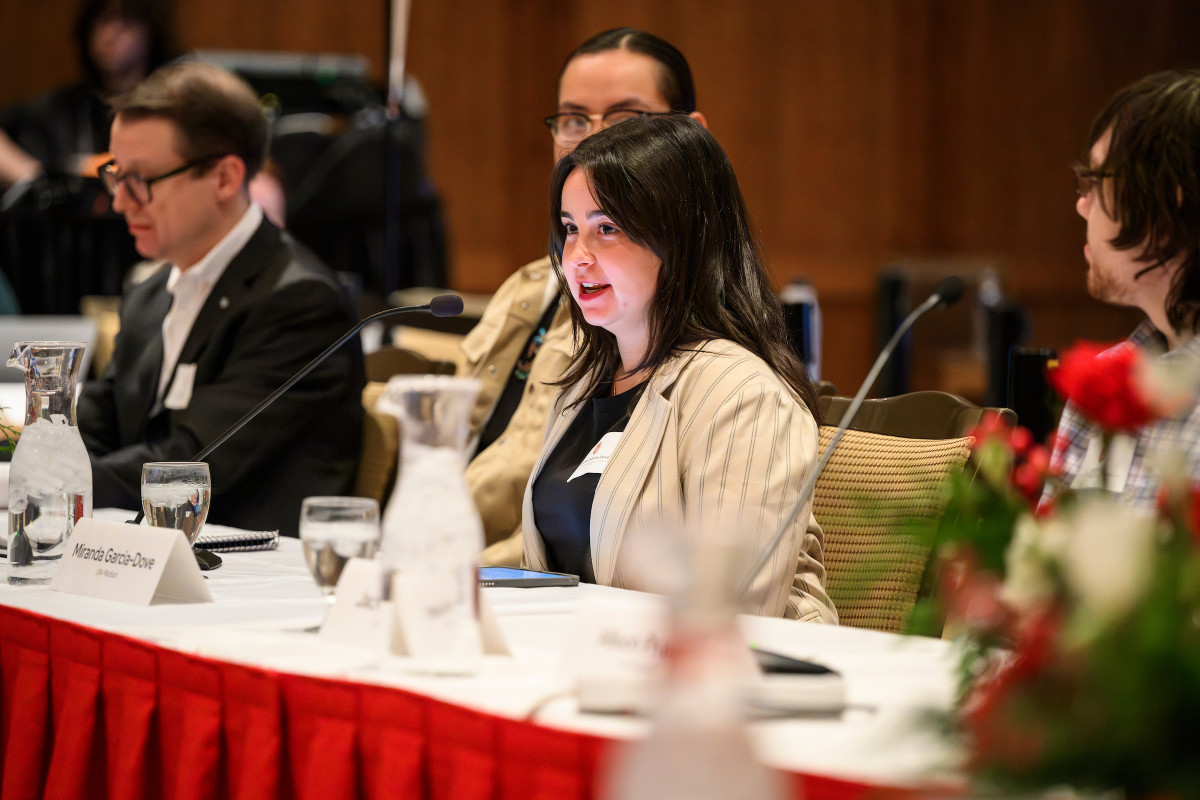
When asked what she plans to do with her $30,000 scholarship, Garcia-Dove took a long pause, “I don’t think I will go right into graduate school. Georgetown has an excellent migrant and refugee program, but honestly, I’m going to take a gap year or two through the Peace Corps or Fulbright.”
And as for her plans after the Peace Corps and graduate school? Garcia-Dove didn’t pause at all when asked about that. “I’ll tell you my dream job. My dream job is to be the Secretary of State. Or work in the State Department as an advisor to the president on immigration issues, national security or relations with Latin America. I want to influence policy decisions. I want to be driven, but I’d also like to grow up to be someone who is curious and kind. At the end of my life, I would like to have people say that I was a kind person.”