Chancellor Mnookin expresses gratitude, reflects on leading in a time of challenge
Addressing the Board of Regents, UW–Madison’s departing leader underscored that the university’s success is derived from the support of the people and State of Wisconsin.
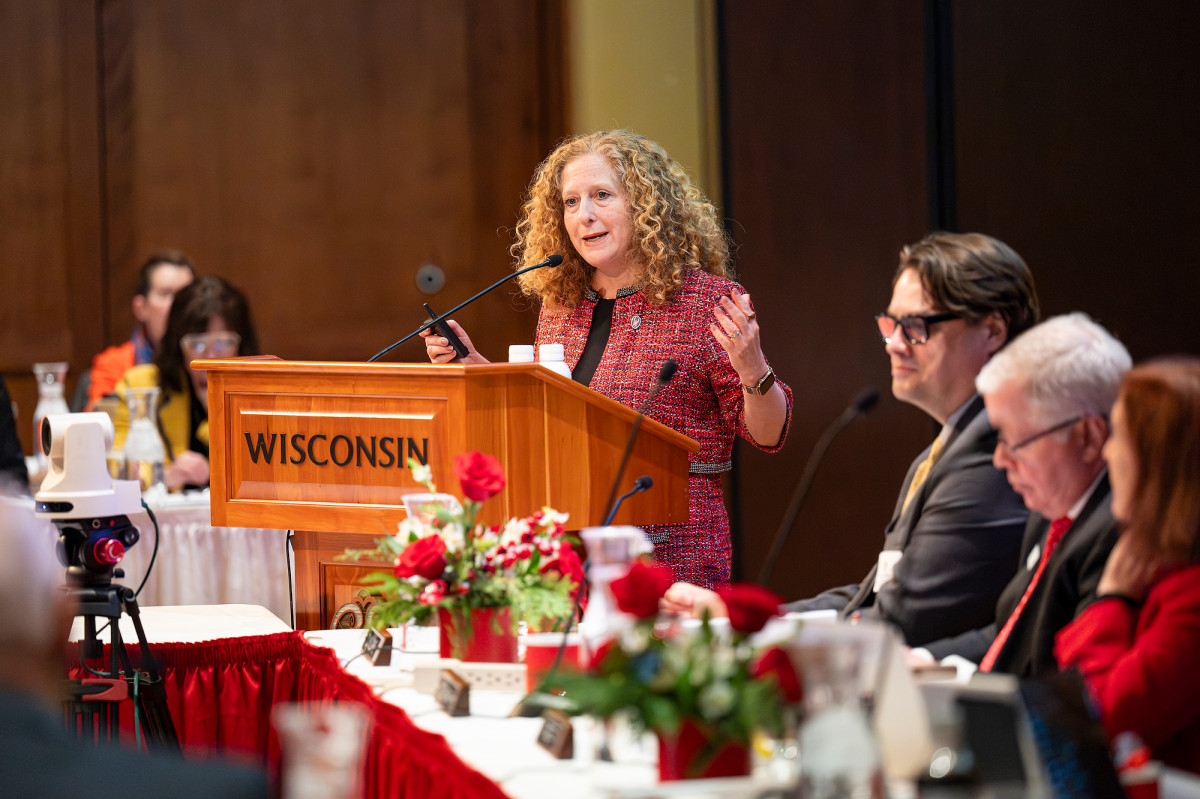
As one of the nation’s leading public universities, the University of Wisconsin–Madison has been able to move forward in meaningful ways by creating new and transformative programs over the past several years despite facing multiple challenges, Chancellor Jennifer L. Mnookin said Thursday.
Mnookin noted that the university’s success is derived from investment and support from the State and people of Wisconsin.
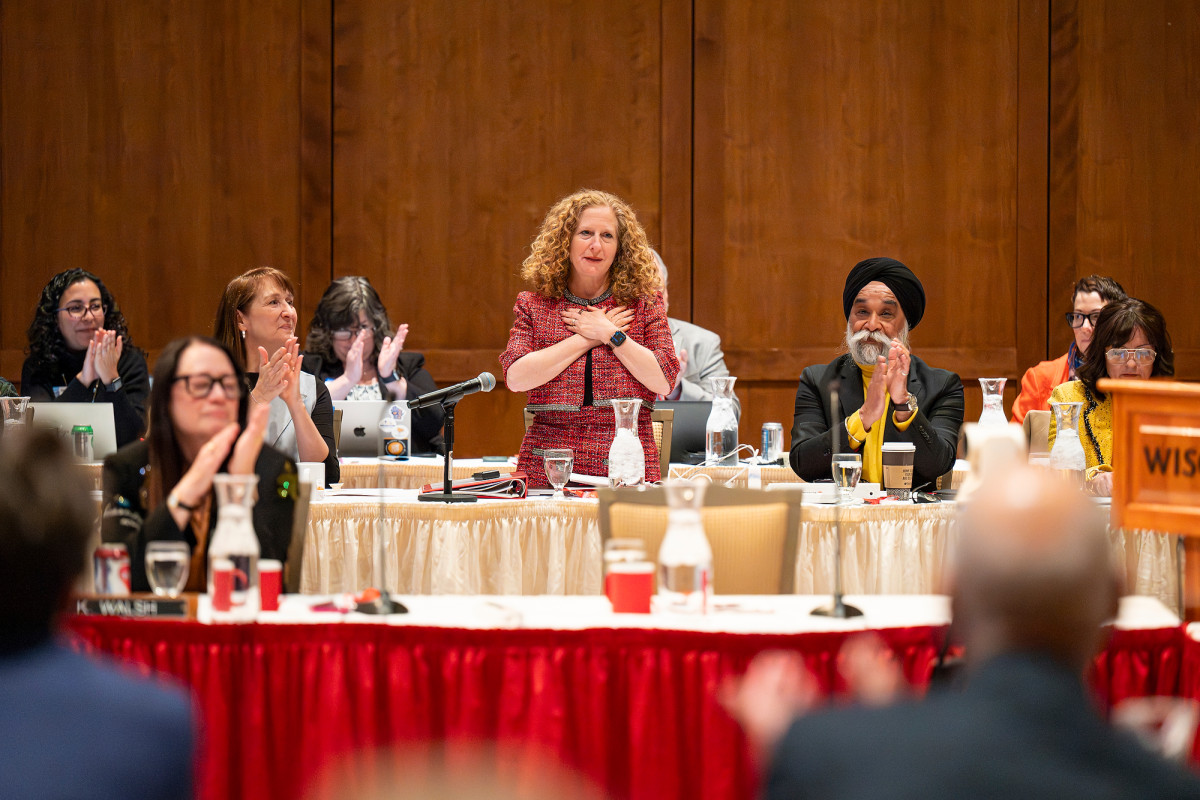
Mnookin received a standing ovation for her final address to the University of Wisconsin System Board of Regents. She will depart for the presidency of Columbia University at the conclusion of the academic year.
“UW–Madison is a center of gravity for the entire Universities of Wisconsin system and, indeed, the entire state,” she said. “I believe the strength of one rises or falls with the strength of the other.”
Mnookin expressed her gratitude to UW–Madison’s faculty, staff and students; fellow Universities of Wisconsin chancellors; the Board of Regents; system leadership; and President Jay Rothman.
She reflected on a leadership approach during nearly four years as chancellor that she called “principled pragmatism,” blending a willingness to listen to critics — and be nimble, creative and open to change — with a strong commitment to core values like academic freedom, research excellence, access and opportunity for students, and the Wisconsin Idea.
UW–Madison is meeting the present moment of change and uncertainty with innovative programs and new infrastructure, positioning Wisconsin’s flagship university to continue its traditions of academic, student and research excellence.
Mnookin outlined several meaningful accomplishments during the course of her tenure, emphasizing that these were shared accomplishments to which many had contributed.
They include establishing the Wisconsin Entrepreneurship Hub; creating programs like Bucky’s Pell Pathway that have greatly expanded access and affordability for students from Wisconsin; fostering pluralism on campus, including through the Wisconsin Exchange; and expanding the university’s ability to address complex problems facing the state and world with the Wisconsin Research, Innovation and Scholarly Excellence (RISE) Initiative.
Mnookin said the RISE-AI program, coupled with the newly opened Morgridge Hall and the expected founding of a new College of Computing and Artificial Intelligence, complete what she called “the UW–Madison AI trifecta.”
“This university will be a national center of excellence in AI, working to ensure that technology enhances — not replaces — human scholarship, and positioning its graduates for so-called ‘gold collar’ jobs, professional roles that require top-notch technical skills,” she said.
Among the challenges UW–Madison and other large research universities are navigating is volatility around federal funding.
Though 2024 was an extraordinary year for UW–Madison, as the university ranked fifth in the United States in research expenditures, in 2025 the university saw a 17% decline in federal research funding. Over the same period, 145 federal grants were terminated or subject to stop-work orders, with $27 million in lost funding.
Mnookin told the Regents that legal challenges have helped reinstate a number of the grants, and with help from Wisconsin’s congressional delegation, some of the major proposed cuts to federally funded programs have been stemmed.
To continue to grow and meet the state’s education and workforce development needs, UW–Madison is seeking greater flexibility on funding essential purchases, more autonomy over building renovation and construction projects and bonding authority to increase flexibility and opportunity for major projects that are funded without taxpayer dollars.
“All three of these challenges are a contest between agility and the inflexible structures of a much slower era,” she said. “It’s like trying to move forward with the parking brake on. I hope you will be strong advocates for a more sensible approach that would allow the university to move at the pace that innovation and excellence require.”
In an era when higher education is confronted with significant uncertainty and risk, the Universities of Wisconsin and its leaders must continue to rise to the challenges with principled pragmatism, Mnookin said, safeguarding its mission while staying open to growth and change.
“I want to be clear that this is not a call to end oversight and accountability. There are legitimate concerns about higher education, and we need to take those seriously. But we also need to give UW–Madison the tools — and sometimes the freedom — to be excellent, and to make supporting its excellence a core value.”