
Category Science & Technology
Stem-cell discovery a global media force
When a scientific advance is hailed as “the biological equivalent of the Wright Brothers’ first airplane,” it stands to reason that the work will grab worldwide attentionn
Prof guides future generations of female scientists
When Jean Bahr believes in something, she doesn’t hesitate to act.

Waistline growth on high-carb diets linked to liver gene
Experts have been warning for years that foods loaded with high-fructose corn syrup and other processed carbohydrates are making us fatter. Now, a University of Wisconsin–Madison study has uncovered the genetic basis for why this is so.

What lies beneath: Growth of root cells remarkably dynamic, study finds
A new UW–Madison study, publishing online this week in the Proceedings of the National Academy of Sciences, has found that certain plant cells pulse as they grow.

New Antarctica research season kicks off
The approach of winter in the northern hemisphere means that summer is coming to Antarctica - still bitterly cold, but just warm enough to let scientists make progress on ongoing studies. A number of UW–Madison researchers are awaiting the call.
Wisconsin Public Utility Institute, energy engineers to promote efficiency
On Wednesday, Dec. 5, the Wisconsin Public Utility Institute (WPUI) and the Wisconsin Association of Energy Engineers (WAEE) will present a program on how to encourage more efficiency from the motor industry.
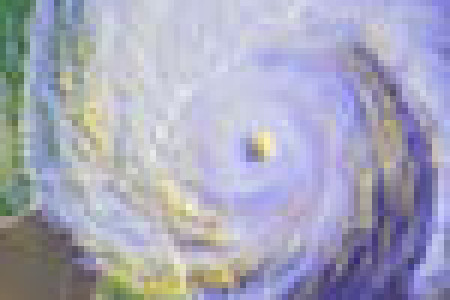
Recipe for a storm: The ingredients for more powerful Atlantic hurricanes
As the world warms, the interaction between the Atlantic Ocean and atmosphere may be the recipe for stronger, more frequent hurricanes.
Virent CEO to speak on green business at WARF’s Gilson Discovery Series
Eric Apfelbach, president and CEO of Virent Energy Systems, will present "Building a Business around Green Technology" on Thursday, Dec. 6 at the Fluno Center, 601 University Avenue. The event, part of the Gilson Discovery Series sponsored by the Wisconsin Alumni Research Foundation (WARF), is free and open to the public.
Annual Christmas chemistry show ‘sold out;’ TV still an option
As traditions go, nothing is more engaging on the Madison holiday scene than the annual holiday chemistry lectures by Bassam Shakhashiri.

Nanotech’s health, environment impacts worry scientists
The unknown human health and environmental impacts of nanotechnology are a bigger worry for scientists than for the public, according to a new report published Nov. 25 in the journal Nature Nanotechnology.

The Science of Cheese
UW-Madison cheese researcher Carol Chen explains the physics, chemistry and biology of cheese on Sicentific American’s Science Talk podcast.

UW-Madison scientists guide human skin cells to embryonic state
In a paper to be published Nov. 22 in the online edition of the journal Science, a team of University of Wisconsin–Madison researchers reports the genetic reprogramming of human skin cells to create cells indistinguishable from embryonic stem cells.
Reprogramming the debate: stem-cell finding alters ethical controversy
When University of Wisconsin–Madison researchers succeeded in reprogramming skin cells to behave like embryonic stem cells, they also began to redefine the political and ethical dynamics of the stem-cell debate, a leading bioethicist says.
Why does orange or grapefruit juice taste so nasty after I brush my teeth?
It’s all about phospholipids, says John Moore, director of the Institute for Chemical Education at UW–Madison. Not a flavor guy…

Bridging the divide between math and biology
As a mathematician who has navigated the field of biology for nearly a decade, mathematics professor Julie Mitchell has some sage advice for those who choose to follow. Never hesitate to ask a “dumb” question. Don’t be afraid to admit you don’t know something. Meanwhile, show some bravado.
Global engineering forum targets looming engineering shortage
The United States and the world face severe shortages of engineers by the year 2025, according to research based on U.S. Bureau of Labor data. The challenge of developing leaders in the changing engineering and technical workforce will be explored during the third annual University of Wisconsin–Madison Engineering Executives Forum.
Post-Kyoto environmental discussion to take place at UW–Madison
This December in Bali, new international talks will be launched to determine the successor of the Kyoto Protocol on Climate Change. The science has spoken. We know the problem is real, but how do we move forward with a solution?

Deep-sea drilling expedition off Japan seeks earthquake, tsunami causes
Harold Tobin is interested in deep scientific questions, whose answers lie thousands of meters underwater. The UW–Madison geologist studies deep oceanic earthquake faults, which extend miles into the Earth’s crust below the seafloor, to learn what causes earthquakes and tsunamis.
Tool-wielding chimps provide a glimpse of early human behavior
Chimpanzees inhabiting a harsh savanna environment and using bark and stick tools to exploit an underground food resource are giving scientists new insights to the behaviors of the earliest hominids who, millions of years ago, left the African forests to range the same kinds of environments and possibly utilize the same foods.