Preserving traditions in a time of change
Go Big Read author Eliot Stein talks about exploring the world — and the life-changing value of study abroad.
In an age when artificial intelligence and data centers dominate conversations, in a world where the same fast food can be purchased on nearly every continent and news comes at us 24/7, a woman in Sardinia quietly rises at 7 a.m. each morning and heads to her kitchen, ties on an apron and makes su filindeu — the “threads of God,” and the rarest pasta in the world.
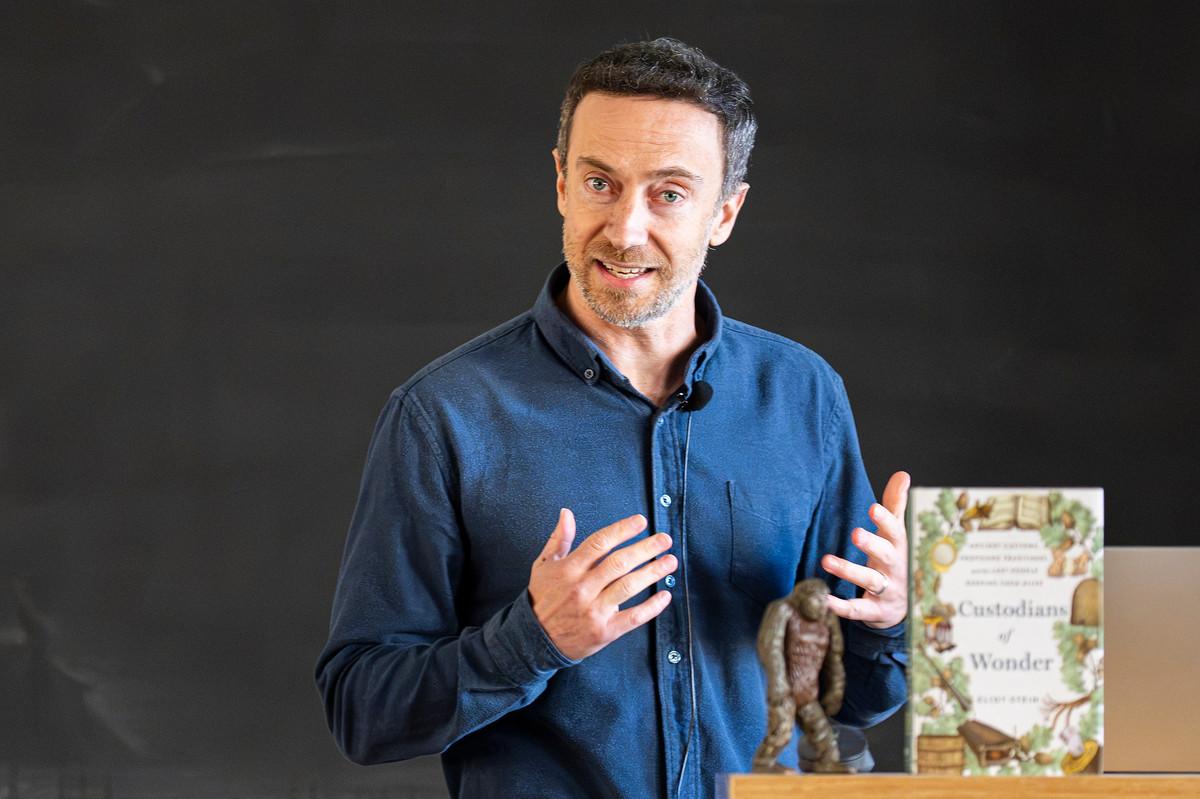
Paola Abraini, the 73-year-old pasta maker, is one of 10 masters of “the world’s most dazzling cultural marvels on the edge of disappearance” profiled in Eliot Stein’s book, “Custodians of Wonder: Ancient Customs, Profound Traditions, and the Last People Keeping Them Alive,” the UW–Madison selection for its 2026-27 Go Big Read.
In addition to Abraini, Stein tells the stories of many custodians of wonder: The last Inca bridge master who, every year, rebuilds a grass-woven bridge over a raging river in Peru. A Swedish watchman who climbs a church tower each night to ease the minds of his fellow townspeople. A man safeguarding a 700-year-old recipe for Japanese soy sauce …
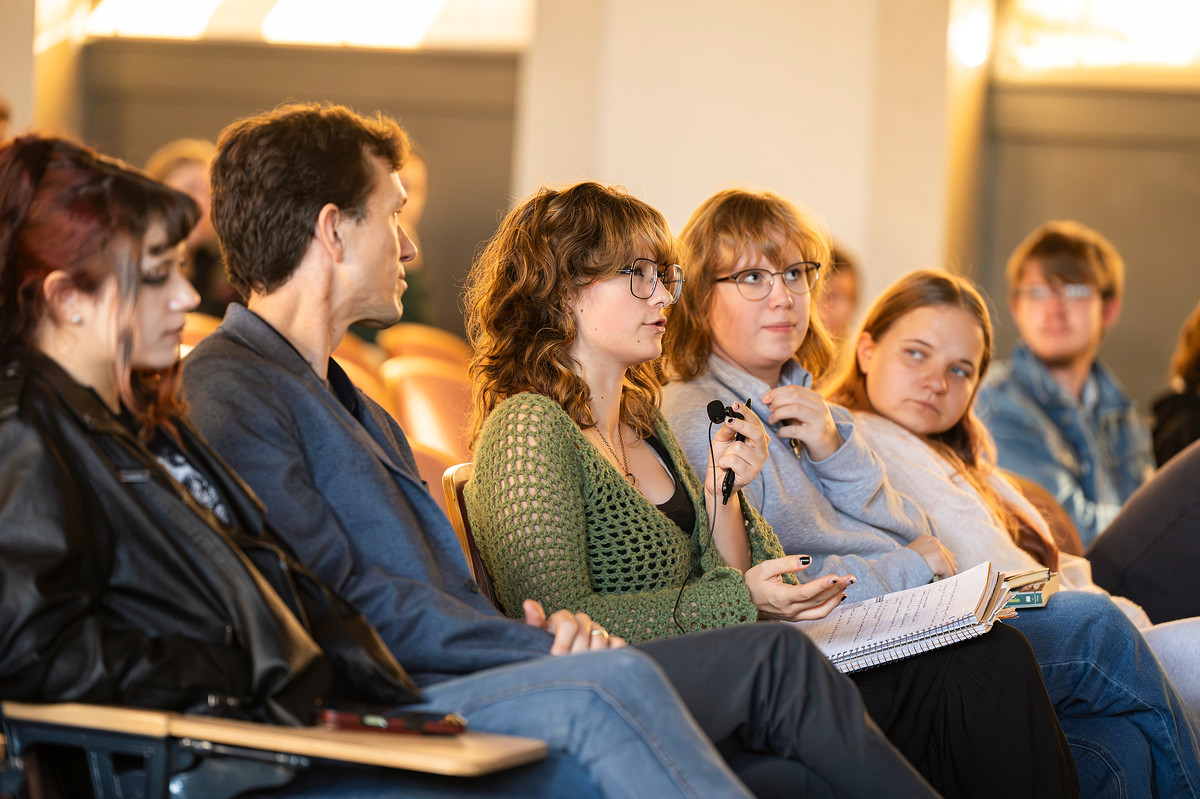
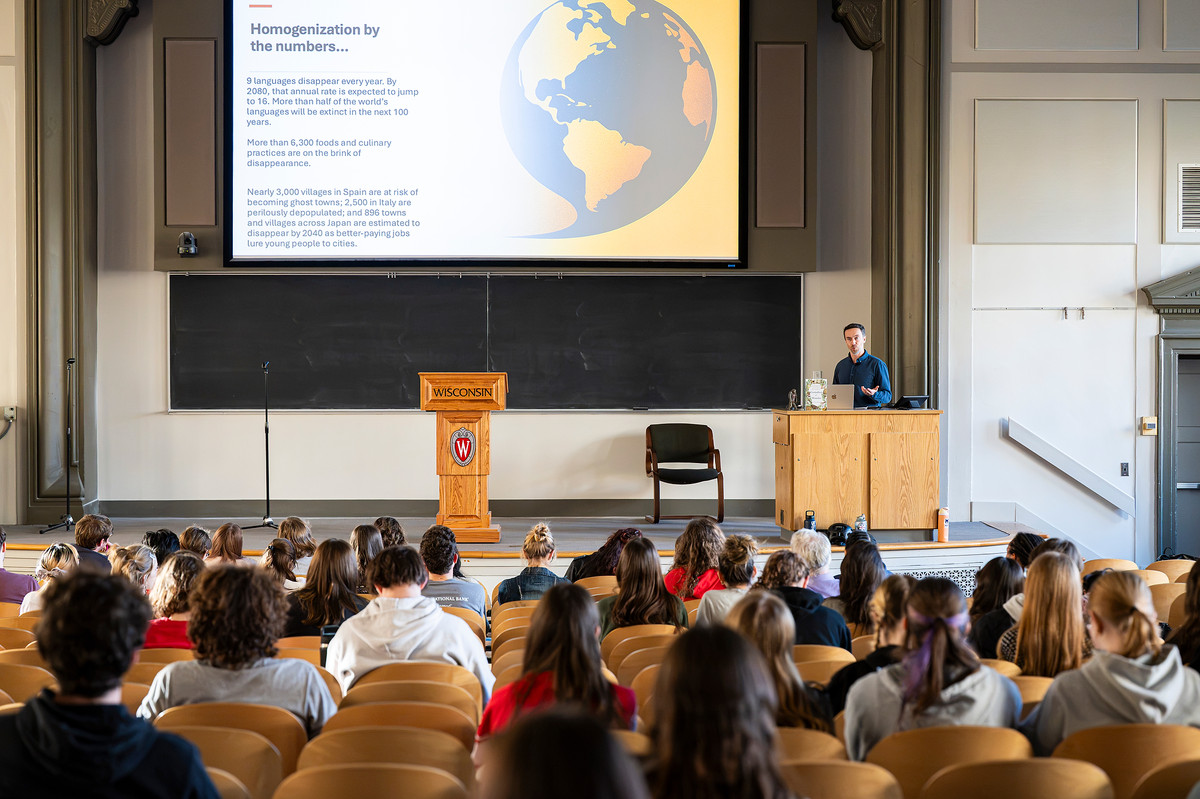
But back to the pasta. On a daylong visit to UW–Madison to deliver his Go Big Read keynote address, Stein visited an Introduction to Folklore class in Bascom Hall and challenged students to find the meaning in the pasta maker’s ritual.
“So, why does this thing matter?“ Stein asks.
”The reason is because su filindeu represents the idea of Sardinia itself,” Stein explains. “It’s a reminder to the people who live there of who they are, where they came from and what they believe in.“
And that, Stein explained, is the core idea behind ”Custodians of Wonder.“
“It‘s about why we humans do the things that might take a lot of calories and a lot of energy and might be gorgeous, or irrational, or completely impractical — but mean something to us.”
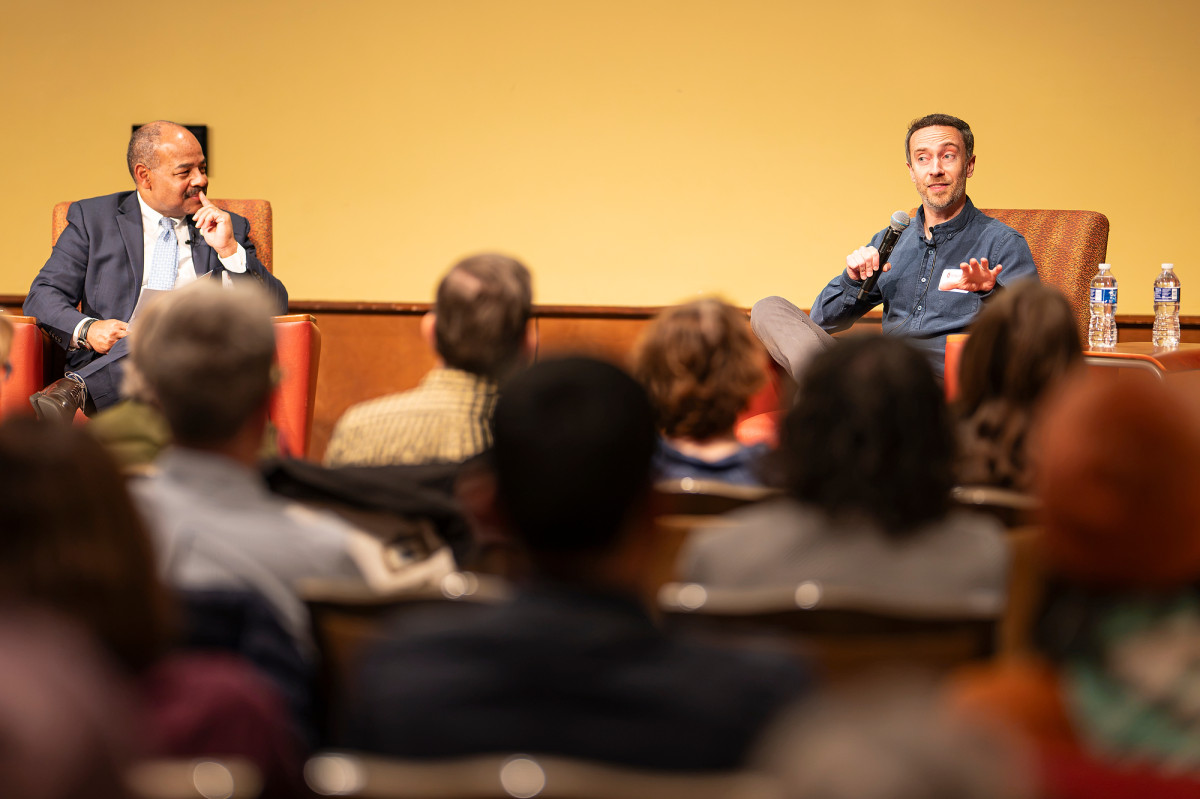
Stein, a senior journalist and editor at the BBC, has had work published in The New York Times, WIRED, National Geographic, The Guardian and many other publications. From his classroom visits to a keynote talk with interim Chancellor Eric Wilcots Thursday evening in Varsity Hall at Union South, the author detailed his global travels in search of unique rites and artistry handed from one generation to the next, even in the face of a swiftly changing world.
“The languages that we speak, the foods that we eat, the beliefs that we have — they‘re all an expression of a community‘s unique worldview,” Stein explains.
But, he cautions, we are losing these marvels at a rapid pace.
“When localism gives way to internationalism, we lose these distinct vestiges that make our world so diverse,” Stein told his keynote audience.
From world travels to Wisconsin
At Varsity Hall, Wilcots welcomed the global traveler — and noted it was Stein’s first trip to Wisconsin. Stein, in turn, talked about how, as an editor for the BBC, he sent a reporter to Madison a couple of years ago for a story about 16 dugout canoes — one dating back 5,200 years, found submerged in the depths of Lake Mendota.
The discovery of those hand-crafted artifacts “changed the whole perspective of what Madison is,” Stein says. “This place was a thriving cosmopolitan place 400 years before the pyramids were ever constructed, 4,000 years before Europeans ever stepped foot on this continent. And it‘s truly mind-boggling.”
As part of Go Big Read, close to 12,000 copies of Stein’s “Custodians of Wonder” were distributed to students and libraries, and the book was used as part of the curriculum in more than 20 UW–Madison courses this fall.
“This book, I think, is a perfect Go Big Read selection for the moment,” Wilcots said, noting its deep research and historical context. “At a time of change and uncertainty, it invites us to be inspired by people who are driven to preserve traditions in the face of change.”
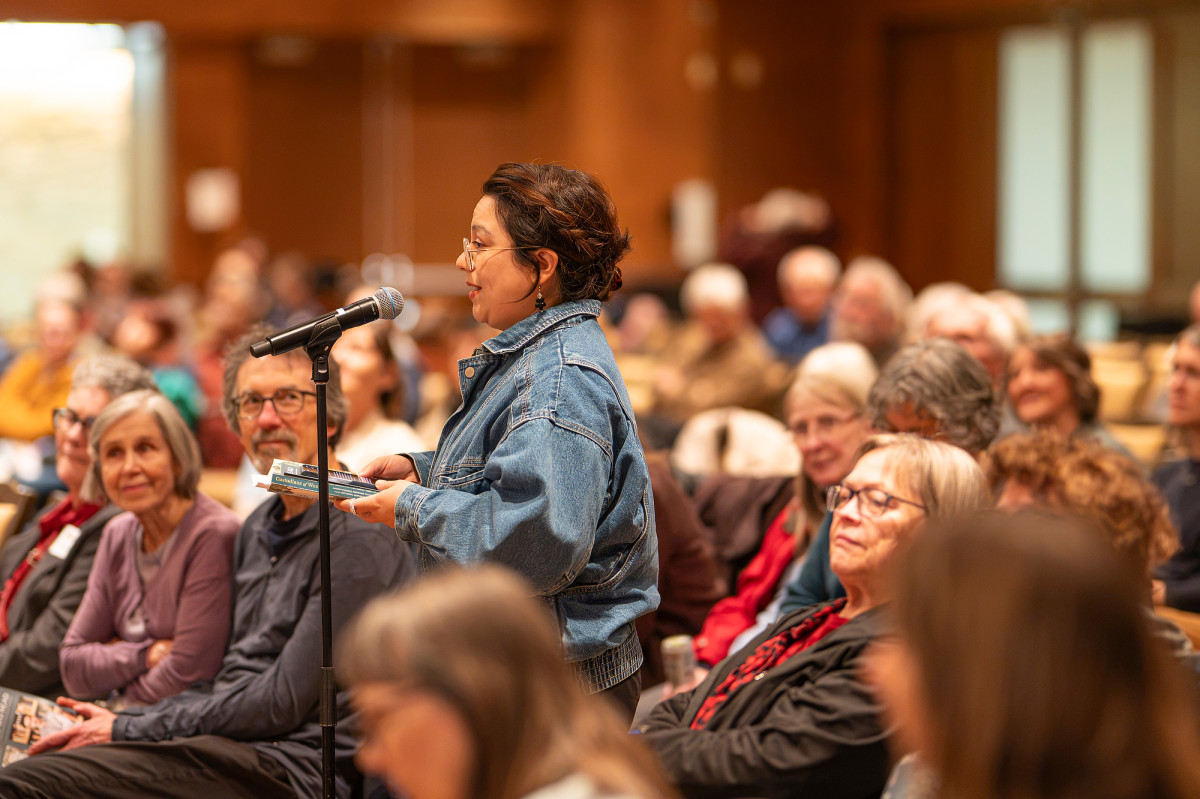
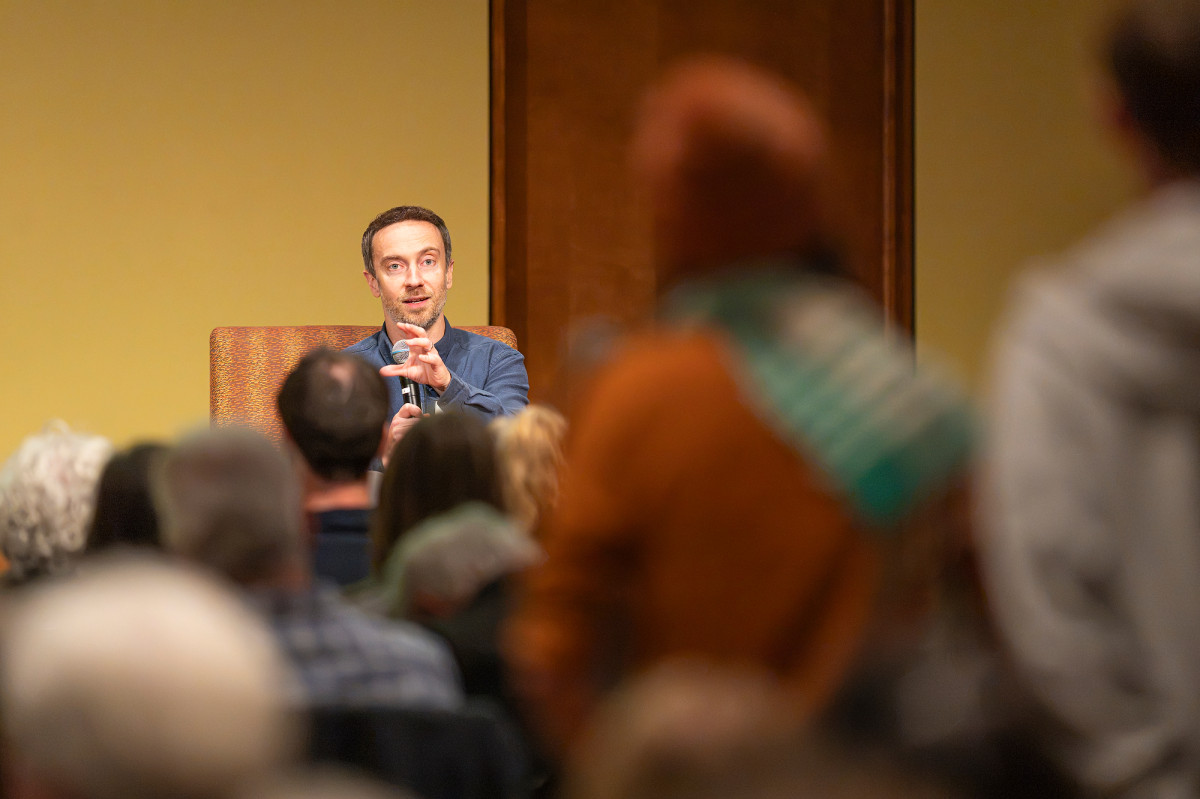
While on campus, Stein fielded questions about how he located his profile subjects for “Custodians of Wonder,” and how he earned their trust as they revealed the secrets of their craft — passed down, in some cases, for centuries. Although he speaks several languages, Stein had local translators with him in each country, he said. He laid the groundwork for his visits ahead of time, and only traveled to profile people who welcomed the chance to speak to a foreign journalist.
“The types of people that I like to profile are, in the best possible way — they’re humble. Individuals who are often overlooked,” he says. “They are somewhat anonymous. These are not celebrities. These are not people who are getting their door knocked down by journalists or tourists.“
In many cases, Stein said, the people he met and interviewed told him his book was their first chance to tell their life stories — and the stories of the things they‘ve chosen to give their lives to.
Approaching his interview subjects with kindness, empathy, sincere curiosity and a willingness to deeply listen is key, Stein says.
“It really comes down to the Golden Rule,” he explains. “What I‘m looking for as a journalist is honesty and vulnerability and candor. So I am honest with my subjects. I‘m vulnerable with my subjects. I‘m candid with my subjects — because that’s what I want them to give me in return. And so, it might sound trite, but just treating people with dignity and respect goes a long way.”
‘Thrust yourself outside your comfort zone’
Stein, who grew up in Maryland and now lives in Brooklyn, New York, recounted how his degree in Italian studies and journalism led to his first job out of college: working as a tour guide and later an English teacher in Sardinia. A study abroad experience was “the absolute best thing that I ever did in college,” he said.
”It opened my eyes. It changed my life. It set me on the path where I am right now.”
So when an audience member at Varsity Hall asked Stein to list three pieces of advice for UW–Madison students considering studying abroad, Stein‘s answer was concise: “Number one: Do it. Number two: Do it. Number three: Do it.”
It opened my eyes. It changed my life.
Stein urged students to pick a study abroad destination that‘s as different as possible from what you‘re used to.
“Thrust yourself outside your comfort zone — that‘s how you‘re going to learn. That‘s how you’re going to grow. If you are from a small town, don‘t pick a small town. If you are from an English-speaking community, don‘t go to a place (where people) speak English,” Stein explains.
Then, once you’re there, get out of your dorm, Stein says. Meet people, talk to strangers and learn about the culture.
“Get under the skin of the place,” Stein says.
As technology speeds up the pace of global homogenization, it’s more important than ever to experience the world’s cultures with a profound sense of wonder and curiosity, the author says.
“There‘s an inherent sense of sadness in this book about these things that are fading away. But how amazing is it that these things are still here?” Stein says.
“It‘s almost 2027, and you’ve got a guy crunching through a forest in Germany delivering handwritten love letters to a tree. There’s a guy climbing 12 stories to the top of a church to look for fires,” Stein adds. “You don‘t need these things, but they’re beautiful and they somehow still exist against all odds. That‘s amazing … The world‘s an incredible place. You just have to go out and find it.”