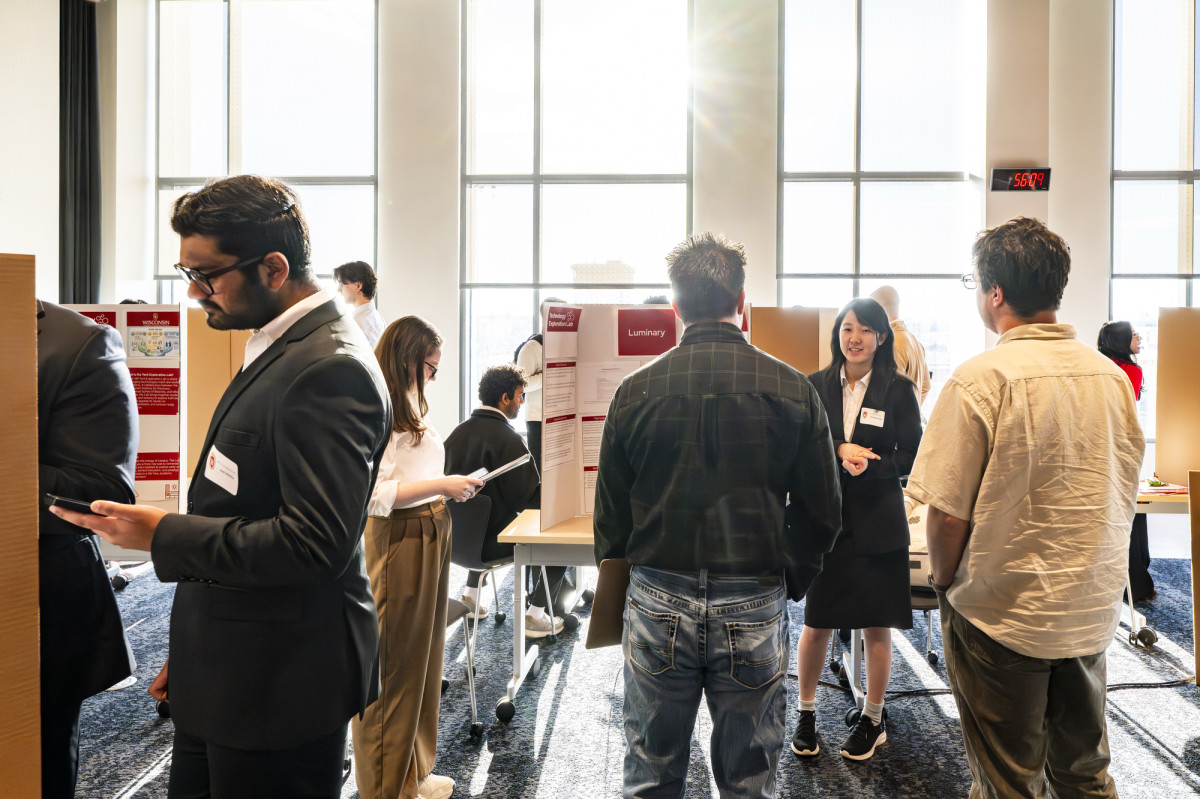
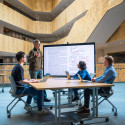
Victoria Yang talks about Luminary, a weekly skincare and skin concern tracker and journal where the user is able to input their weekly skincare schedule and monitors how their skin responds over time, during the UW Tech Exploration Lab. Photo: Taylor Wolfram / UW–Madison
At Demo Night, the public showcase for the UW Tech Exploration Lab, University of Wisconsin–Madison students presented prototypes at the intersection of emerging technology, entrepreneurship and applied problem-solving. Held at Morgridge Hall, the event drew a packed room of students, faculty and judges for live demonstrations and awards.
Led by the Wisconsin School of Business in collaboration with Wisconsin Institute for Discovery, the lab is built around a simple expectation: Students come to build, test and refine projects with real users and real problems in mind. In a moment when AI has accelerated the pace of prototyping, the lab gives students a place to work across disciplines and move from concept to working demo quickly.
“Students are here because they want to build a project, they want to test out their ideas and they want to create something that existed only in their mind before but now exists in the physical world,” says Mai Nguyen, the lab’s ventures and strategy fellow.
That mindset showed up across the room in projects shaped by student curiosity and community needs.
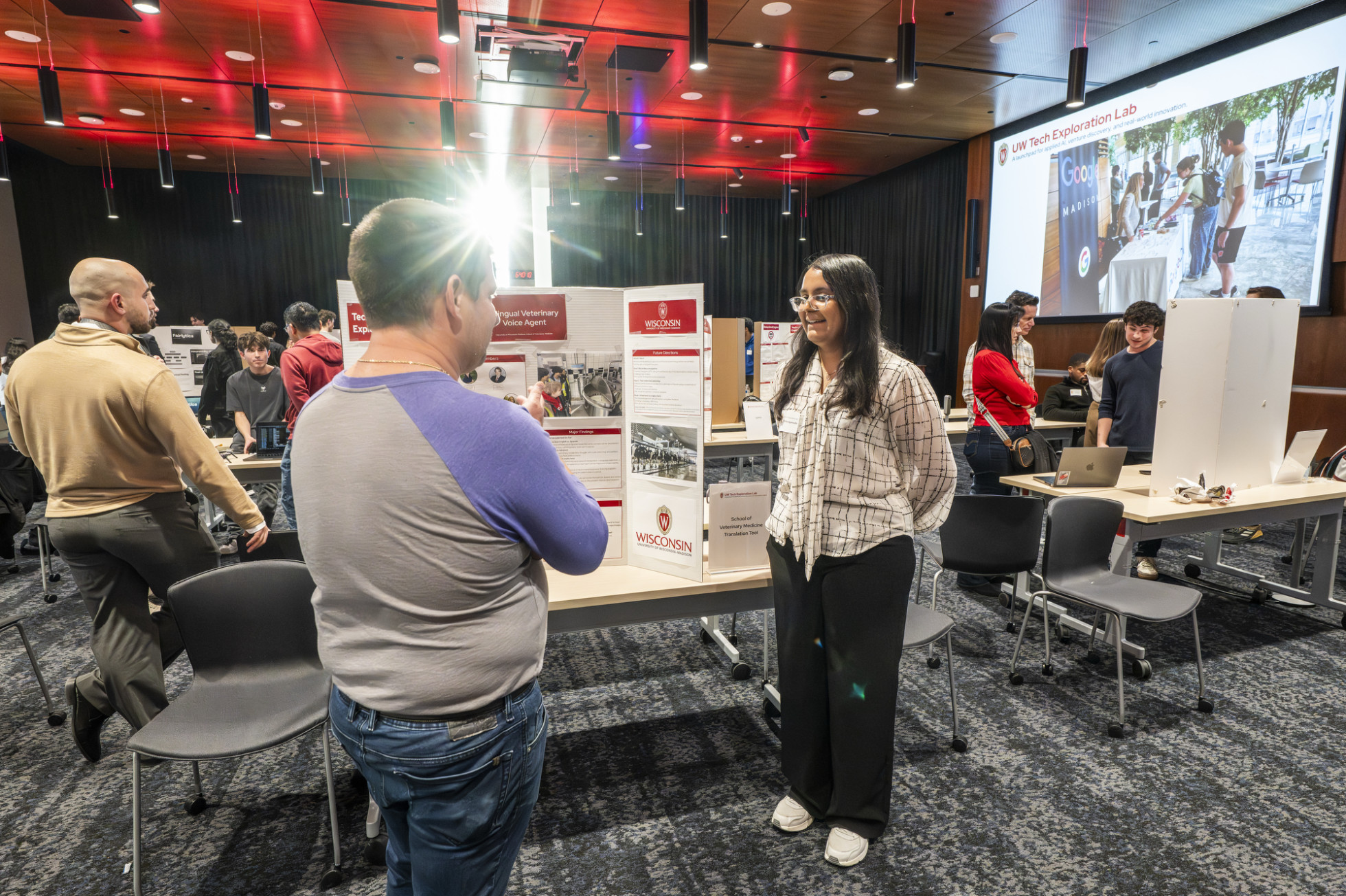
A team working with the School of Veterinary Medicine is developing a bilingual voice agent designed to help improve communication between Spanish-speaking dairy farm workers and English-speaking veterinarians. The tool is built to recognize veterinary vocabulary and isolate voices in noisy farm environments where quick and clear communication can affect animal welfare, worker safety and food safety.
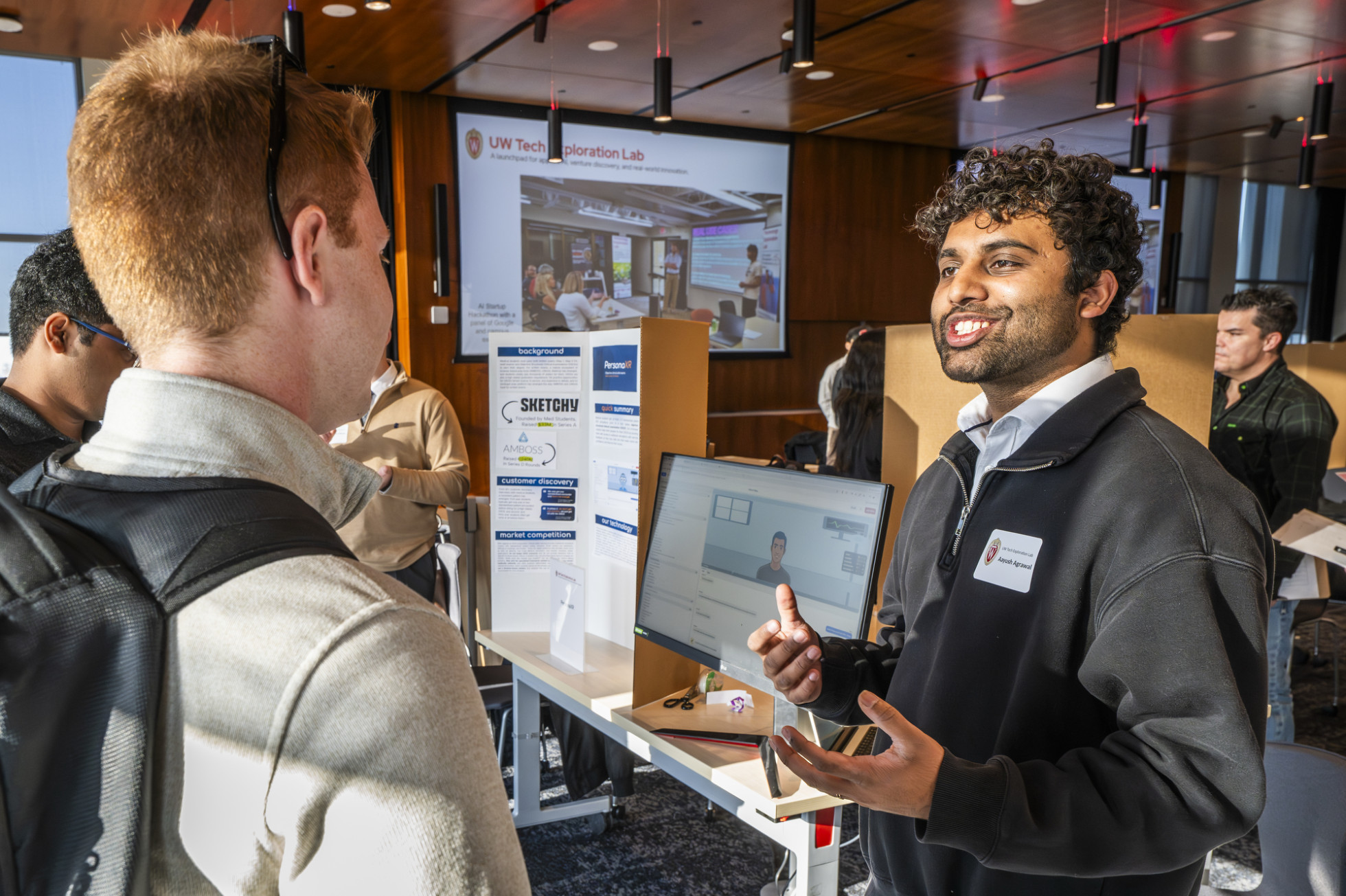
Nearby, another team showcased PersonaXR, a browser-based tool designed to help medical students prepare for Objective Structured Clinical Examinations, or OSCEs. “In order to make healthcare more accessible, we need to start with healthcare education,” said first-year medical student Pouya Mirzaei of the UW School of Medicine and Public Health. Mirzaei said early testing showed 80% of students said it improved their confidence going into exams.
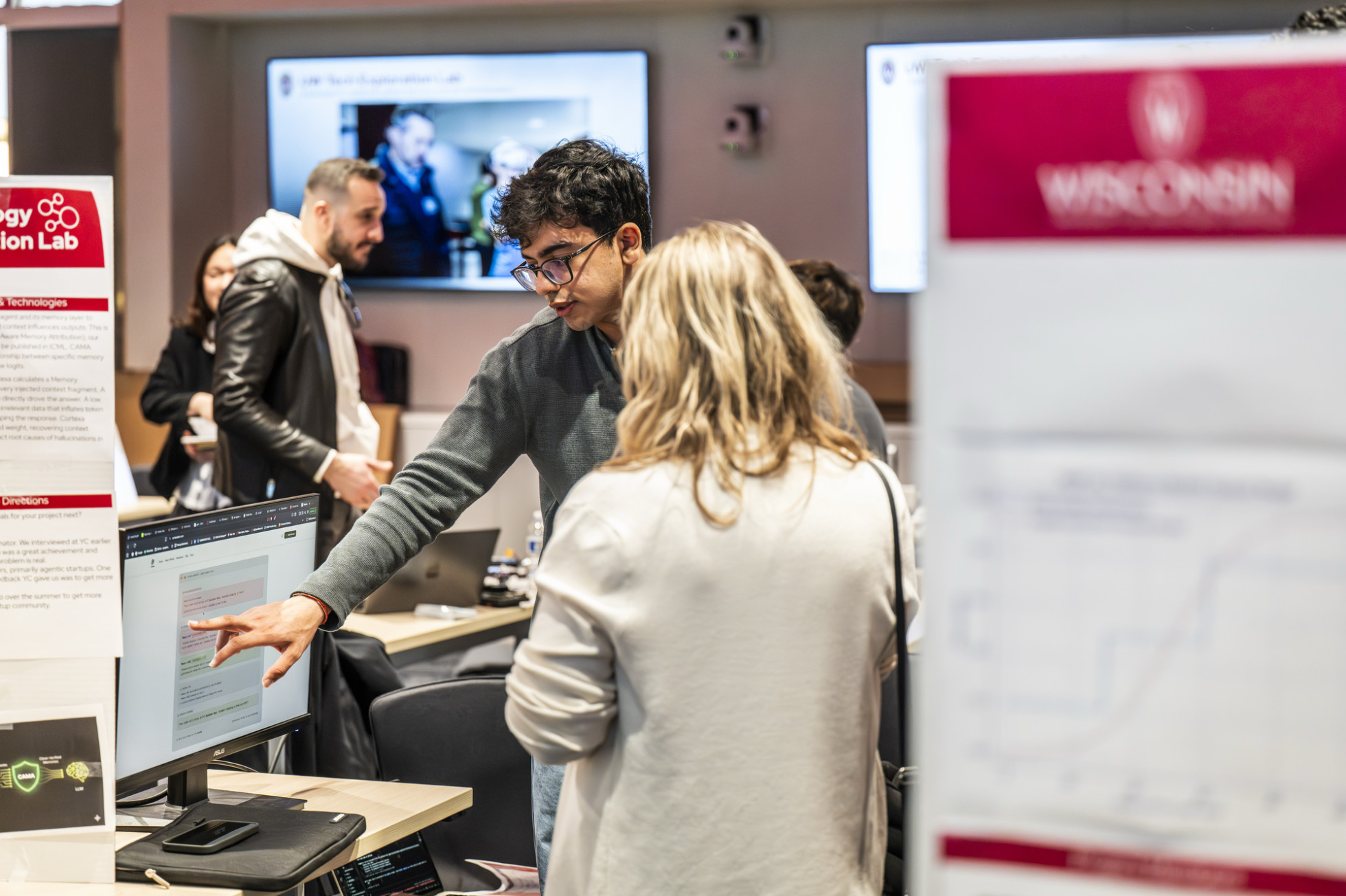
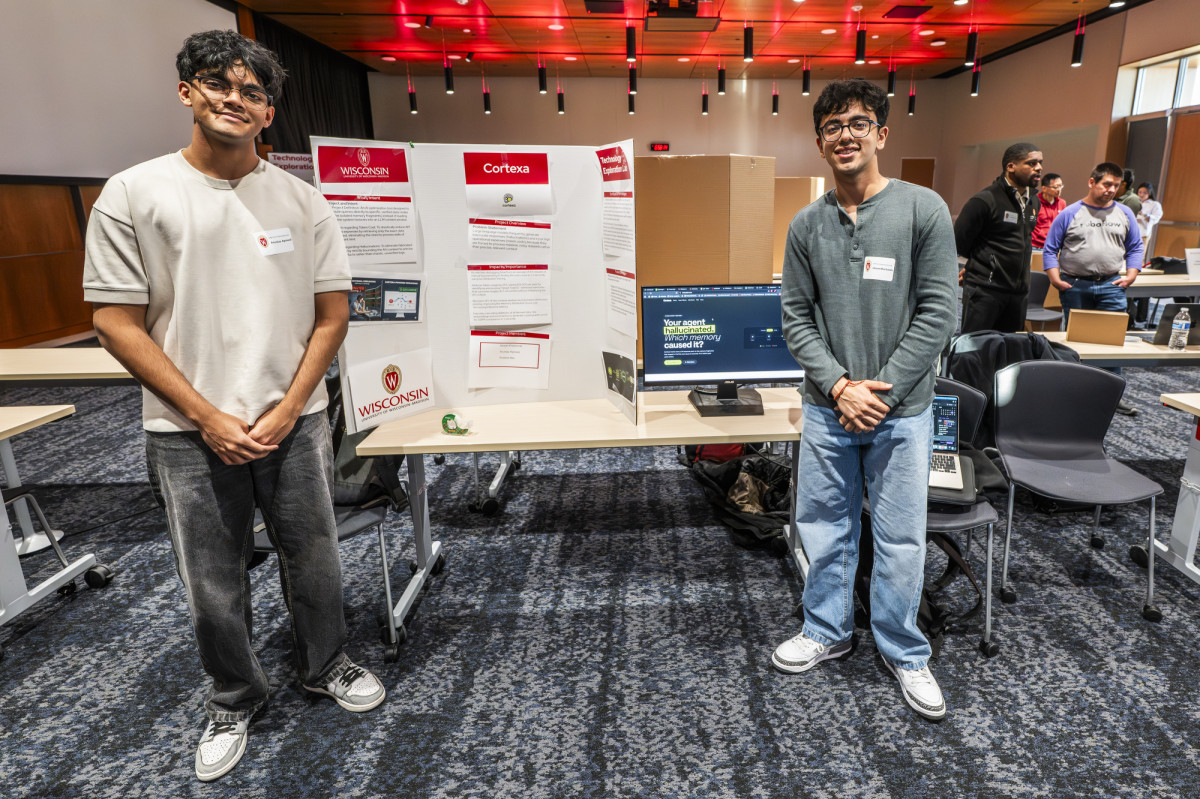
Other projects tackled one of AI’s most persistent problems: hallucinations. Cortexa, built by computer science students Ishaan Kharbanda and Arunjay Agrawal, is an observability platform designed to make AI agents more reliable by reducing hallucinations, improving memory and lowering token costs. The team said they already have customers and are interviewing with Y Combinator. “We were never on the startup track,” said Kharvand, who had been planning to pursue a PhD. Agrawal put it simply: “I was picturing, like, a normal job.”
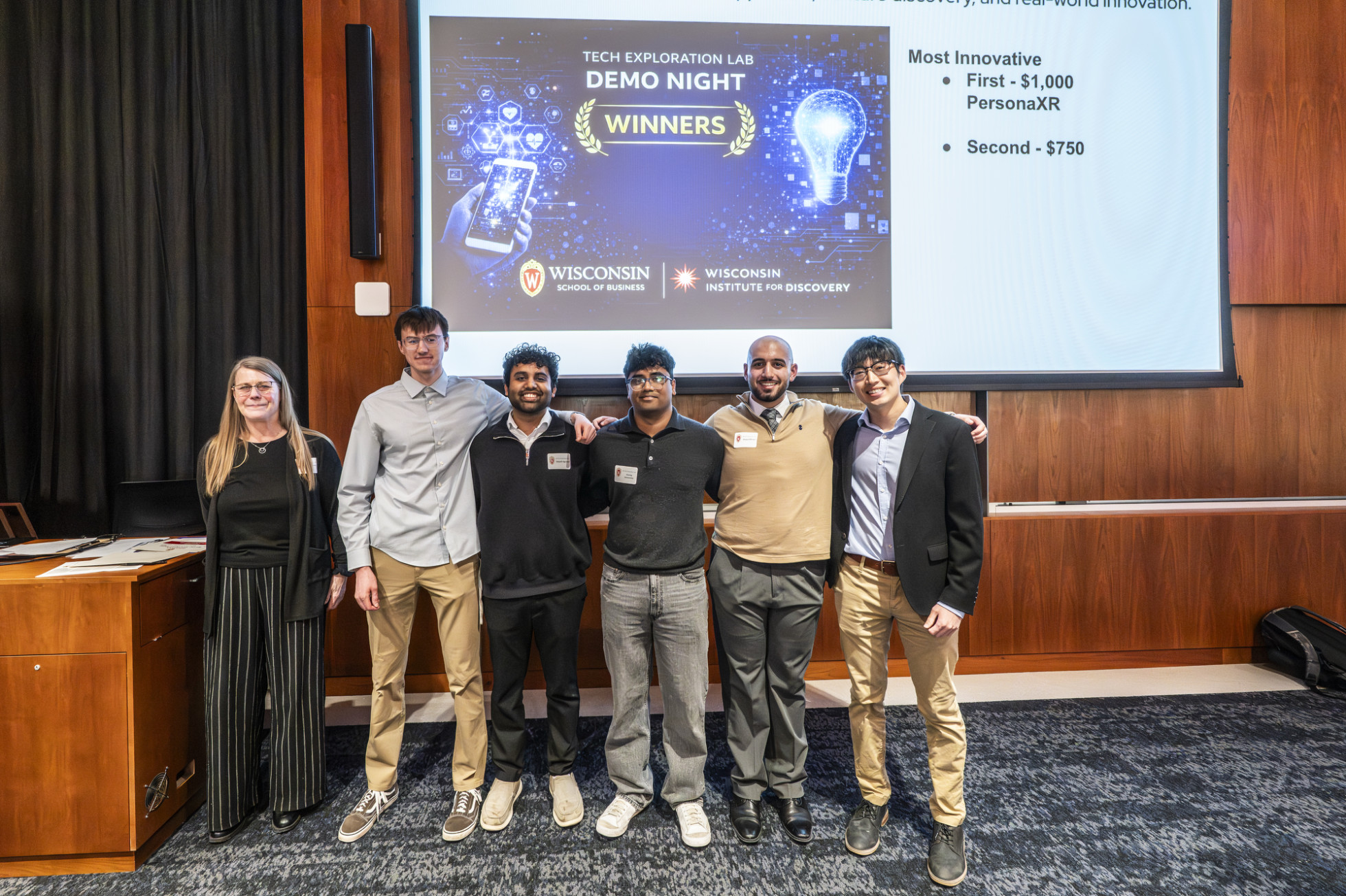
At the end of the evening, the lab recognized standout student work with awards for innovation and venture potential. PersonaXR earned first place for “Most Innovative.” Cortexa received first place for “Most Impactful/Best Venture.”
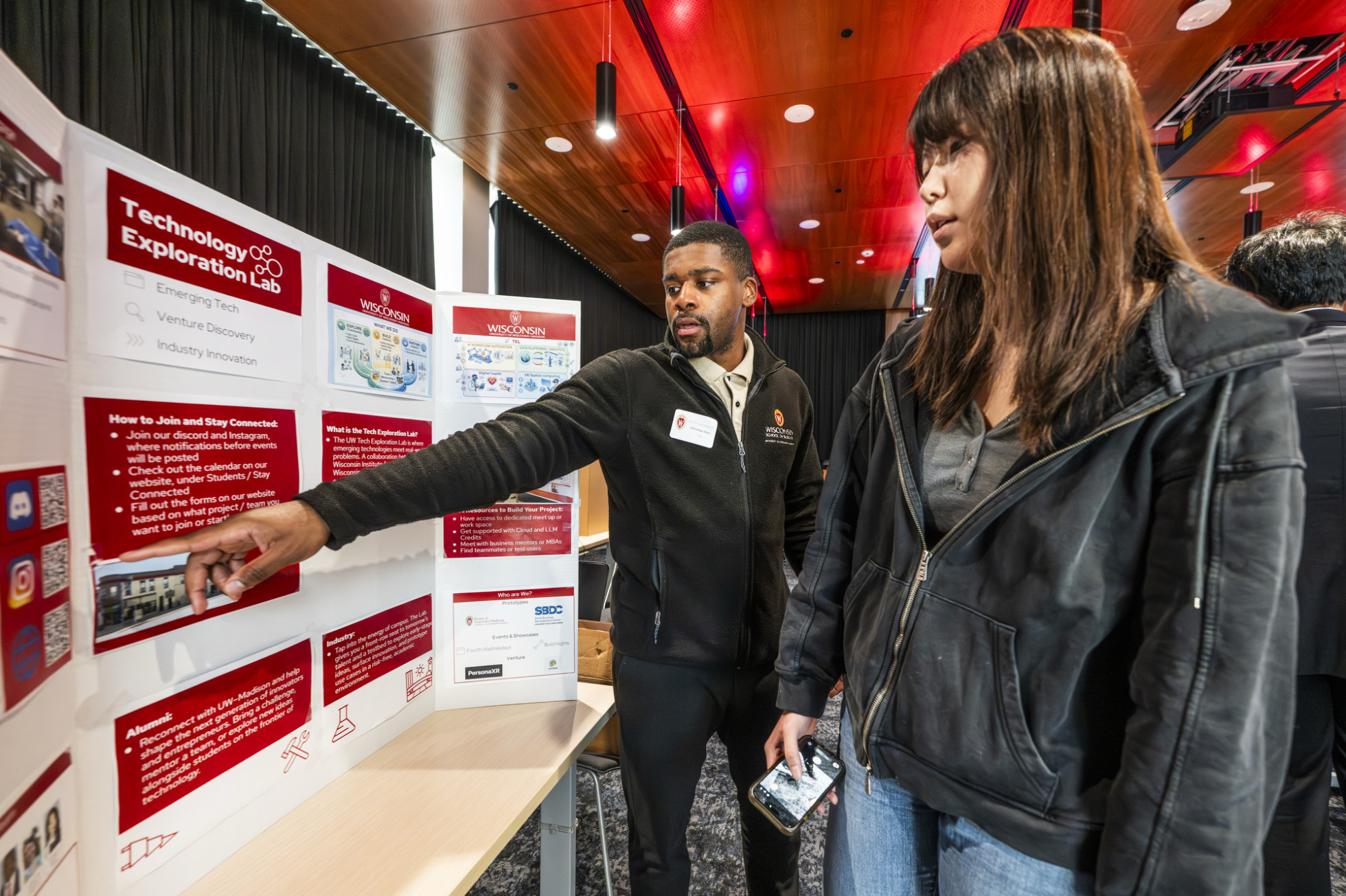
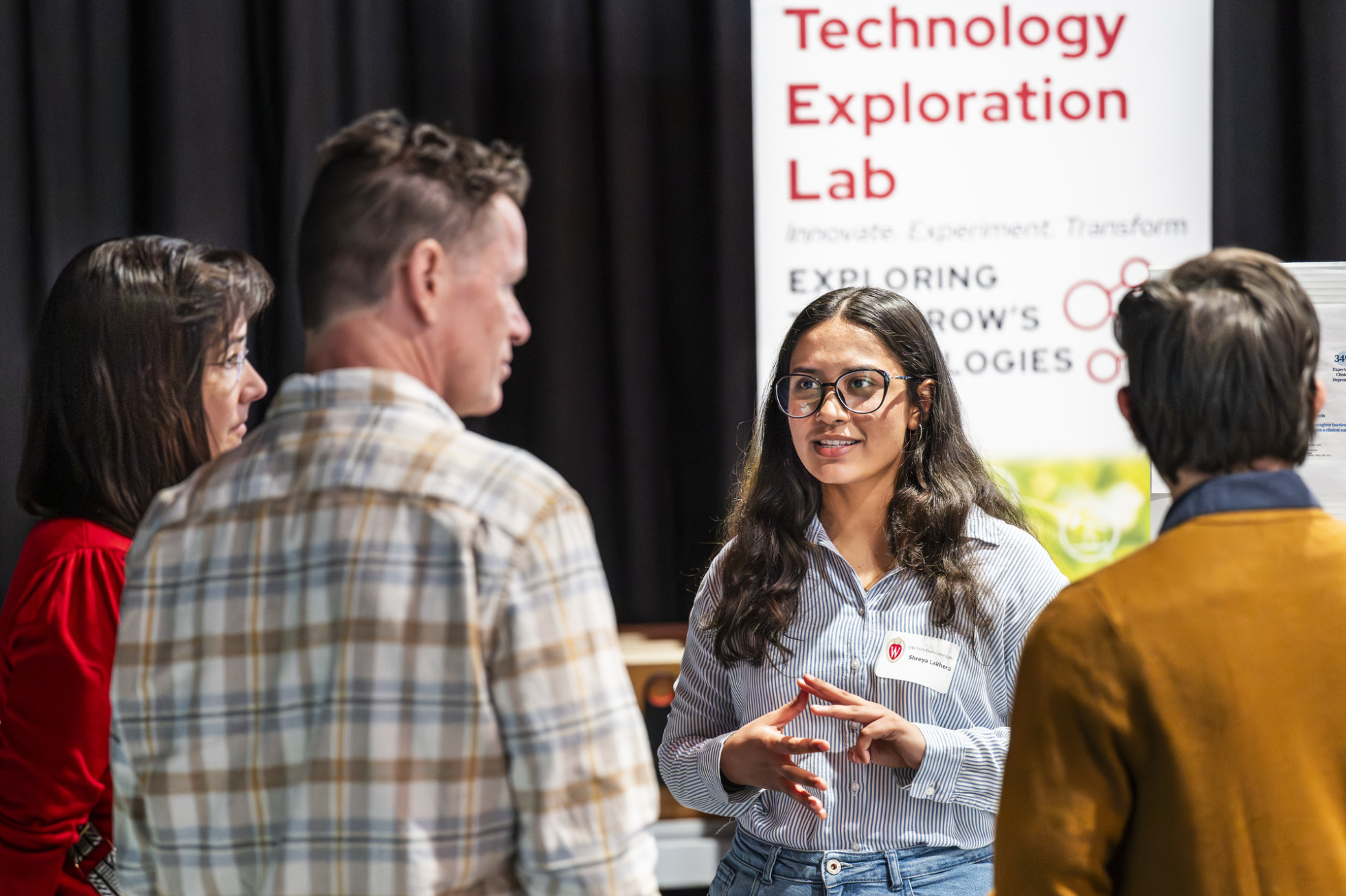
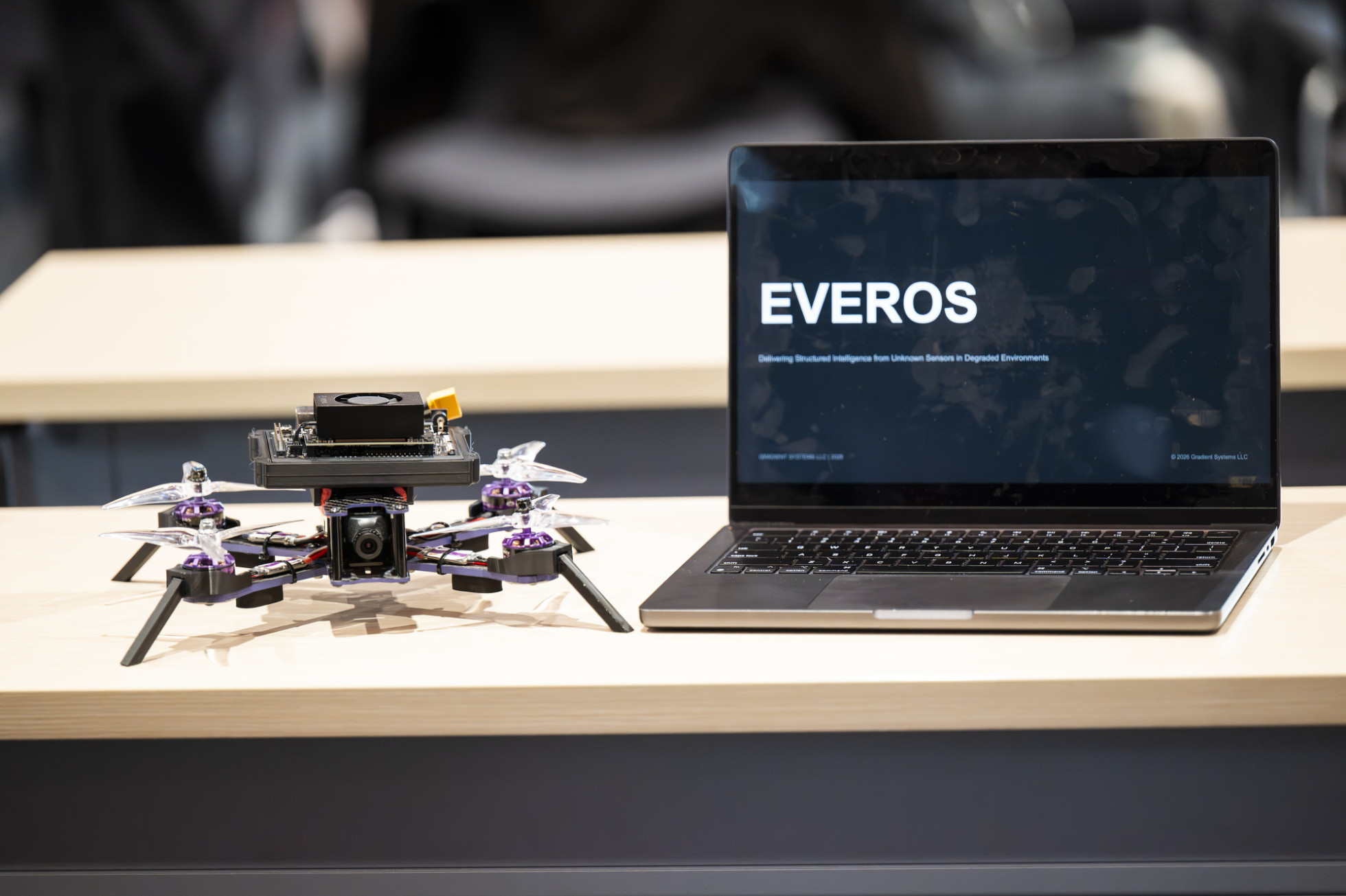
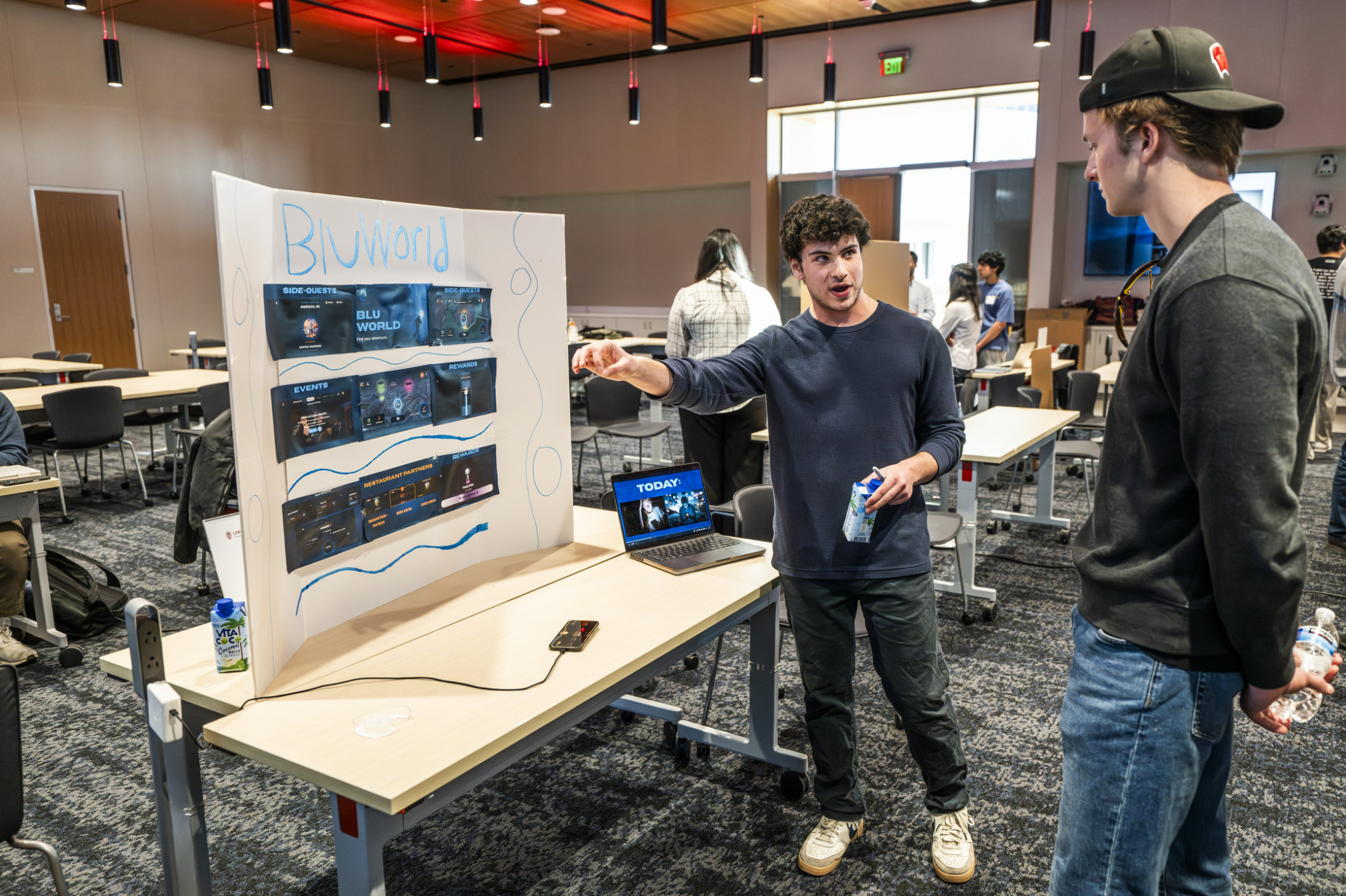
Ishaan Kharbanda talks about Cortexa, which builds a memory observability layer for AI agents to reduce hallucinations and improve reliability by tracking how agents store and use information. Photo: Taylor Wolfram / UW–MadisonPrisha Agarwalla (right) talks about the School of Veterinary Medicine — Translation Tool, an AI translation tool to improve communication between English-speaking veterinarians and Spanish-speaking dairy farm workers in real time. Agarwalla, a first-year student majoring in computer science and data science, said the project introduced her to an industry she had not known much about before arriving at UW–Madison. As a part of the project, she had the opportunity to visit a dairy farm. She said she was surprised to learn there was only one bilingual person on the entire farm, and she left with a new perspective on how her CS skills could apply in agricultural settings. Photo: Taylor Wolfram / UW–MadisonMBA Leadership Fellow Christian Eken (left) talks about how to get connected to the Technology Exploration Lab. Photo: Taylor Wolfram / UW–MadisonArunjay Agrawal (left) and Ishaan Kharbanda (right) built a memory observability layer for AI agents to reduce hallucinations and improve reliability by tracking how agents store and use information. Photo: Taylor Wolfram / UW–MadisonShreya Lakhera talks about “The Invisible Patient,” a conversational AI app designed to help caregivers with their mental health and prevent burnout. Photo: Taylor Wolfram / UW–MadisonA piece of technology from student-led EverOS, which delivers automated situational awareness by integrating data from unknown and distributed sensors into a unified, real-time intelligence layer in contested environments, enabling fast, autonomous decision-making in defense and other high-stakes settings. Photo: Taylor Wolfram / UW–MadisonAayush Agrawal discusses PersonaXR, a medical training simulation platform which provides customizable, browser-based clinical exam simulations to help medical students prepare for oral exams (OSCEs) and improve readiness and pass rates. Photo: Taylor Wolfram / UW–MadisonA student showcases BluWorld, a social platform designed to get people off their phones and into real-world experiences by helping users discover what’s happening in their city through gamified rewards and local business partnerships. Photo: Taylor Wolfram / UW–MadisonAt the end of the evening, the lab recognized standout student work with awards for innovation and venture potential. PersonaXR earned first place for “Most Innovative.” Cortexa received first place for “Most Impactful/Best Venture.” Director of the Tech Exploration Lab Sandra Bradley (far left) stands with members of PersonaXR (from left to right) Mathom Johnson, Aayush Agrawal, Anurag Janaswamy and Pouya Mirzaei after their win. Photo: Taylor Wolfram / UW–Madison