Abbott visit marks UW–Madison’s ‘We Give Blood’ competition win
Abbott and the Big Ten Conference presented a $1 million award to support student well-being and participated in campus events with students, researchers and leaders.
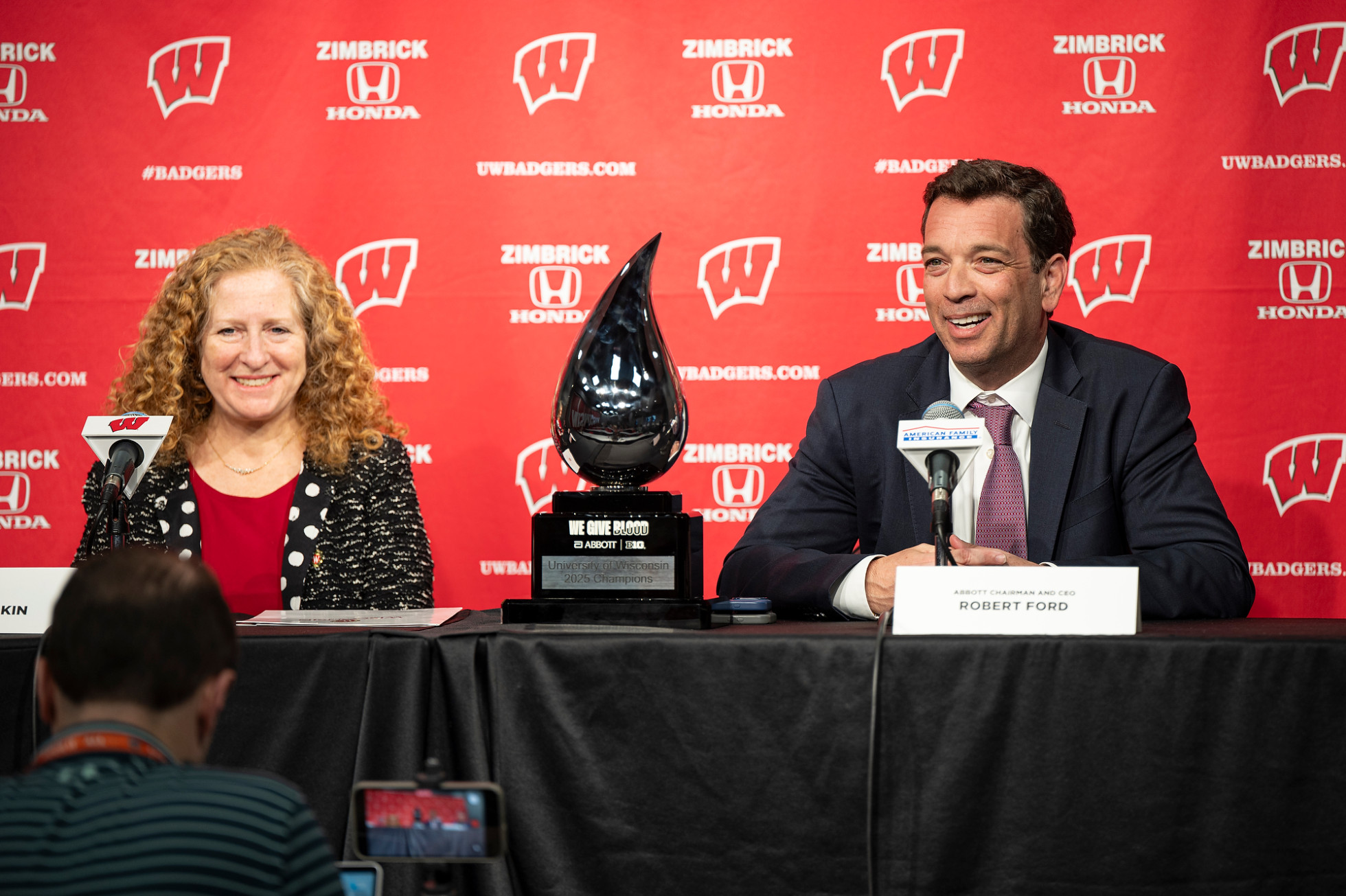
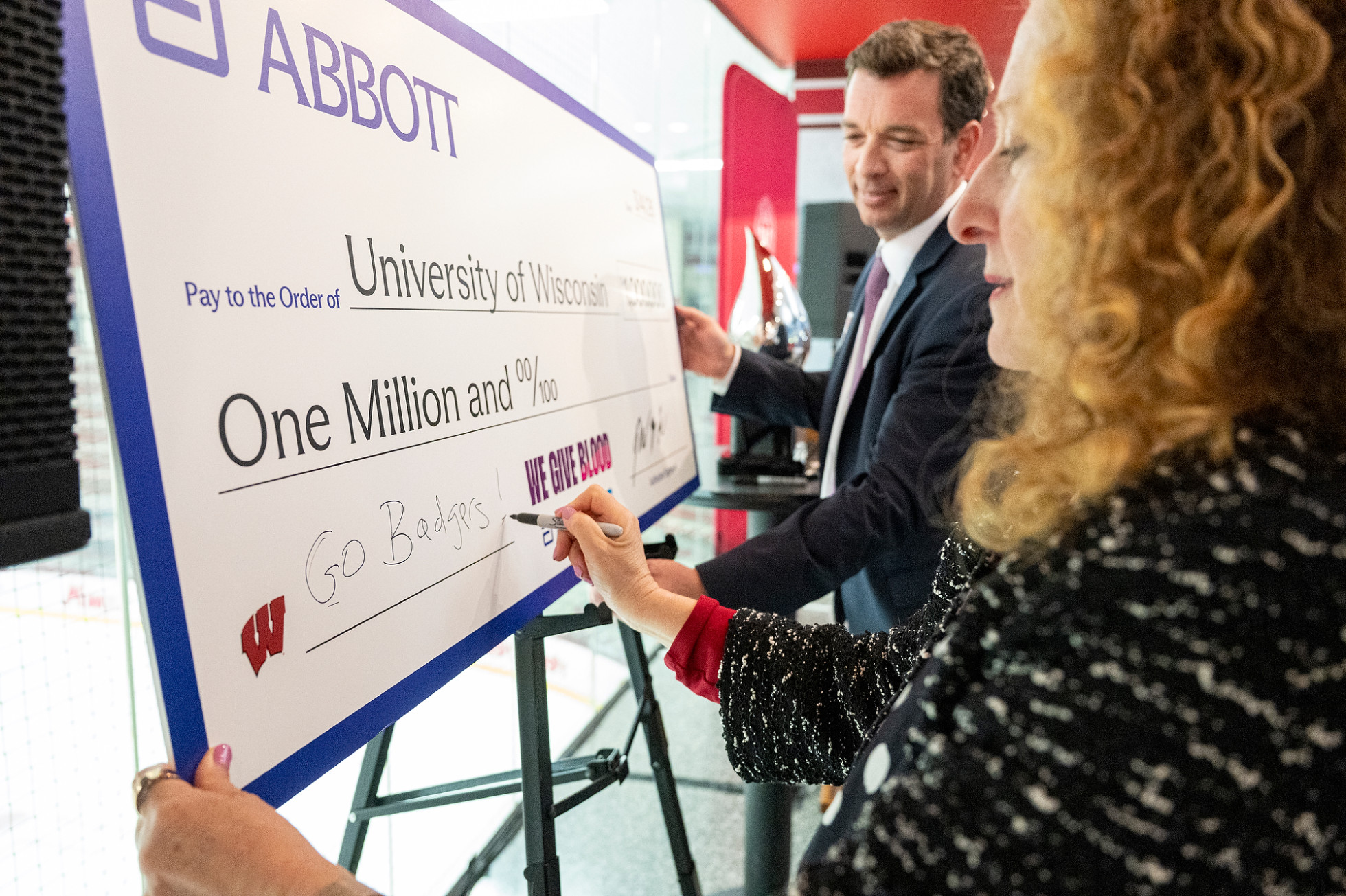
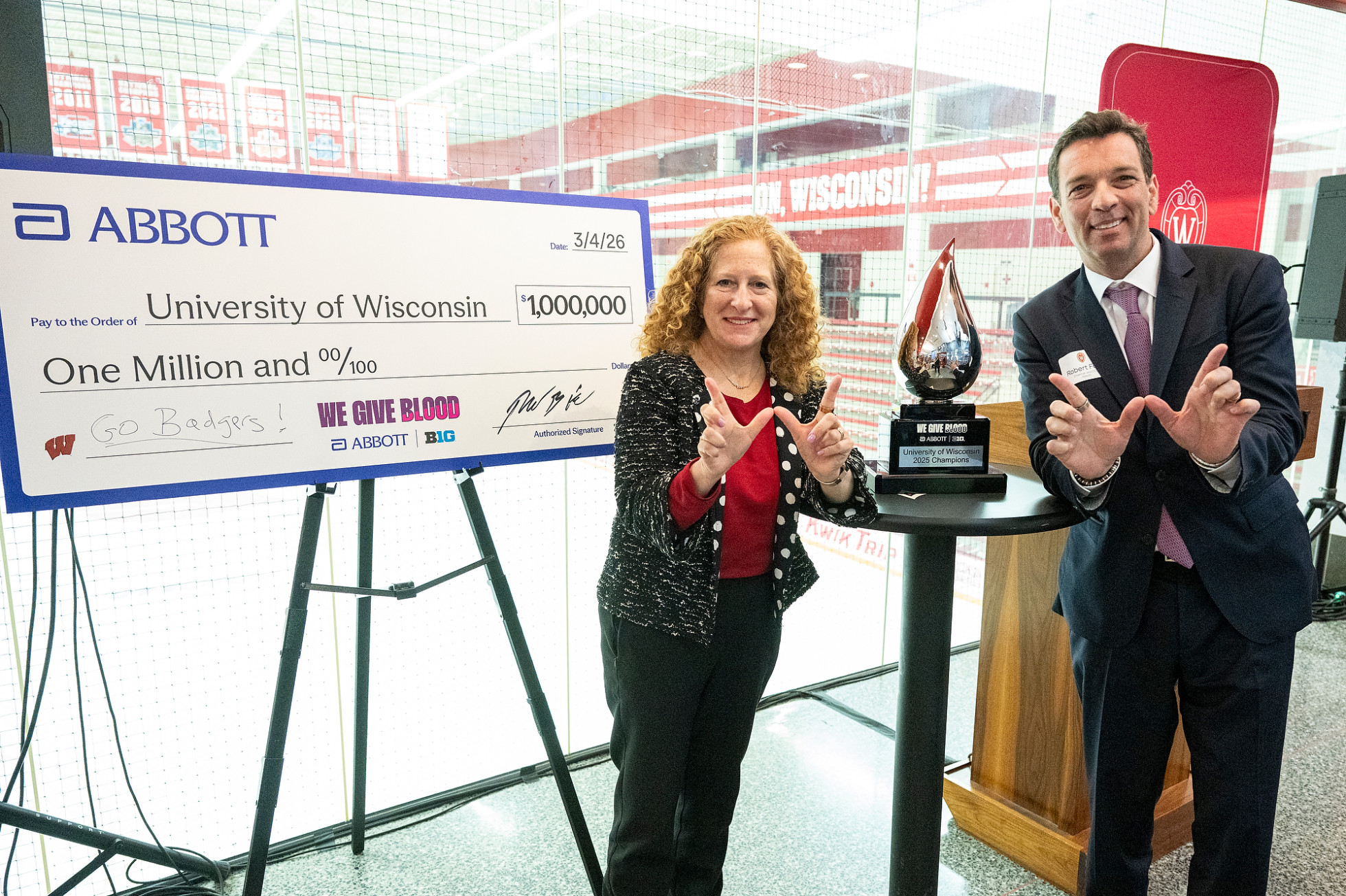
On Wednesday, March 4, leaders from the global health care company Abbott and from the Big Ten Conference made a daylong visit to the University of Wisconsin–Madison to recognize the campus’s first-place finish in their “We Give Blood” competition. UW–Madison accepted the competition trophy and a $1 million award during the Wisconsin men’s basketball game against Maryland at the Kohl Center on Wednesday evening.
Now in its second year, Abbott and the Big Ten’s national blood donation competition leverages the conference’s coast-to-coast reach to help address nationwide blood shortages and save lives. The initiative aligns with Abbott’s focus on improving health outcomes by strengthening access to care, including the blood supply that many patients rely on every day.
“The ‘We Give Blood’ competition is already having a tremendous impact, and we want to keep building on that momentum together. As we look ahead to year three, I’m hopeful we can raise the bar even higher, and I hope UW continues to help lead the way,” said Melissa Brotz, Abbott’s chief marketing, communications, and sustainability officer, during the Wednesday event.
UW–Madison’s 15,476 donations will help save up to 46,428 lives. Across the Big Ten, according to Abbott, 83,043 donations could help save up to 249,129 lives. Donations across the conference increased 300% compared to the previous year, and leaders hope they are building the next generation of lifelong donors.
A $1 million gift to support campus well-being
On Wednesday morning, Vice Chancellor for Student Affairs Lori Reesor welcomed representatives from Abbott, the Big Ten and campus to the university’s Bakke Recreation & Wellbeing Center. She framed the current student well-being landscape and outlined how Abbott funds will support new and expanded student initiatives.
For example, funds from the gift will support a new on-campus challenge course for team building and leadership development, expand peer wellness training and coaching, and establish a concert series modeled after Carnegie Hall’s Well-Being Concerts called Wisconsin ArtsRx.
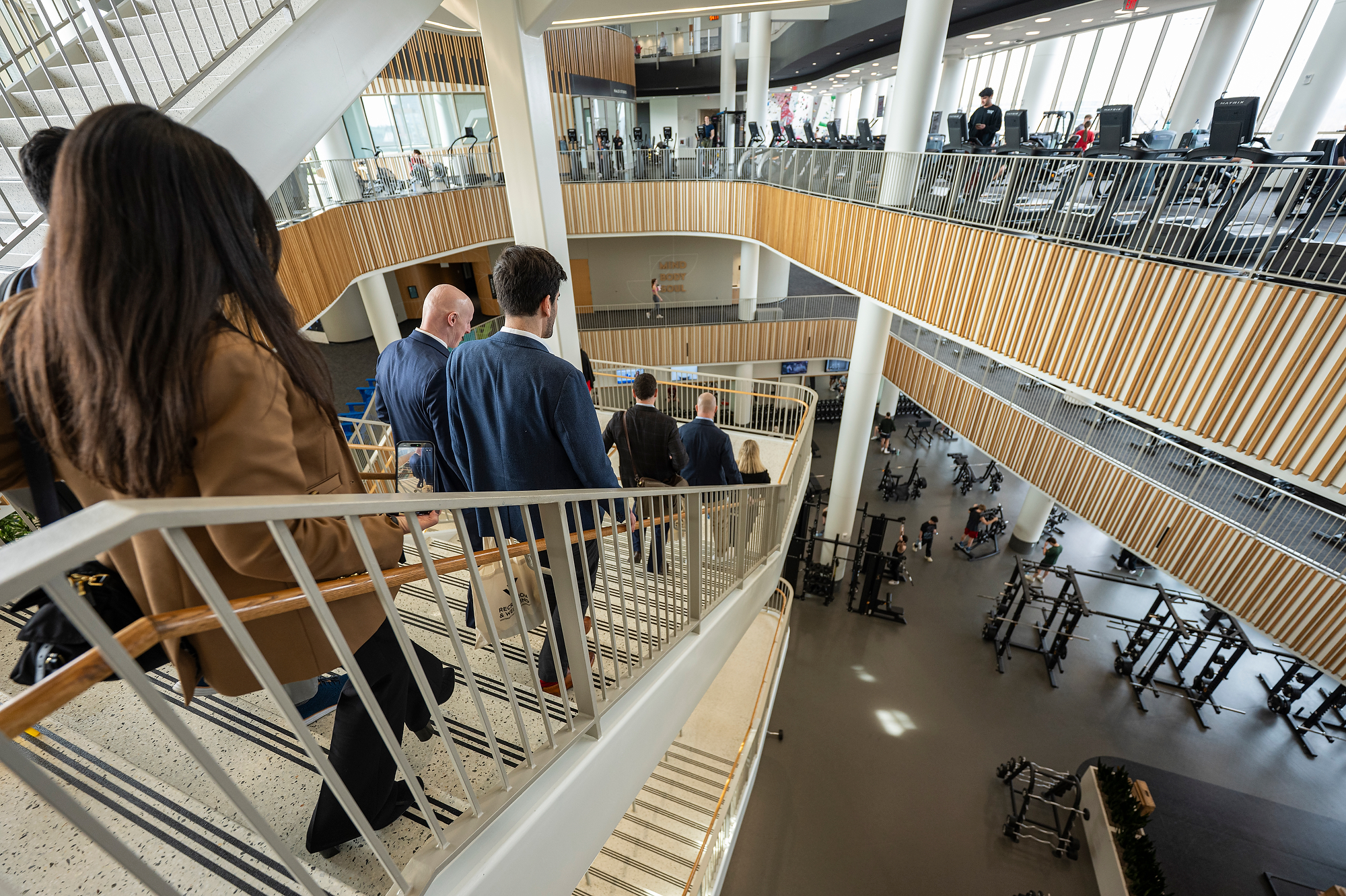
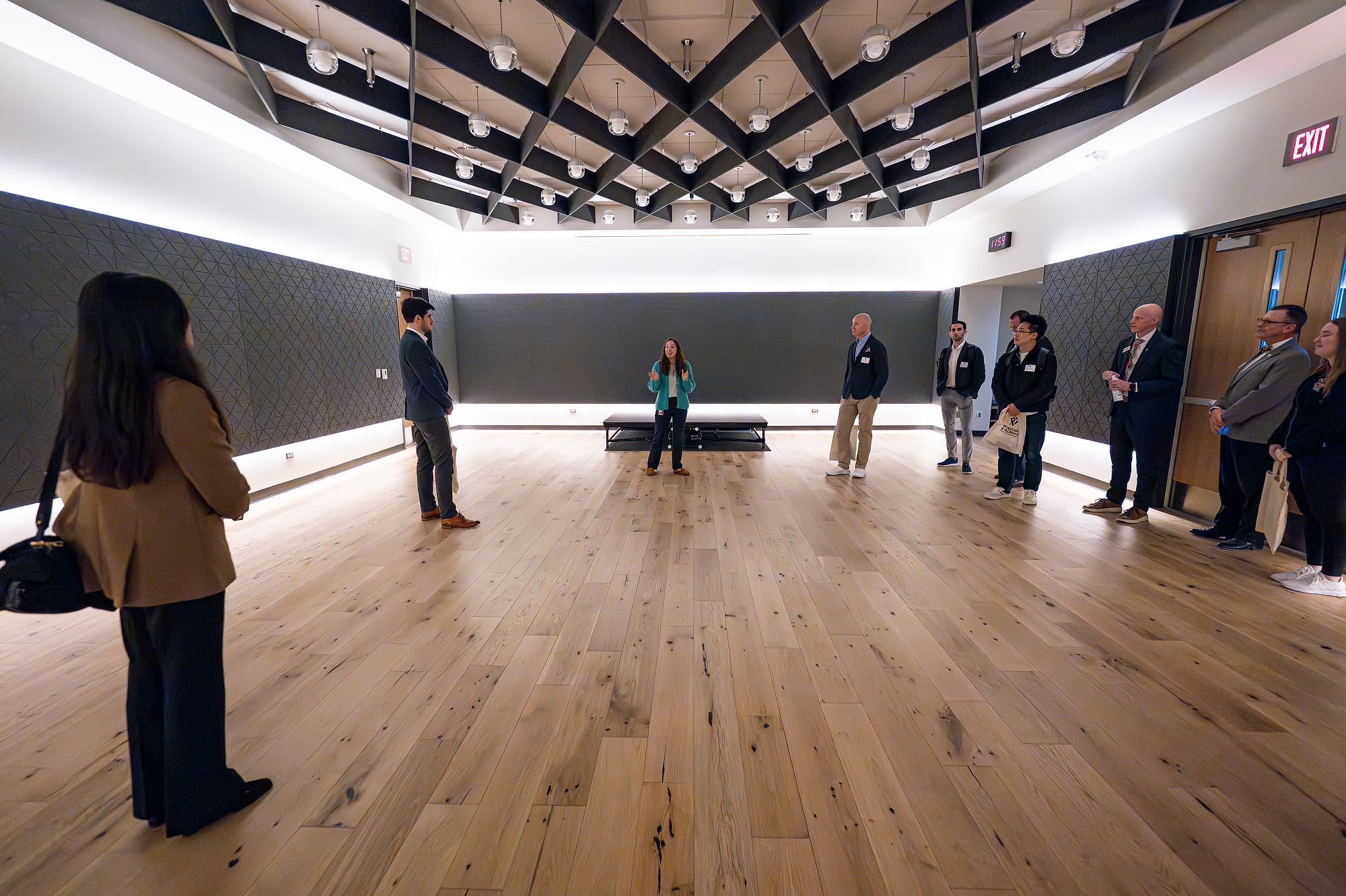
The funding will also strengthen student access to fresh, locally grown produce from University Housing’s campus farm and support student grants for health research, student wellness organizations and student-athlete leadership and well-being.
At Bakke, a panel of students also emphasized the importance of peer connection and access to wellness resources on campus.
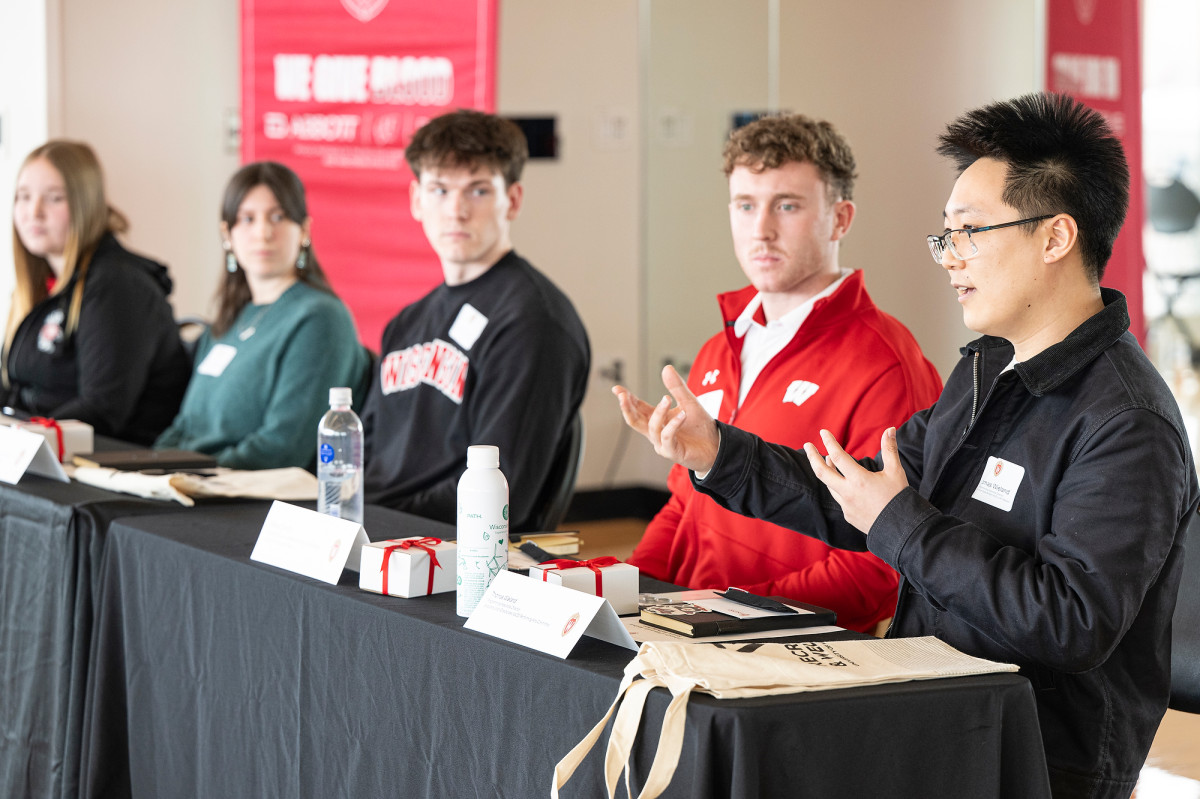
William Smith, president of the Student-Athlete Advisory Committee and a member of the Badger men’s soccer team, emphasized the connection between mental fitness and physical fitness: “If you’re both, you will perform at your highest level.”
UW–Madison leads the nation in the number of mental health specialists in the athletic department, with eight on staff.
“It’s great to see the downstream impact [of our gift] on campus,” Brotz noted.
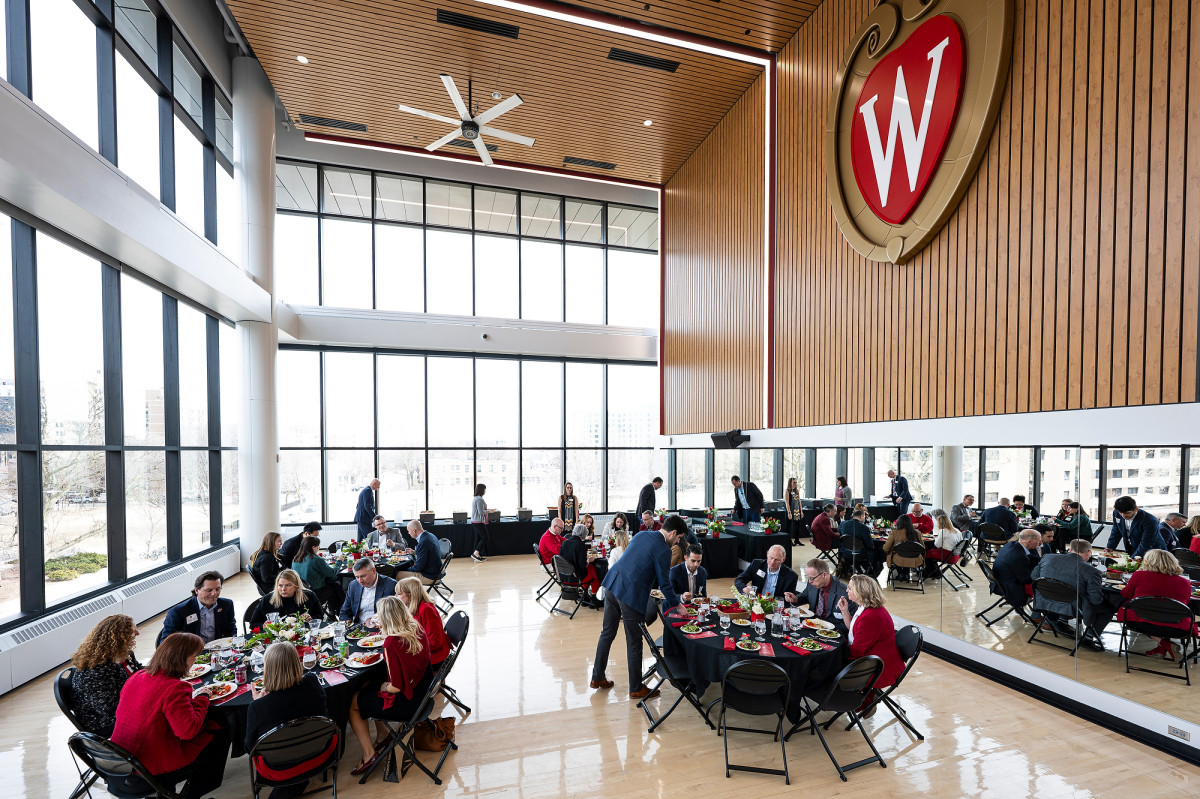
UW–Madison later hosted an appreciation luncheon and program at the Nicholas Recreation Center. Speakers included Chancellor Jennifer Mnookin, Mitchell Pinta of Wisconsin Athletics, Abbott’s Brotz, Kerry Kenny of the Big Ten Conference, Student Affairs’s Reesor, and Kate Hopkins, a student ambassador and co-chair of UW–Madison’s “We Give Blood” effort.
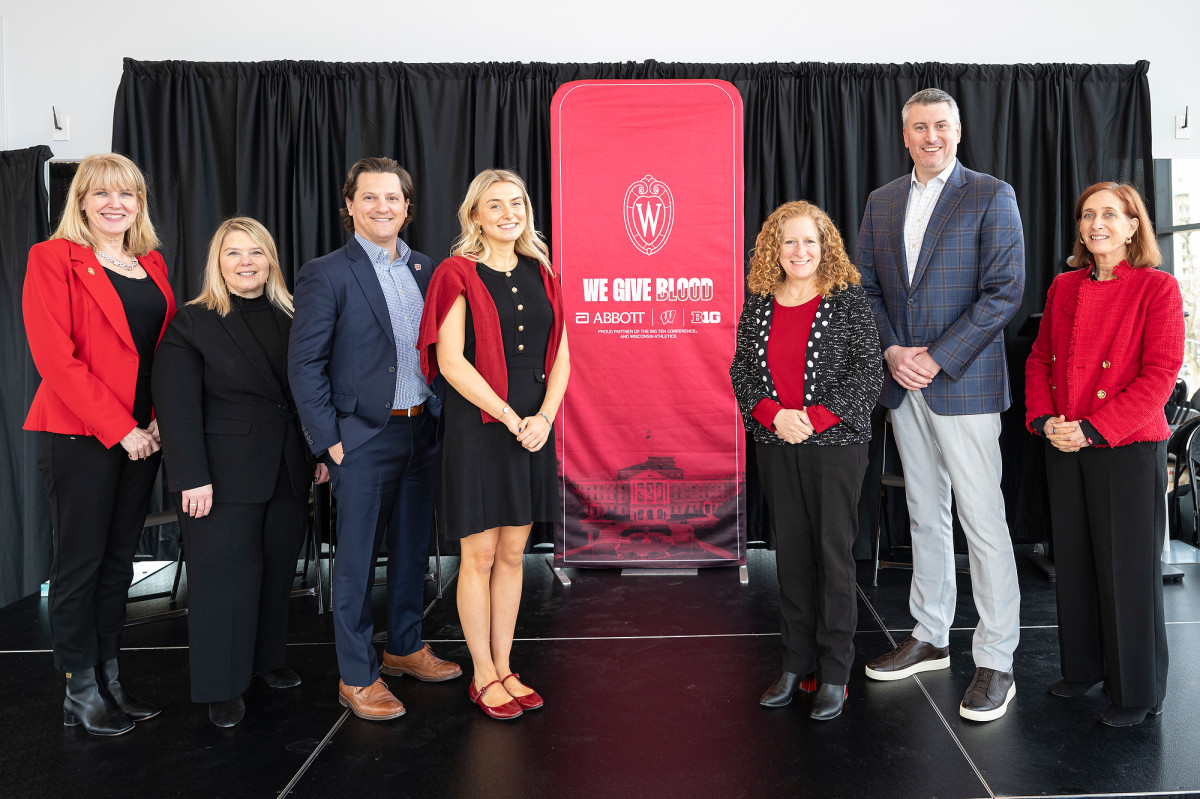
Speakers reflected on a simple premise with immense impact: When the Big Ten’s competitive spirit is aimed at the public good, it can help save and improve lives. Year-two participation in the competition grew thanks to student leadership, which served as a key driver of UW–Madison’s performance.
“Badgers are passionate, driven, spirited and a little competitive,” Hopkins said. “We love our sports, we love to win, and we love the celebrations that follow. But we also show up — fully — for things that matter.”
Leaders also highlighted Abbott’s long-term research investment at UW–Madison and the collective impact of individual actions.
“Over the past 25 years, Abbott has invested in research here not just once … or 10 times … or even 20 times, but nearly 60 times!” noted Mnookin. “That sustained commitment has made a real difference in our ability to tackle complex problems across dozens of fields, from the Carbone Cancer Center to Wisconsin dairy farms.”
Research roundtable highlights shared health and research priorities
At the School of Medicine and Public Health, the conversation shifted from celebrating impact to building what’s next. UW–Madison researchers and Abbott leaders discussed shared priorities in patient-centered care and the promise of smarter, faster diagnostics, including precision medicine, novel testing approaches, cancer detection, dementia research, health devices, and the future of artificial intelligence in health care, which has the potential to positively shape health outcomes.
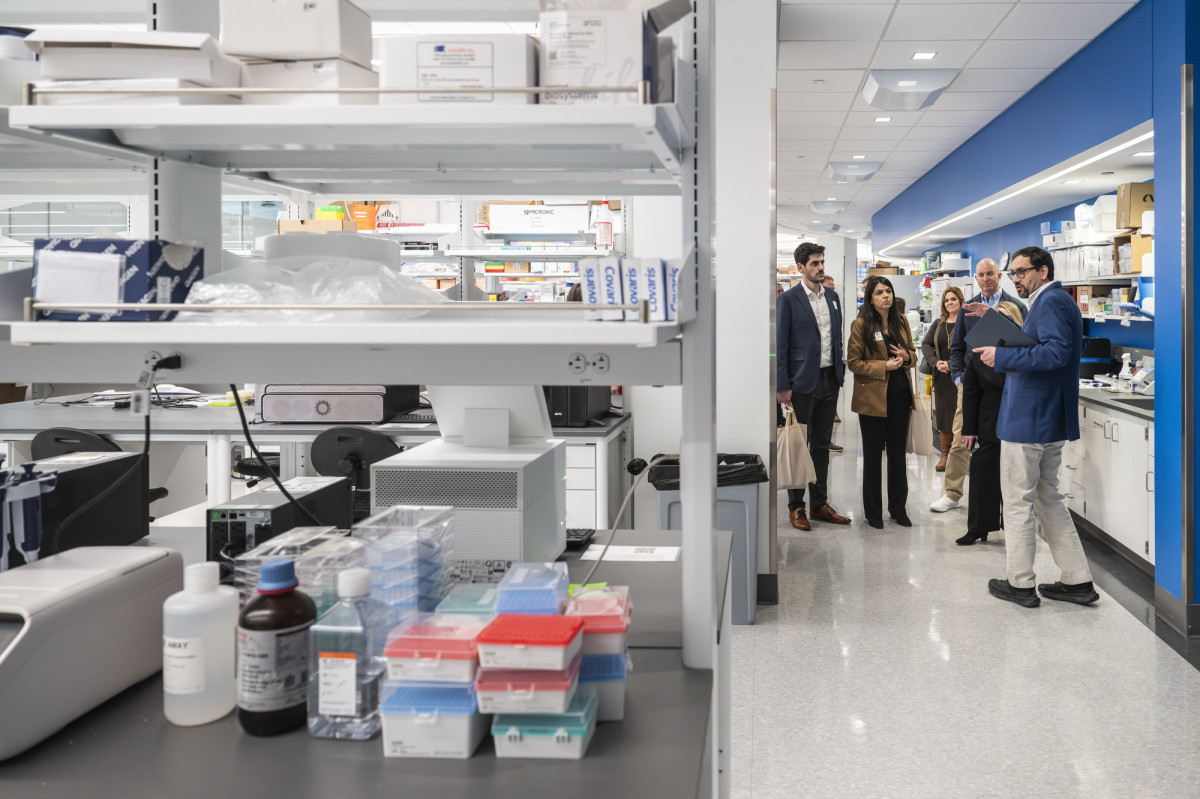
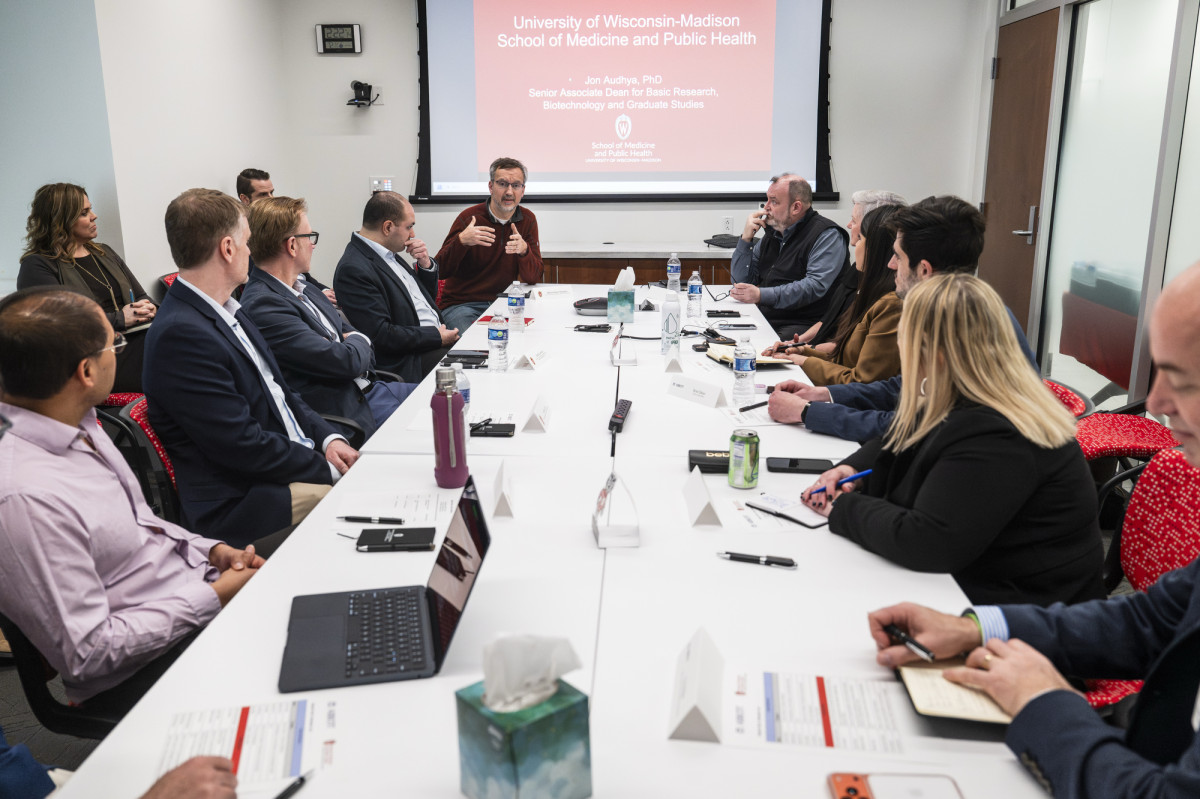
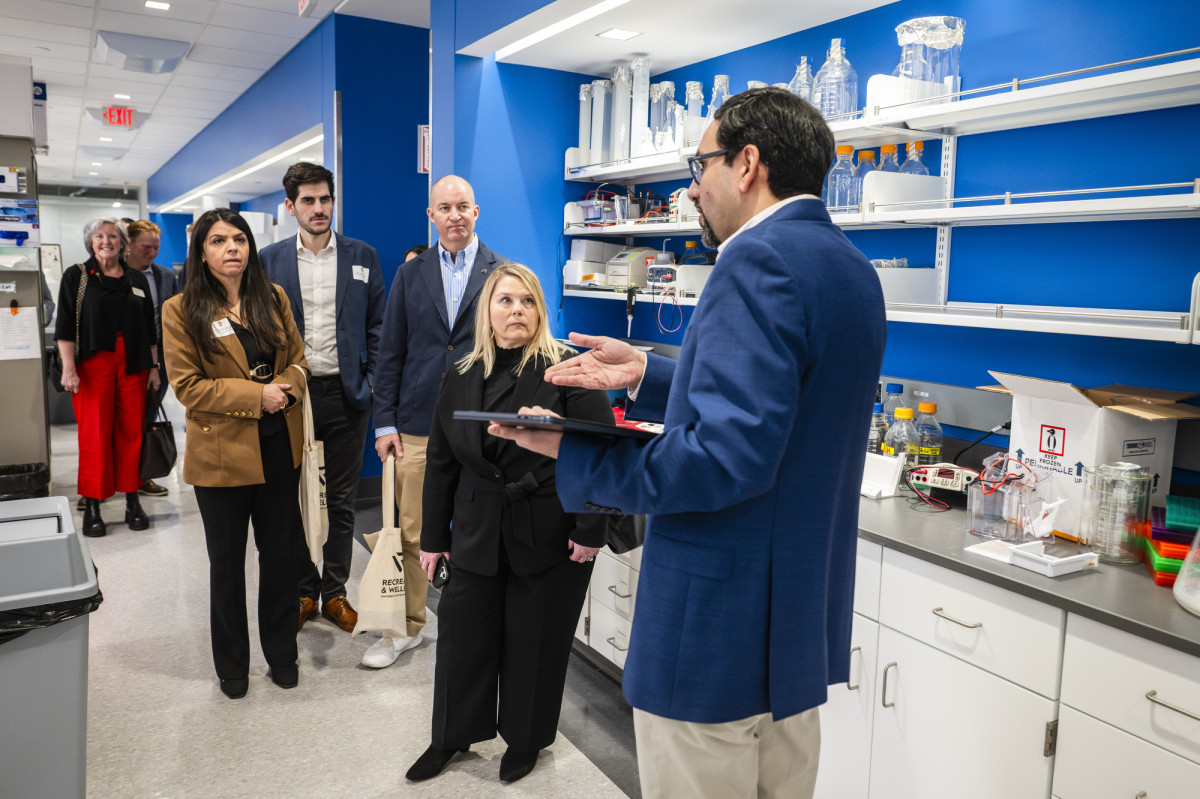
The visit also reflected Abbott’s growing ties to Wisconsin and ongoing connections through UW–Madison alumni and research partnerships.
“Patients are the heart of what we’re doing,” said Joshua Lang, associate director of translational research at the UW Carbone Cancer Center and professor of hematology, oncology and palliative care.
Kohl Center presentation emphasizes record-breaking participation
The recognition visit concluded at the Kohl Center during the Wisconsin men’s basketball game. During halftime, Abbott Chairman and CEO Robert Ford and the Big Ten’s Kenny presented Mnookin and Pinta with the check and trophy in an on‑court ceremony and recognized the remarkable level of participation across campus and throughout the conference.
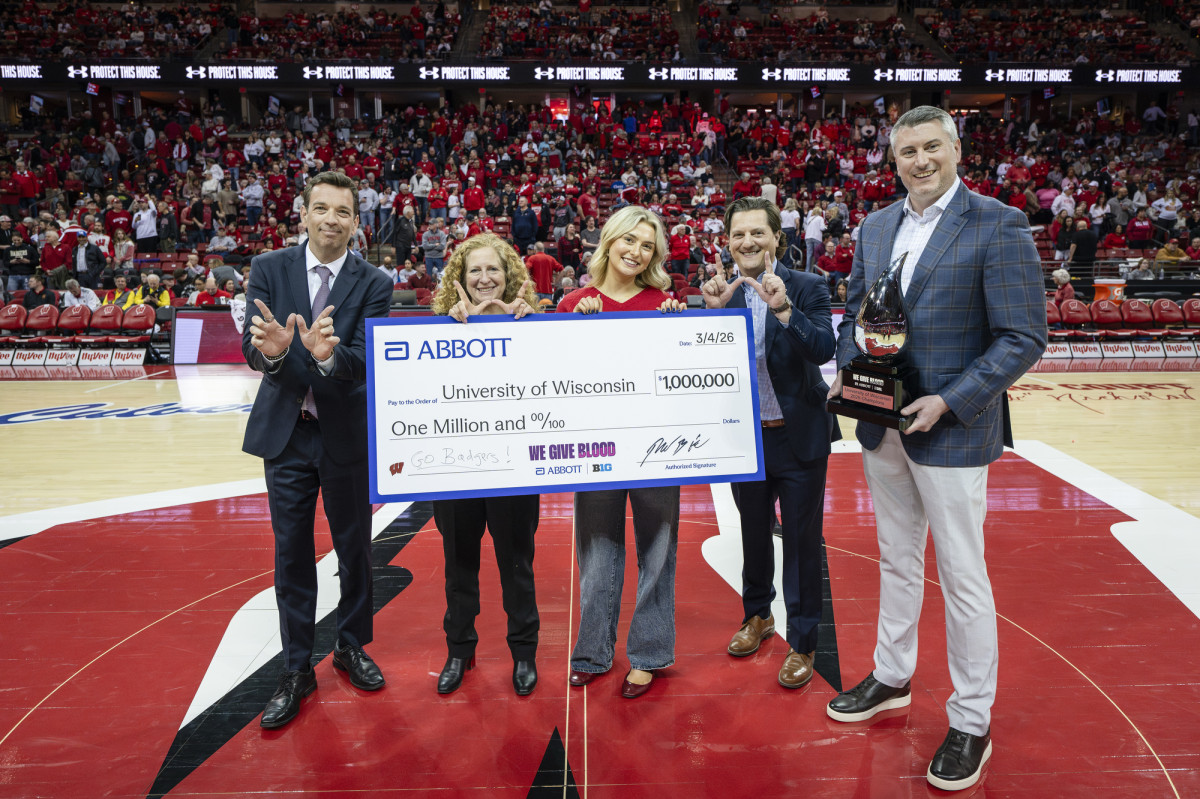
“Athletics is sometimes called the front porch of the university. Our Badger teams energize and unite people,” Mnookin said.
Ford applauded the university for its leadership and commitment.
“The ‘We Give Blood’ competition is making a real and measurable difference in communities across the country, and it’s inspiring to see the level of commitment here in Wisconsin,” he said. “UW–Madison has shown what’s possible when a campus rallies around a shared purpose, and their leadership helped drive record participation. We’re proud to support this effort and grateful for the way Wisconsin continues to set the pace in helping strengthen the nation’s blood supply.”
Mnookin called the energy behind the blood donation competition a “great example of the Wisconsin Idea in action.”
UW–Madison will continue partnering with Abbott and the Big Ten to expand participation in “We Give Blood,” and encourage a new generation of lifelong donors.