
Tag College of Engineering
Nanoscale light-emitting device has big profile
University of Wisconsin–Madison engineers have created a nanoscale device that can emit light as powerfully as an object 10,000 times its size. It's an advance that could have huge implications for everything from photography to solar power.
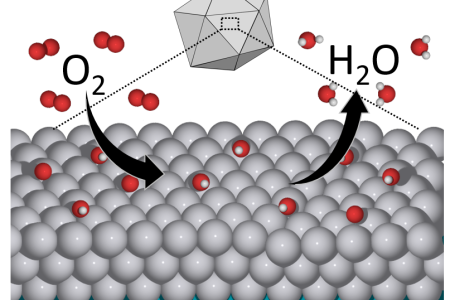
Fueled by nanoparticles, new catalyst does more with less platinum
Platinum is a highly reactive and in-demand catalyst across the chemical and energy industries, but a team of University of Wisconsin–Madison and Georgia Institute of Technology scientists could reduce the world's dependence on this scarce and expensive metal.
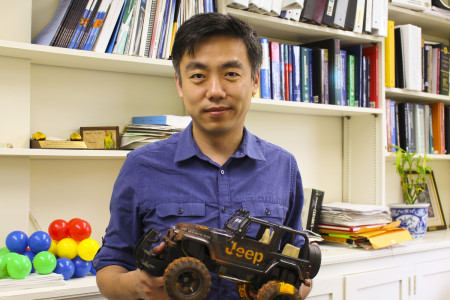
New nanogenerator harvests power from rolling tires
A group of University of Wisconsin–Madison engineers and a collaborator from China have developed a nanogenerator that harvests energy from a car's rolling tire friction.

Wisconsin engineers contribute to Grand Ethiopian Renaissance Dam discussion
UW-Madison researchers aim to bring empirical data and a multidisciplinary perspective to discussions about the construction and eventual management of the Grand Ethiopian Renaissance Dam, which will be the largest hydroelectric dam in Africa.
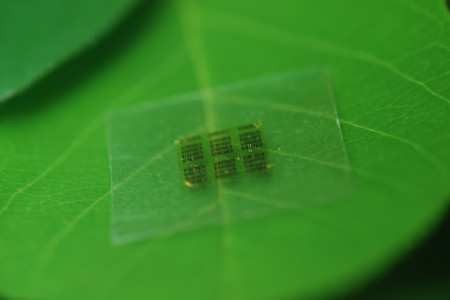
A new kind of wood chip: collaboration could lead to biodegradable computer chips
In an effort to alleviate the environmental burden of electronic devices, a team of University of Wisconsin–Madison researchers has collaborated with researchers in the Madison-based U.S. Department of Agriculture Forest Products Laboratory (FPL) to develop a surprising solution: a semiconductor chip made almost entirely of wood.

UW–Madison microgrids help power industry in Milwaukee
On the same site in Milwaukee where the A. O. Smith Corporation once built airplane and auto parts for the military during both world wars, University of Wisconsin–Madison energy researchers are using state-of-the-art microgrid technology to help revitalize Milwaukee's power industry.
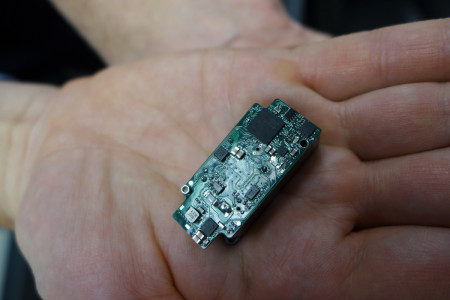
High-power laser spinoff proves versatility is strength
Since lasers were invented in 1960, they have penetrated countless scientific, industrial and recreational fields: from eye surgery to DVD players, from cutting steel to triggering ignition in missile stages.
Model helps Wisconsin city planners prepare to weather large storms
How society should respond to climate change may be a global-scale debate, but University of Wisconsin–Madison researchers know that preparing for climate change's impact on weather is a profoundly local problem.

UW engineer models groundwater to help farmers at home and abroad
Argentina might seem a long way to go for an environmental engineer seeking to better understand land use in Wisconsin. But there are some surprising parallels between the two countries' histories of land use and ecohydrology.

Johnson Controls partners with UW–Madison to reduce commercial energy costs
Johnson Controls began when founder Warren Johnson invented the thermostat in 1885, and today the Milwaukee-based controls company is working toward another major innovation in heating and cooling in collaboration with UW–Madison chemical engineers. A research group led by Jim Rawlings, the Paul A. Elfers professor and W. Harmon Ray professor of chemical and biological engineering, has partnered with Johnson Controls to develop better HVAC control systems for its clients in large commercial buildings.
Two UW–Madison engineers named to National Academy of Engineering
On Thursday, Feb. 5, the National Academy of Engineering (NAE) announced it has named two University of Wisconsin–Madison engineering professors to its 2015 class of new members. Grainger Professor of Power Electronics and Electrical Machines Thomas M. Jahns and Steenbock Professor of Engineering Physics Raymond J. Fonck are among the 67 new members and 12 foreign members elected to the NAE in 2015.

New $3M distinguished chair at UW–Madison honors influential alumnus
A newly established professorship will allow the University of Wisconsin–Madison to hire new faculty to build upon its widely recognized leadership in chemical and biological engineering. Supported by a $3 million commitment from the Wisconsin Alumni Research Foundation (WARF), the Ernest Micek Distinguished Chair in Chemical and Biological Engineering will honor a UW–Madison graduate with a long record of service to UW–Madison.

Calculating the future of solar-fuel refineries
A team of University of Wisconsin–Madison engineers has developed a new tool to help plot the future of solar fuels. In a paper recently published in the journal Energy & Environmental Science, a team led by chemical and biological engineering Professors Christos Maravelias and George Huber outlined a tool to help engineers better gauge the overall yield, efficiency and costs associated with scaling solar-fuel production processes up into large-scale refineries.

Rudolph honored as Outstanding Young Manufacturing Engineer
A University of Wisconsin–Madison polymer engineer has received the 2015 Outstanding Young Manufacturing Engineer Award from the Society of Manufacturing Engineers. Natalie Rudolph, an assistant professor of mechanical engineering, is among 11 recipients who will receive the award in 2015.

With new professor, university-industry effort to focus on energy storage
With expertise in energy storage systems for electric vehicles, smart-grid technology and military applications, Deyang Qu will be the first Johnson Controls Endowed Professor in Energy Storage Research.
Engineering alumni honored with Distinguished Achievement Awards
The University of Wisconsin–Madison College of Engineering will honor the achievements of eight distinguished alumni during the 67th annual Engineers’ Day celebration Friday, Oct. 24.

UW-Madison to launch new transportation workforce center
The University of Wisconsin–Madison is launching a new center aimed at bolstering the Midwest transportation industry by providing training and opportunities for more people to pursue careers in transportation.
See-through sensors open new window into the brain
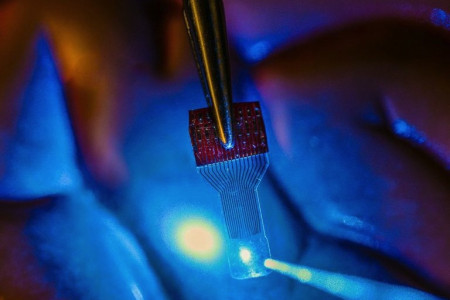
Developing invisible implantable medical sensor arrays, a team of University of Wisconsin–Madison engineers has overcome a major technological hurdle in researchers’ efforts to understand the brain. The team described its technology, which has applications in fields ranging from neuroscience to cardiac care and even contact lenses, in the Oct. 20 issue of the online journal Nature Communications.
Ultrasound enhancement provides clarity to damaged tendons, ligaments
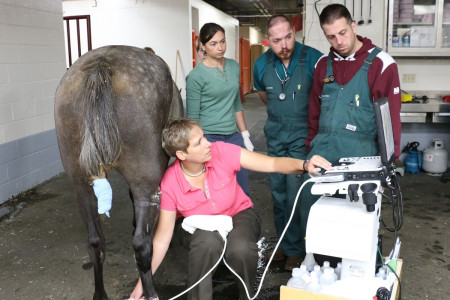
Ultrasound is a safe, affordable and noninvasive way to see internal structures, including the developing fetus. Ultrasound can also “see” other soft tissue — including tendons, which attach muscles to bone, and ligaments, which attach bone to bone. Ray Vanderby, a professor of biomedical engineering and orthopedics and rehabilitation at the University of Wisconsin–Madison, is commercializing an ultrasound method to analyze the condition of soft tissue.