Mnookin to assume presidency at Columbia University
Jennifer L. Mnookin, who has served as UW–Madison chancellor since August 2022, will depart for Columbia at the end of the academic year.
Translations are offered of a version of the announcement:
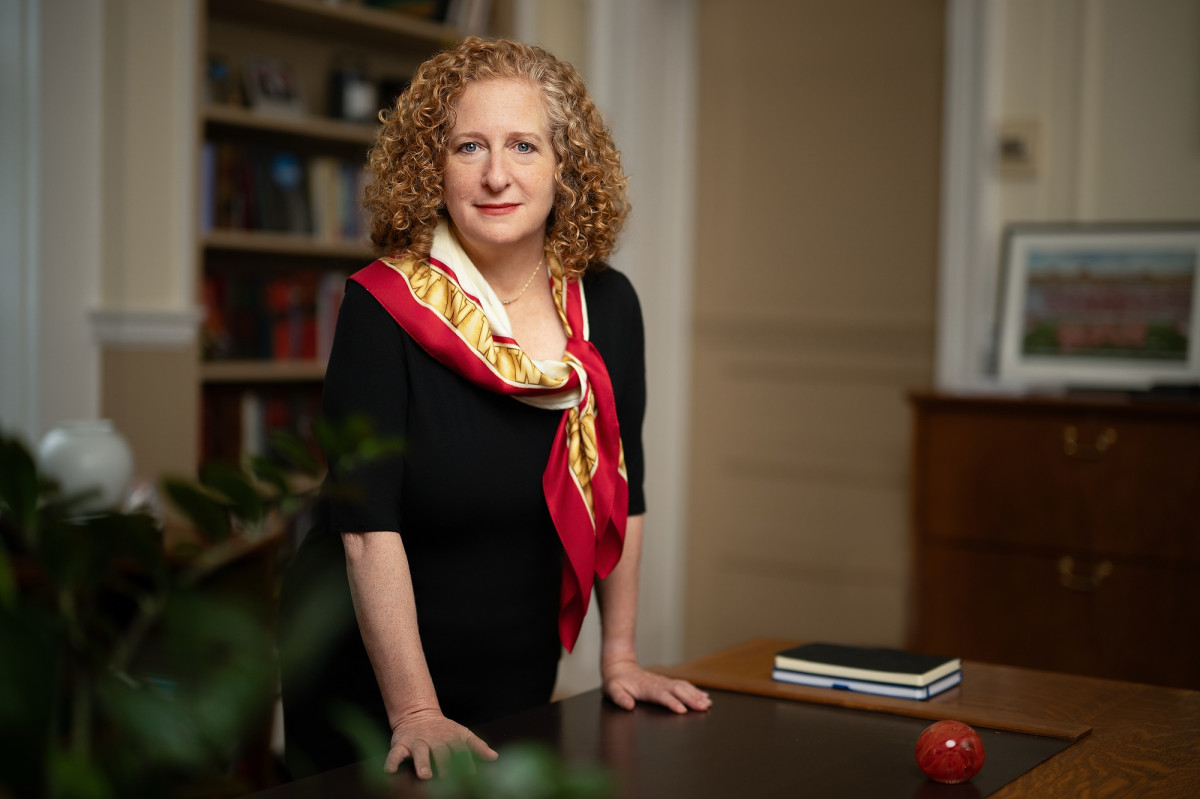
At the end of the academic year, Chancellor Jennifer L. Mnookin will depart the University of Wisconsin–Madison to serve as president of Columbia University in New York City.
Mnookin, a nationally noted evidence scholar, has served as chancellor of UW–Madison since Aug. 4, 2022. Before coming to Madison, she was dean of the University of California, Los Angeles Law School.
During her leadership tenure, the university has risen in important national rankings, improved student outcomes, achieved record fundraising success and helped make a UW–Madison education affordable and accessible for more Wisconsin students.
“During her tenure, Chancellor Jennifer Mnookin brought unbounded energy, resilience and deeply thoughtful leadership to this great university. As she now takes on a new opportunity at another prestigious institution, we extend our substantial gratitude for her service and wish her continued success in the years ahead,” says Jay Rothman, president of the Universities of Wisconsin.
Rothman says he will name an interim leader for UW–Madison soon and that a search for a permanent replacement will begin later this year.
“It has been a true honor to be a part of the Wisconsin family. I am proud of what we have accomplished together, even in a challenging period for higher education, and I know great possibilities lie ahead for the UW–Madison campus community,” says Mnookin.
“My time at UW–Madison has been life-changing and so much of that is attributable to the talented and deeply committed faculty, students and staff who call our institution home, and who strive to bring the Wisconsin Idea to life. I will continue to work hard each and every day prior to my departure and I look forward to partnering with President Rothman, the Board of Regents and others to ensure a smooth transition.”
Expressing appreciation for Mnookin and her accomplishments on behalf of the Universities of Wisconsin Board of Regents, Regents President Amy B. Bogost says: “We express our deepest gratitude for Chancellor Mnookin’s tireless work and the transformative legacy she leaves at the University of Wisconsin. She is an incredible leader whose unique strength and ability to accomplish so much, even in the most difficult times, truly set her apart. Her deep commitment to the Wisconsin Idea inspires us all to work harder and do better, and we remain secure in the knowledge that her extraordinary contributions have prepared us for an even stronger future.”
Early commitment to accessibility and affordability
Building on the university’s commitment to expanding opportunities for Wisconsin students, early in her time at UW–Madison Mnookin launched Bucky’s Pell Pathway. The program guarantees full financial support for Pell Grant-eligible in-state students, covering tuition and fees and other college-related expenses such as housing, meals and educational supplies. Since its inception, more than 7,800 students have benefited from the program.
In late 2023, Mnookin launched the Wisconsin Tribal Educational Promise program, which guarantees scholarships and grants to cover the full-in state cost of attendance for undergraduates who are members of federally recognized Wisconsin American Indian tribes and pursuing their first degree. A pilot program also covers in-state tuition and fees for Wisconsin Native students pursuing law (J.D.) and medical (M.D.) degrees. Since 2024, 100 students have participated.
Overall student success metrics have also improved during Mnookin’s time on campus.
- For 2024–25 undergraduates, the average “time to degree” — measured in calendar years from entrance date to degree date for new freshman starts — was 3.78 years, the lowest ever.
- The six-year graduation rate rose to 89.5%, the highest ever.
- In May 2025, the university awarded 13,733 degrees to 13,663 recipients, the most in university history.
- 66% of the university’s undergraduates completed their degree debt-free, according to 2024–25 figures, the highest percentage on record.
- Total enrollment topped 50,000 for the first time during Mnookin’s tenure, with more than 73,000 applicants for the fall 2025 class of 8,500 students.
- The fall 2025 percentage of entering students who are Pell Grant recipients increased to 26%, another record.
“My time at UW–Madison has been life-changing and so much of that is attributable to the talented and deeply committed faculty, students and staff who call our institution home, and who strive to bring the Wisconsin Idea to life.”
Capitalized on research strengths
Recognizing the opportunity to harness UW–Madison’s significant research strengths to address society’s greatest challenges and offer educational opportunities for UW–Madison students, in early 2024 Mnookin launched the Research, Innovation and Scholarly Excellence (RISE) Initiative.
Under Mnookin’s leadership and working closely with the provost and deans, RISE encompasses three focus areas: artificial intelligence (RISE-AI), environmental sustainability (RISE-EARTH), and improvements to human health and well-being (RISE-THRIVE).
A priority of the initiative is to add to the university’s existing faculty expertise by recruiting top scholars across each focus area. Ultimately, the initiative will encompass 250 new RISE faculty members, about half of whom were hired by the end of 2025.
And, in December 2025, for the first time in more than a decade, UW–Madison was ranked in the top five universities in the nation in annual research expenditures according to the National Science Foundation’s Higher Education Research and Development Survey, or HERD.
The ranking reflected university investments in research activities for fiscal year 2024 and included a double-digit percentage increase in federal expenditures — the second highest among top 10 research universities.
Created a model for environmental sustainability
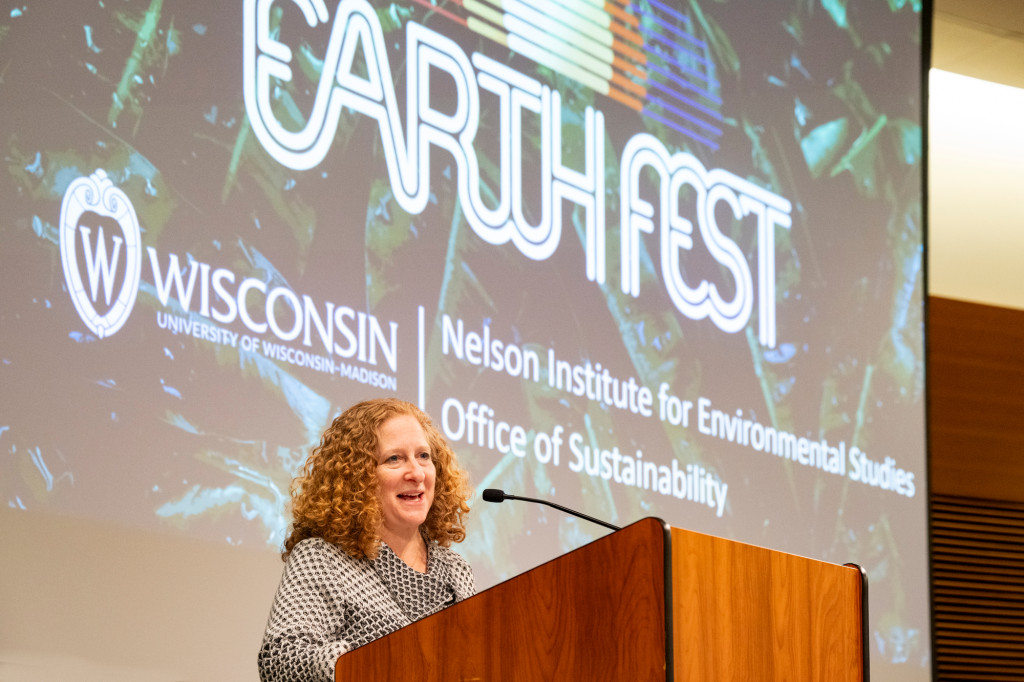
In February 2024, Mnookin launched the most comprehensive sustainability initiative in UW–Madison’s history, focused on advancing the university’s mission in research and education and making campus a living laboratory for sustainable practices.
Since then, the university achieved gold for the first time in the Association for the Advancement of Sustainability in Higher Education’s Sustainability Tracking, Assessment and Rating System, or STARS, ranking. The achievement marked key progress among the five goals Mnookin set for the initiative.
Among those goals was also the formation of the Sustainability Research Hub, to drive innovation and support research grants across campus. As of this year, the Research Hub has helped establish $20.4 million in new extramural funding.
And, in a commitment to ensuring all interested students have access to sustainability educational experiences by the end of the decade, sustainability course enrollment now numbers in the thousands across campus, from the College of Engineering to the School of Business and the College of Agricultural and Life Sciences.
Campus has also seen a decrease in greenhouse gas emissions since 2023, despite campus growth, and a significant reduction in construction and demolition waste.
Launched Wisconsin Entrepreneurship Hub
Mnookin was struck early on by the energy around innovation and entrepreneurship on campus. She recognized the ways in which supporting discovery and companies founded by members of campus could play a role in the university’s growth and financial sustainability, as well as benefit the state.
She charged a working group to recommend an approach to bring disparate entrepreneurship efforts around campus together with a coordinated founder-first focus. The result was the launch in July 2025 of the Wisconsin Entrepreneurship Hub, which recently announced its inaugural leader, as well as the first “spoke” in the Hub.
Promoted dialogue across difference
In 2025, Mnookin also established the Wisconsin Exchange to help students, staff and faculty question, challenge and debate ideas in ways that are respectful and constructive. She was responding to Wisconsin’s position as a purple state, society’s diminished capacity for civil engagement and an interest in preparing students to engage in dialogue across their differences.
The Wisconsin Exchange encompasses a series of campus events, national speaker engagements, a grant program, a postdoctoral program and support for ongoing initiatives — such as Deliberation Dinners, which she helped build, and the Discussion Project, which expanded during her chancellorship.
In addition to these efforts, Mnookin regularly invited students from all walks of campus life to lunch through her Chats with the Chancellor series.
Success amid political challenges
Mnookin’s accomplishments came amid notable shifts in the state and national political climate. In 2023, she participated in negotiations related to a legislative agreement that resulted in the release of funds for employee compensation increases and a new engineering building for campus.
Following the Hamas attack on Israel on Oct. 7, 2023, Mnookin took steps to support UW–Madison students and clarify campus expressive activity policies. In early 2025, as the federal government began proposing cuts to research, Mnookin and her leadership team worked to protect academic freedom, international students and the university’s research mission.
Record-breaking philanthropy
A university’s ability to raise private philanthropy is frequently tied to donor confidence in its leader. Mnookin connected with thousands of alumni and friends around the world, and during her tenure, more than 127,000 generous donors committed $1.6 billion through the Wisconsin Foundation and Alumni Association for a wide variety of campus projects.
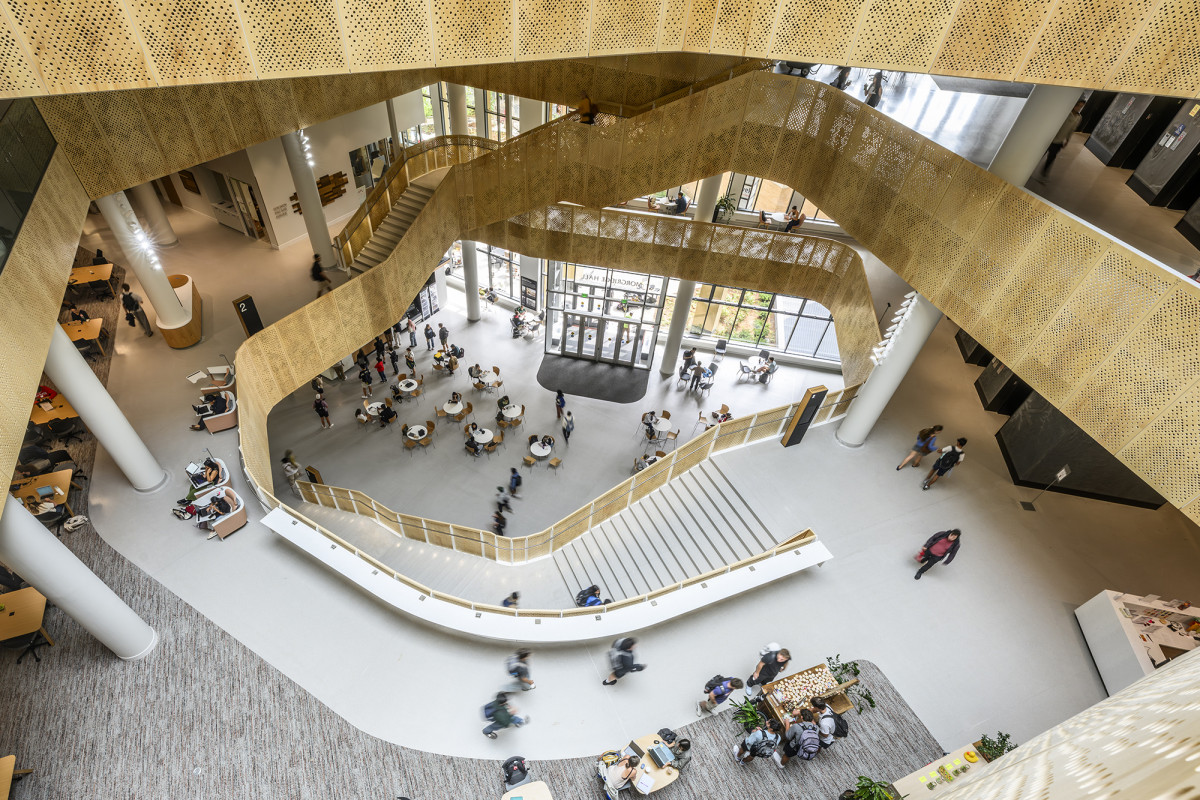
Building boom
Throughout Mnookin’s tenure at UW–Madison, cranes have been a regular feature, rising above campus in an indication of the new facilities that were developed or broke ground during her time, including three major academic buildings.
Morgridge Hall opened in August 2025 and will be home to a proposed new College of Computing and Artificial Intelligence. In addition, the Levy Engineering Center (2028) and Irving & Dorothy Levy Hall (2026) are under construction, along with the Kellner Family Athletic Center, a new UW Athletics practice facility (2026).
Next steps
Universities of Wisconsin President Rothman indicated he would name an interim leader for UW–Madison soon and that a search for a permanent replacement would begin later this year.
“Chancellor Mnookin will remain in her role through the spring commencement,” he says. “After consulting with the Board of Regents, UW–Madison, and other stakeholders, I will in the near term appoint an interim chancellor to succeed Chancellor Mnookin. The Board of Regents will thereafter commence a search process for Chancellor Mnookin’s permanent successor.”