Two Badgers were Rhodes Scholarship finalists
Amitabha Shatdal and Andrew Dirkse reached the final stage of competition for a 2027 Rhodes Scholarship, one of the most prestigious and selective academic honors in the world.
University of Wisconsin–Madison senior Andrew Dirkse and recent graduate Amitabha Shatdal were finalists for the Rhodes Scholarship, the oldest and most celebrated international academic fellowship award in the world.
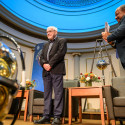
Established in 1903, the Rhodes Scholarship program annually awards 100 fully funded scholarships for post undergraduate study at the University of Oxford. Each year, 32 Americans are awarded a Rhodes Scholarship. Dirkse and Shatdal were among the finalists in attendance at The Rhodes Trust ceremony in Detroit, where the winners were announced on November 14.
Dirkse, of Sheboygan, Wisconsin, is a double major in neurobiology and mathematics. He will graduate with a bachelor’s degree in May.
Shatdal ’26 majored in computer sciences, economics and applied mathematics, engineering, and physics (AMEP). He grew up in Madison, Wisconsin.
“Beyond academic excellence, Andrew and Amitabha are engaging the challenges of the world through authentic curiosity, commitment to the common good, and principled leadership,” says John Zumbrunnen, UW–Madison provost and executive vice chancellor for academic affairs. “They are shining examples of The Wisconsin Idea and what it means to be a Badger. Congratulations to both on this impressive recognition.”
Learning is about giving
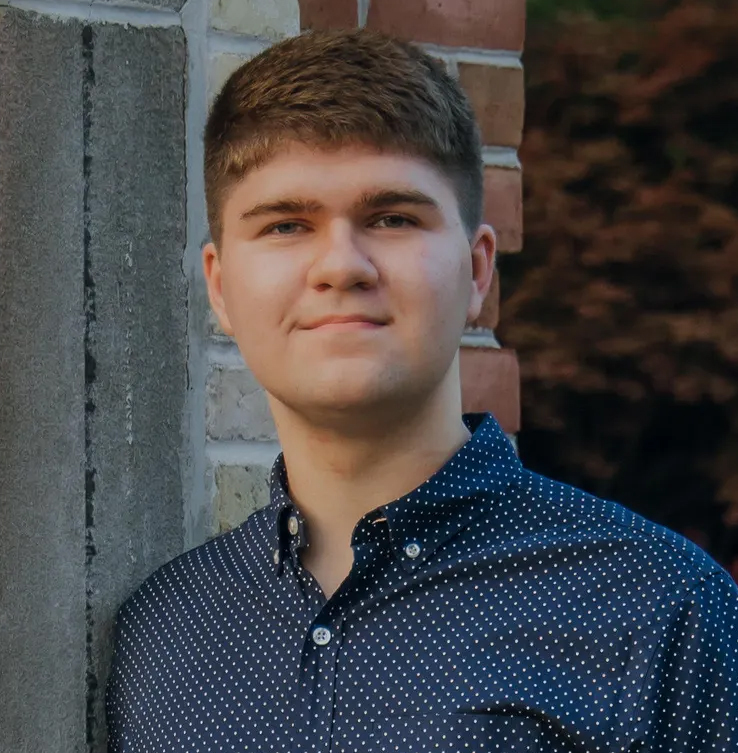
When Andrew Dirkse was in high school, he wanted to go to college for computer science, but when his grandfather was diagnosed with dementia, he started to rethink his education. He asked himself where he could put his energy and talents towards a future where no family had to hear a dementia diagnosis again.
“Going into college, I decided that my future lay in neuroscience research rather than building websites,” Dirkse says.
That vision has guided him throughout his college career with internships at the UW–Madison Data Science Institute and at the Department of Human Oncology. Dirkse has been to the College of Letters & Science Dean’s List six out of six semesters and received the 2023 Kemper K. Knapp High Merit Undergraduate Scholarship for National Merit, awarded to only 5% of UW–Madison students.
Though a student, Dirkse also sees himself as a teacher. He works as a course assistant at the UW–Madison Math Learning Center, as well as being a PrEPS (Practicing Engineering Problem Solving) facilitator at the Learning Center and a drop-in math tutor with University Housing. He also volunteers as an advising fellow where he hosts weekly meetings with first-generation and lower-income high school students applying for college.
For Dirkse learning is about giving. “To me, the Wisconsin Idea means that the research that I do should ‘leave the lab’ and benefit people, both across the state and beyond,” Dirkse says.
Service as a North Star
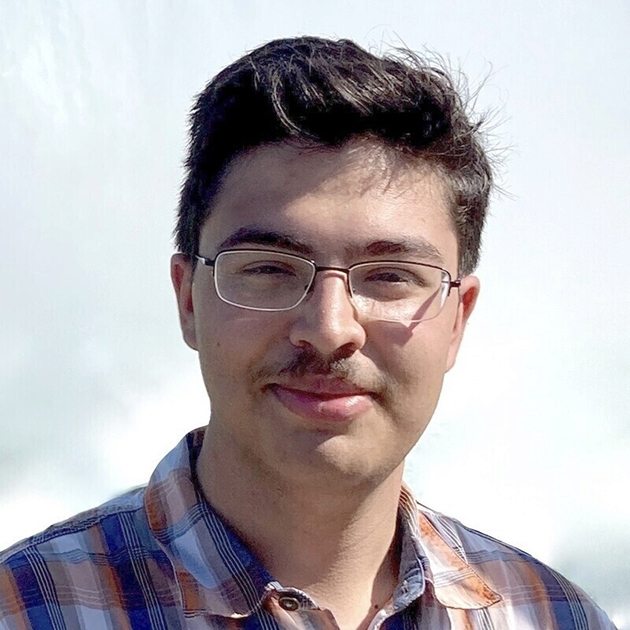
During his time at UW–Madison, Shatdal worked as a policy analyst for the Wisconsin Department of Workforce Development and held computer science internships at Johnson Controls International and with US Department of Defense at the National Security Agency (NSA). He founded the UW student bulletin board buckyboard.org and was active in the Wisconsin Ideas Conference as a presenter, chairman, and advisor. And he was twice elected to the Associated Students of Madison (ASM) governance body, including being the school-wide representative for the Student Services Finance Committee.
Shatdal is also a member of the Phi Beta Kappa Society, the nation’s most prestigious academic honor society, and is the only UW–Madison student ever to be awarded the honor of being named its Key into Public Service (KIPS) scholar.
But public service is not lip service for Shatdal. “I believe that like the university, we who have benefitted from and graduated from UW–Madison hold a responsibility to place service as a North Star in our lives.”
Among his many awards and honors include the 2026 Dean’s Prize Award and the Applied Mathematics, Engineering & Physics (AMEP) Leadership Award in 2026.
He is currently an AI chip design engineer at NVIDIA.
Shatdal is enamored with the tools of technology. But he is quick to add that if those tools are mishandled, “they can also displace workers, fuel civil discord, erode democracy, and cause mental and physical harm.”
He sees himself at the crossroads where philosophy, politics and economics meet with technology. A place where he can make a difference.
“Managing the advancement of technology skillfully so that our society is strengthened and not hollowed out requires a coordinated response that I hope to lead,” Shatdal says. “I have worked to solve individual symptoms of the problem, but to address the issue at its root requires working with and coordinating across corporations, non-profits, governments and universities.”