Where an art education can take you
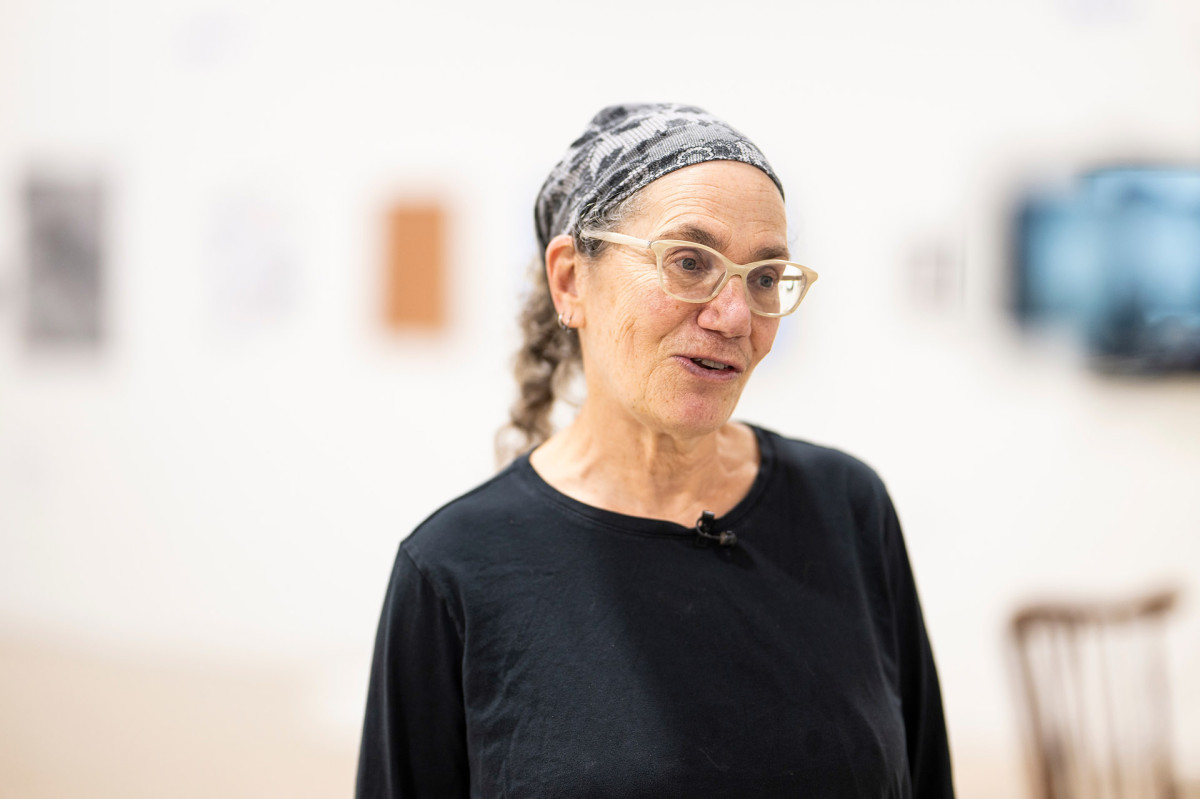
Following an illustrious career, Professor Emerita Laurie Beth Clark is putting on a massive exhibition to showcase the work and lives of her former graduate students.
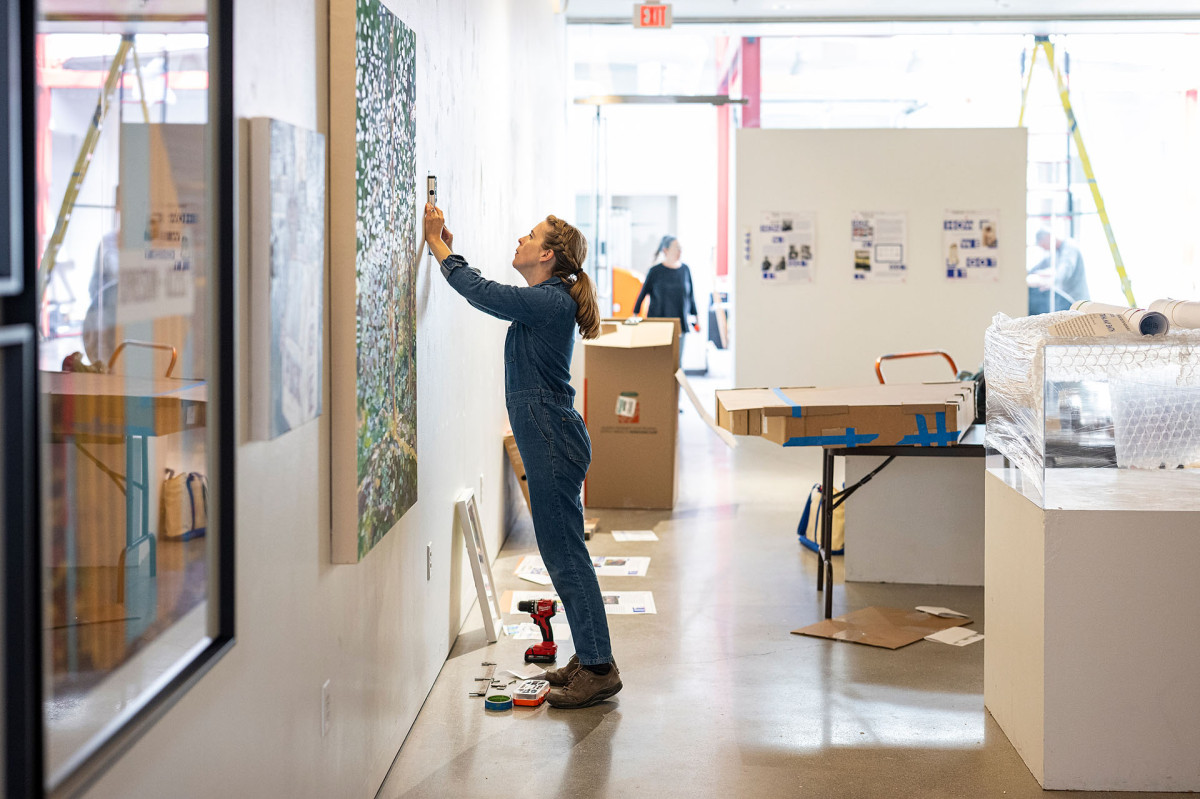
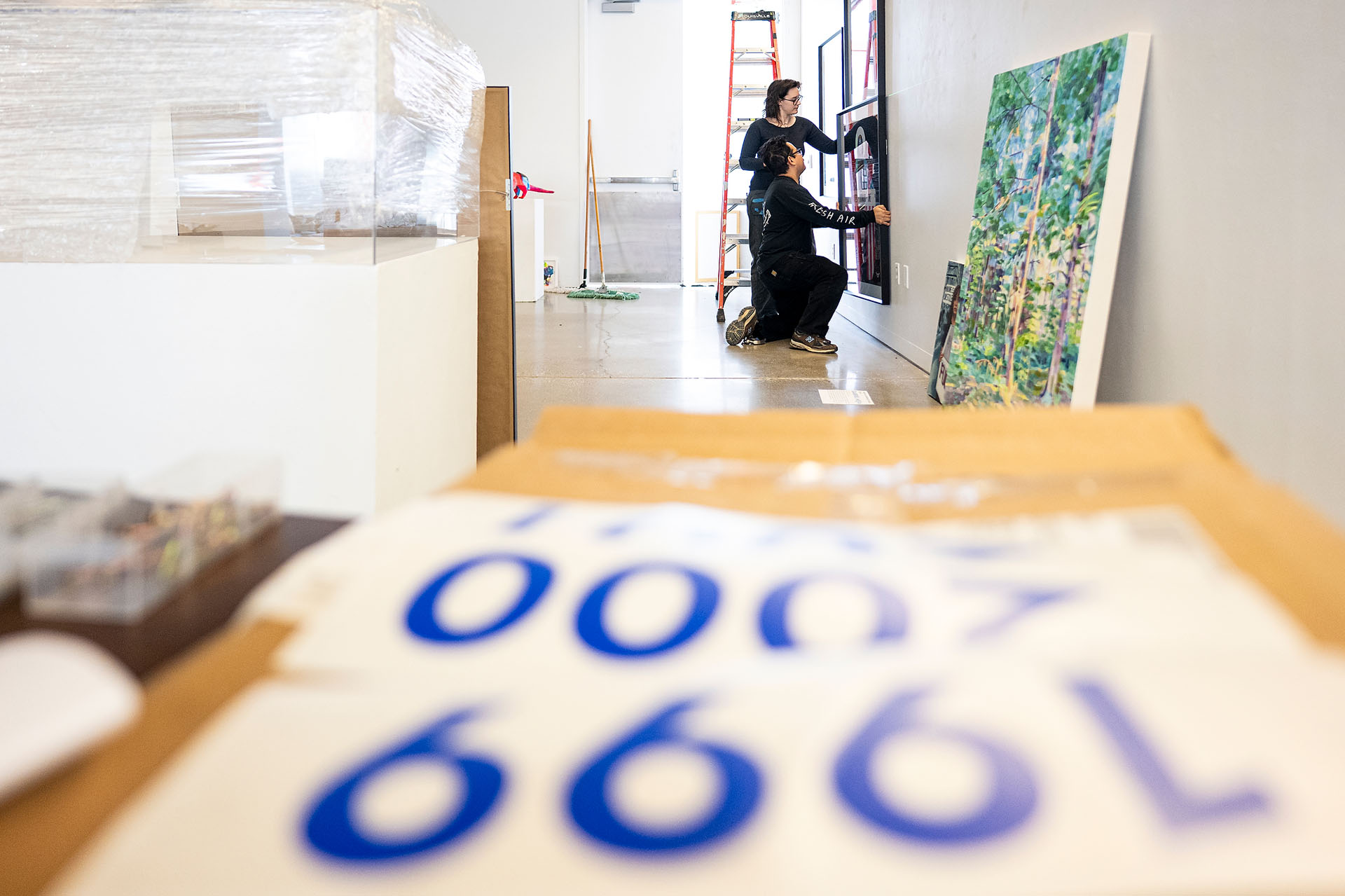
Emily Belknap (installing an artwork above) is one of more than 100 UW–Madison alumni artists featured in “How We Got It Together,” a massive campus exhibition curated by Professor Emerita Laurie Beth Clark.
Forty-one years of a professor’s teaching career. Three galleries. More than 100 life stories of her former students told through their art.
“How We Got It Together,” a massive show of alumni artworks, will run from October 12-18 on the University of Wisconsin–Madison campus. The works have arrived from 17 states and seven countries; they range from paintings and ceramics to glass and textiles. And they all have one thing in common: They illustrate the impact of an art education at UW–Madison.
“This has been a joyful process,” says Laurie Beth Clark, the exhibition’s curator, who worked with all of the artists during their graduate studies at UW–Madison, in some cases decades ago. More recently, she contacted each of them out of the blue with an invitation to be part of “How We Got It Together.”
In response, “So many of them have said, ‘Thank you. Thank you for doing this,’” she says.
Clark, who joined the UW–Madison faculty in 1986, retired from her professorship in May and was granted emerita status last month. Clark’s career has been dedicated to both teaching and building community through art, including through decades of interdisciplinary collaboration on campus. She’s also known internationally for Spatula&Barcode, the collaborative social practice art duo she created with UW art professor Michael Peterson, who also retired this spring.
Visit the galleries (Oct. 12-18):
- Gallery Seven, Humanities Building, 455 N. Park St. (8 a.m.-8 p.m.)
- Art Lofts Gallery & Backspace Gallery, 111 N. Frances St. (9 a.m.-4:30 p.m.)
Join conversations with the artists:
- Thursday, Oct. 15, 12:30-2 p.m. (Gallery Seven, Humanities Building)
- Friday, Oct. 16, 12:30-2 p.m. (Art Lofts Gallery)
- Saturday, Oct. 17, 12:30-2 p.m. (Art Lofts Backspace Gallery)
A reception will take place in Gallery Seven on Friday, Oct. 16, from 5-9 p.m., and in the Art Lofts on Saturday, Oct. 17, from 5-9 p.m
Yet getting this latest exhibition off the ground required some detective work. To track down all her former MFA students and other graduate students on whose committees she had served — and who had earned degrees from 1986 to 2026 — Clark scoured the internet for email addresses, websites and other clues. She then sent out more than 200 letters and received almost as many responses.
What she got back from many was not only a desire to participate, but a flood of memories of their formative days at UW–Madison.
“As a young and naive artist, my time at UW was foundational in growing my artistic vocabulary,” wrote Andrew Roberts-Gray, who now lives in Colorado and has a 6’ x 8’ painting in the permanent collection of the Denver Art Museum. “Mostly I studied printmaking, which is still part of my practice today. Additionally, I worked part-time at the Elvehjem Museum, now the Chazen Museum of Art, beginning my museum career.”
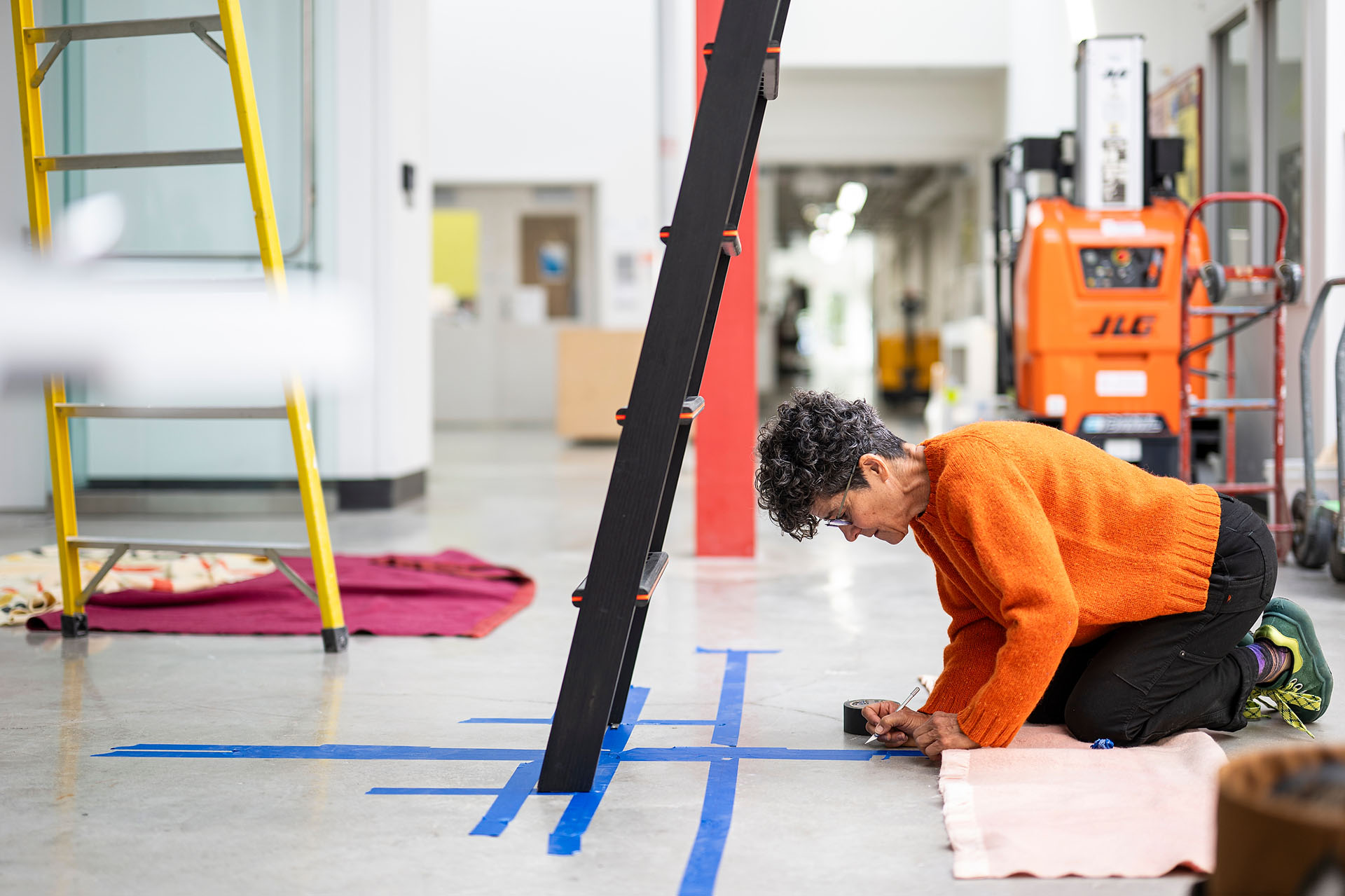
Nan Kornfeld, a San Francisco-based color consultant for homes and businesses, recalled forging an “interdisciplinary path” at UW, blending printmaking with textiles, woodworking, welding and language. “The freedom I practiced in graduate school serves me every day in my work: blending creativity, communication and technical skill to optimize human beings in their environments,” Kornfeld wrote.
Praveen Maripelly, now a PhD candidate at the University of California, Davis, was so inspired by Clark’s and Peterson’s classes on socially engaged art that it led him to found a community-based art center in his home village in India. Kristin Thielking, today a professor emerita at UW–Stevens Point and an artist who exhibits internationally, credited the MFA program at UW–Madison for helping her find her “artistic voice.”
“The collaborative, forward-thinking and intellectually challenging environment within such an exciting Research 1 institution was a feast for me,” wrote Thielking. “My experiences within and outside of the art department expanded my understanding and ideas in ways no other place would have.”
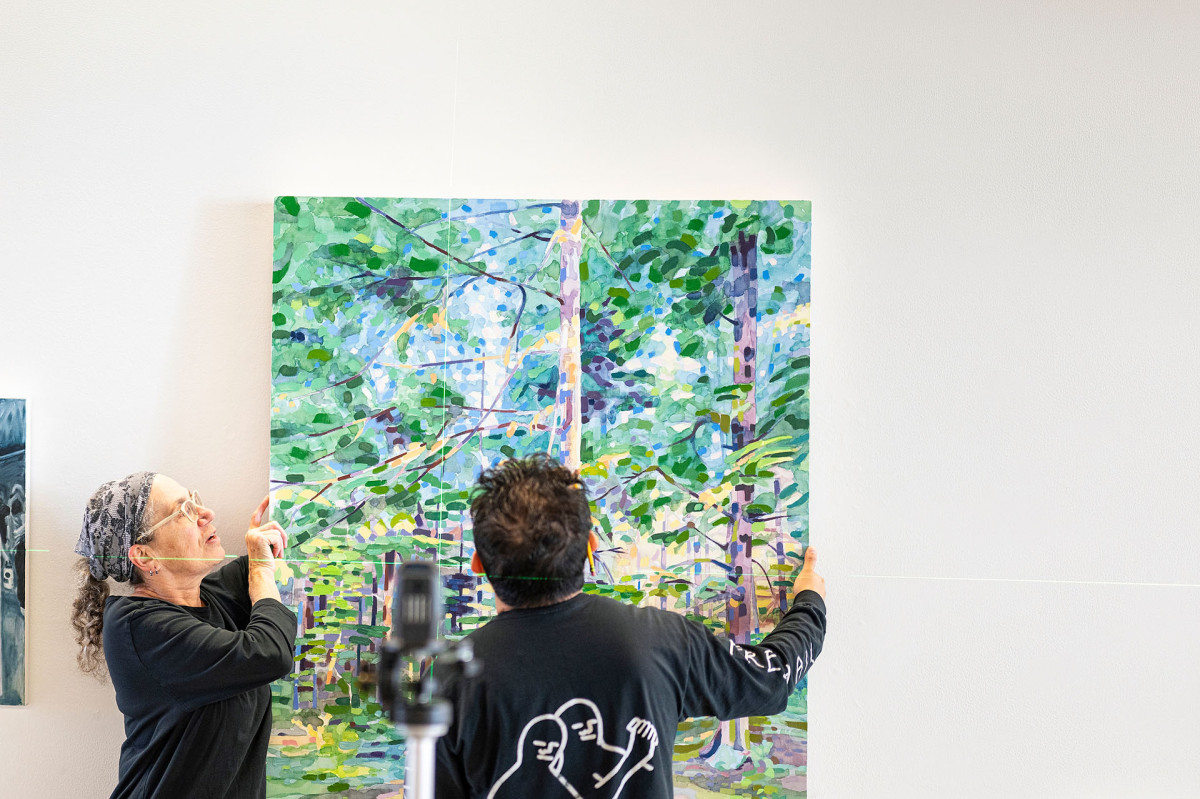
Although she’s also taught hundreds of undergraduate students, Clark has a special place in her heart for graduate students, who devote a full three years to earning a master of fine arts degree.
“For me the important thing about retiring was celebrating my students’ work,” Clark says. “I love all my undergraduate students — don’t get me wrong — but there’s something about graduate education. It’s just kind of an honor to be alongside it and to witness it. You see students at a moment in their lives where they’ve decided art is what they’re going to do, but they’re still trying to figure it out and find their footing. And if they do it right, when they leave, they’ve become the artist they’re going to be for the rest of their lives.”
“How We Got It Together” also highlights alumni who are not professional artists today, but have gone on to pursue other rich and rewarding careers. Some have departed from the field of art entirely, yet count their years at UW as some of the most influential of their lives. Those students tell their stories in “life posters,” featuring photos and text, that are displayed alongside artworks.
“This show explores the questions, ‘What is the value of studying art? How does it set us up for a rich and creative life, whether or not the student pursues an art-based career?’” Clark explains. “Taken together, the works in this exhibition demonstrate the ways that training in the arts enables creative production, critical thinking and resilience.”
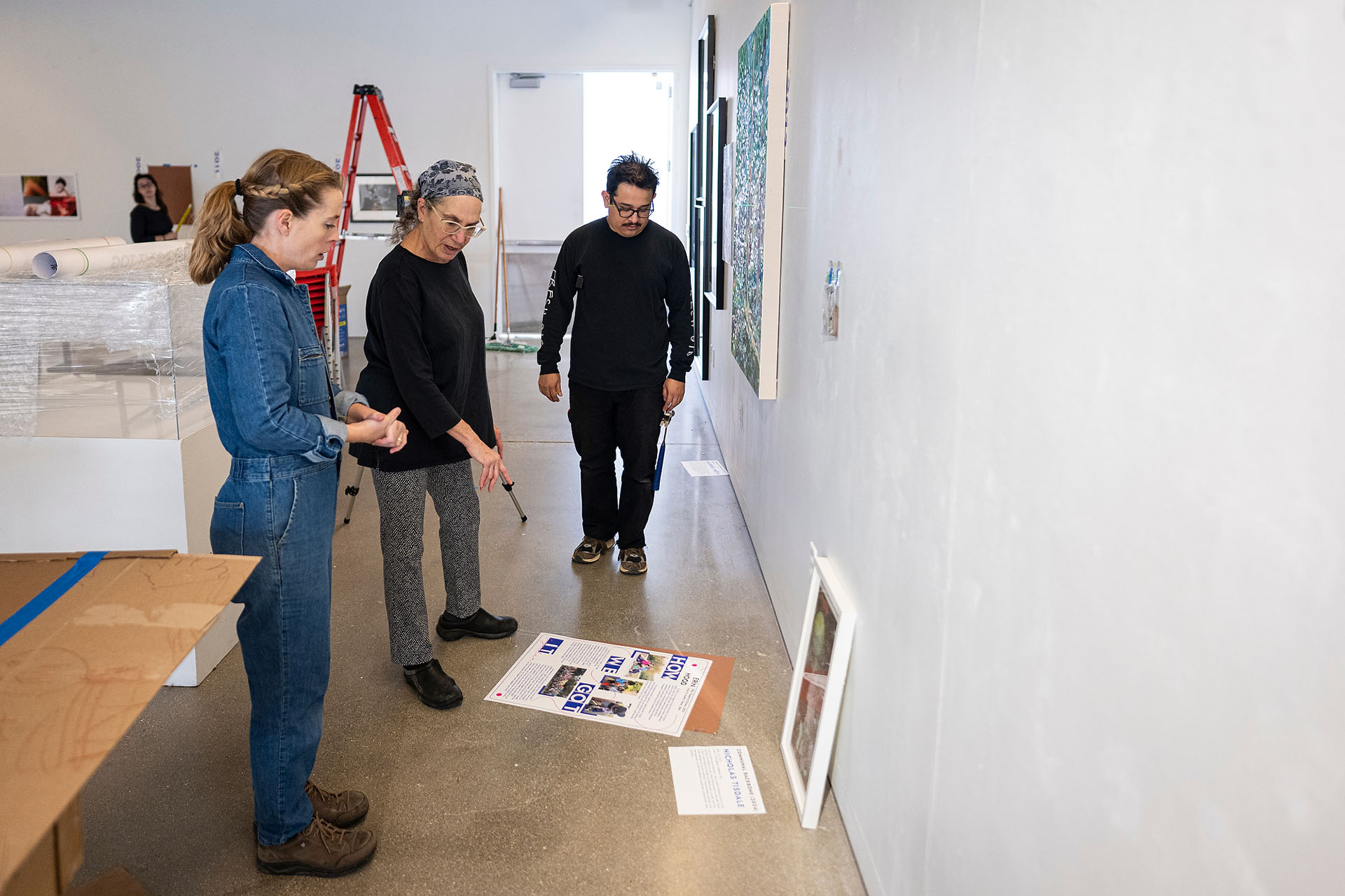
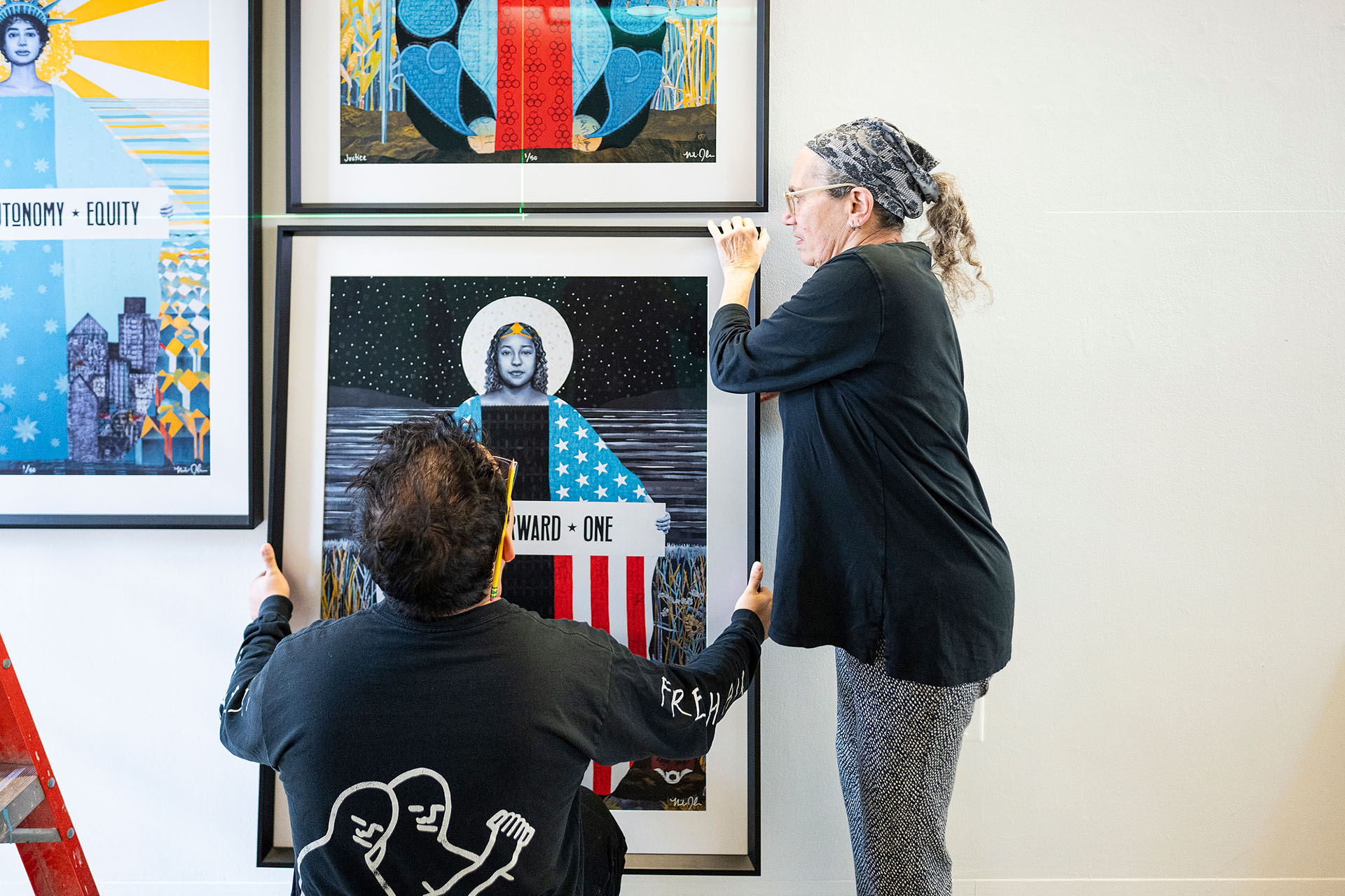
The show is so vast that it spreads over three galleries, beginning with art by the earliest grads (1986-98) in Gallery Seven, located on the seventh floor of the Humanities Building. It continues in the Art Lofts Gallery (1999-2015) and concludes in the Art Lofts Backspace Gallery (2016-26). The artworks can also be viewed online in the exhibition catalog at howwegotitogether.blog.
Chair of the Art Department Leslie Smith III notes that “How We Got It Together” is distinctive in several ways. “There is something genuinely meaningful about seeing a colleague conclude more than four decades of service to UW–Madison with such pride in the community she has helped build,” Smith says.
“The exhibition brings together people who encountered the department at different moments in its history and reflects the wide range of directions an art education can lead. That is especially valuable for our current undergraduate and graduate students,” Smith says. “It gives them a chance to see the breadth of what is possible, both within the art world and beyond it. More broadly, the exhibition has encouraged us to think about how we can sustain stronger relationships with the community of artists and professionals who have been part of the department over time.”
“How We Got It Together” coincides with a national conference of the Association for the Study of Arts of the Present, which titled its 2026 gathering “Get It Together” — the inspiration for the name of Clark’s show. One of the sessions at the conference, held at the Pyle Center, will be a tribute to Clark.
“With this conference, we hope we’ll be able to draw this international audience” to the UW campus galleries, along with students and the public at large, says Clark. “I hope that the show will be a testament to what rich and interesting lives people have when they study the arts, and all the different ways that might happen.”