3 things you didn’t know about tutoring at UW–Madison
UW’s learning support services help students succeed during the academic year.
As the semester gets underway, you might find yourself in a situation that’s all too familiar to many UW–Madison students. You’re staring at a difficult homework problem and aren’t sure where to start, you’re preparing for a tough exam, or you’re aiming for a specific grade in a challenging course.
Looking for academic help might be an obvious next step, but you may not know where to go or worry that it’s not meant for you.
In reality, students use tutoring for all kinds of reasons. The best part? It’s widely available across campus and free for everyone.
To find out what tutoring at UW–Madison is really like, we turned to people who know it well — two student tutors and the director of Greater University Tutoring Service (GUTS) — to share three things every student should know about UW’s tutoring services, including why it’s a great support option.
1: Tutoring isn’t just for students who are failing
Bodhi Pavlik, a tutor with Greater University Tutoring Service (GUTS), said the biggest misconception he hears about tutoring is that it means you’re “not doing good enough.”
“Students view it as a bad thing, when actually you are just growing as a human and extending your knowledge,” Pavlik adds.
Ashley Swenson, a student tutor with the Center for Academic Excellence, agrees. She’s quick to share that tutoring is for everyone, and that she sees a “wide range of people” use these services.
Tutors at the many learning centers across campus can help students understand difficult material, figure out homework problems, study for exams and build overall confidence in their academic abilities.
Students who are doing well in courses can benefit from tutoring, too.
“Seeing what others are curious about is really beneficial because people are going to ask questions that you would never have thought of,” says Swenson. “Even if you’re getting all the points on your assignments, you might get a better understanding of the course in general.”
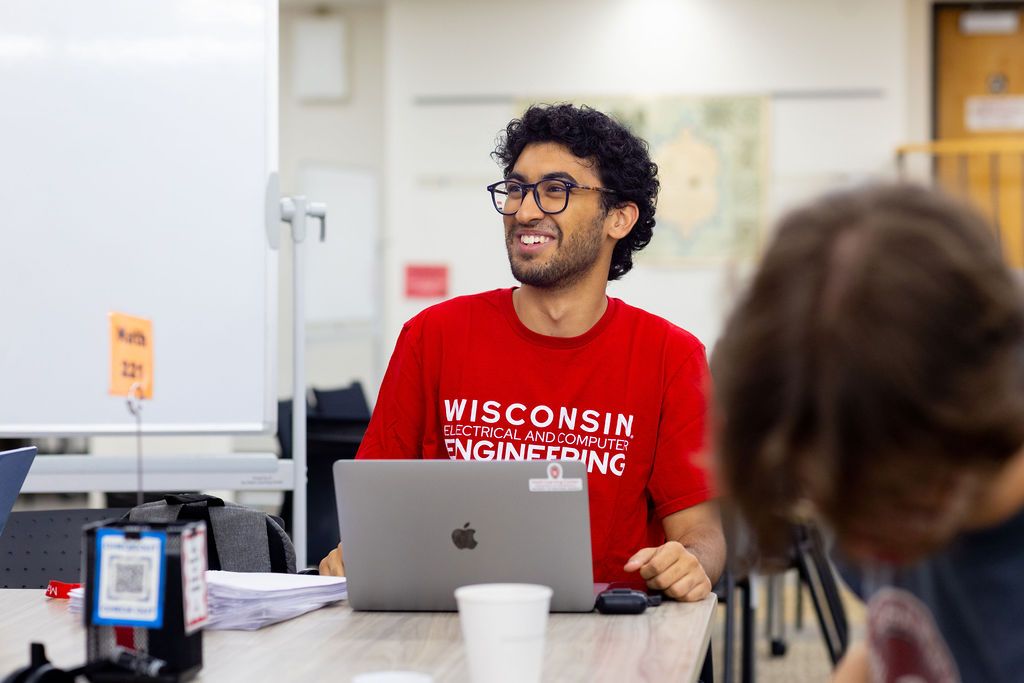
2: There are more tutoring options than you think
At UW–Madison, we have more than 10 learning centers across campus. You can access tutoring at any learning center that supports a course you’re enrolled in.
“I know that, at first, the number of tutoring options can feel like a lot,” said Caitlin Farrell Haven, director of GUTS. “But the variety is actually a strength since it means students can find support at different times, in different formats and in ways that match how they like to learn.”
Beyond helping you succeed in class, learning centers are a great way to meet students who are taking similar courses and have common goals. Many schools and colleges have a dedicated learning center that can help you connect with support.
Farrell Haven believes building connections like this can make a big campus feel smaller and ensure you have people and resources to lean on when you need them.
“Finding a learning environment that feels comfortable and a tutor who clicks with how you learn can make a real difference,” she says.
And while it may seem intimidating at first, both Pavlik and Swenson agree that learning centers are welcoming, low-key environments.
“I think people tend to forget that tutors are around your age, which can be less intimidating than going to talk to a professor during office hours or even a TA,” says Swenson.

3: There’s no “typical” tutoring session
Most learning centers on campus offer small group or drop-in tutoring. Small group tutoring has a consistent structure and requires signing up early in the semester, but drop-in tutoring is more flexible.
“A lot of people have questions on the homework, but there’s a decent amount of people who are just attending to see what other people are asking,” Swenson says when describing drop-in tutoring.
She also notes that you can determine the experience you want to have at a drop-in session.
“If you want that one-on-one attention, I would say to go right when it starts. If you feel like that’s awkward, go in the middle [of the session] when a group has formed so there’s not as much pressure to talk or contribute. You can just sit and listen.”
Drop-in tutoring can also be a dedicated time and place to simply study. And a tutor is always nearby in case questions come up.
When it comes to any type of tutoring, Pavlik and Swenson made it clear that tutors don’t know everything. And in that case, tutoring sessions can look like learning together, but with a tutor who is well-versed in figuring things out.
“I’ll put the question up on the board and we’ll research it together,” says Pavlik. “And that’s a great thing because tutors are human, too. The most important thing is if we don’t know something, we say ‘I don’t know, but I will help you find that answer.’”

Give it a try
If there’s one thing these conversations made clear, it’s that tutoring is far more flexible, welcoming and accessible than many students realize.
There is no “typical” student who uses tutoring and no single way a tutoring session should look. If you’re on the fence, why not give it a try?
“I would say take the leap of faith. I feel like that’s kind of a cliche answer, but it’s the truth,” says Pavlik. “I always have this perspective that it literally doesn’t hurt.”
Whether you’re struggling with a concept, aiming for a stronger grade or just looking for a new perspective on course material, tutoring might be one of the most valuable free resources you haven’t used yet.
Explore tutoring at learningsupport.wisc.edu.