Inside the studio of the best student radio station
WSUM rules the airwaves thanks to creative freedom and hard work.
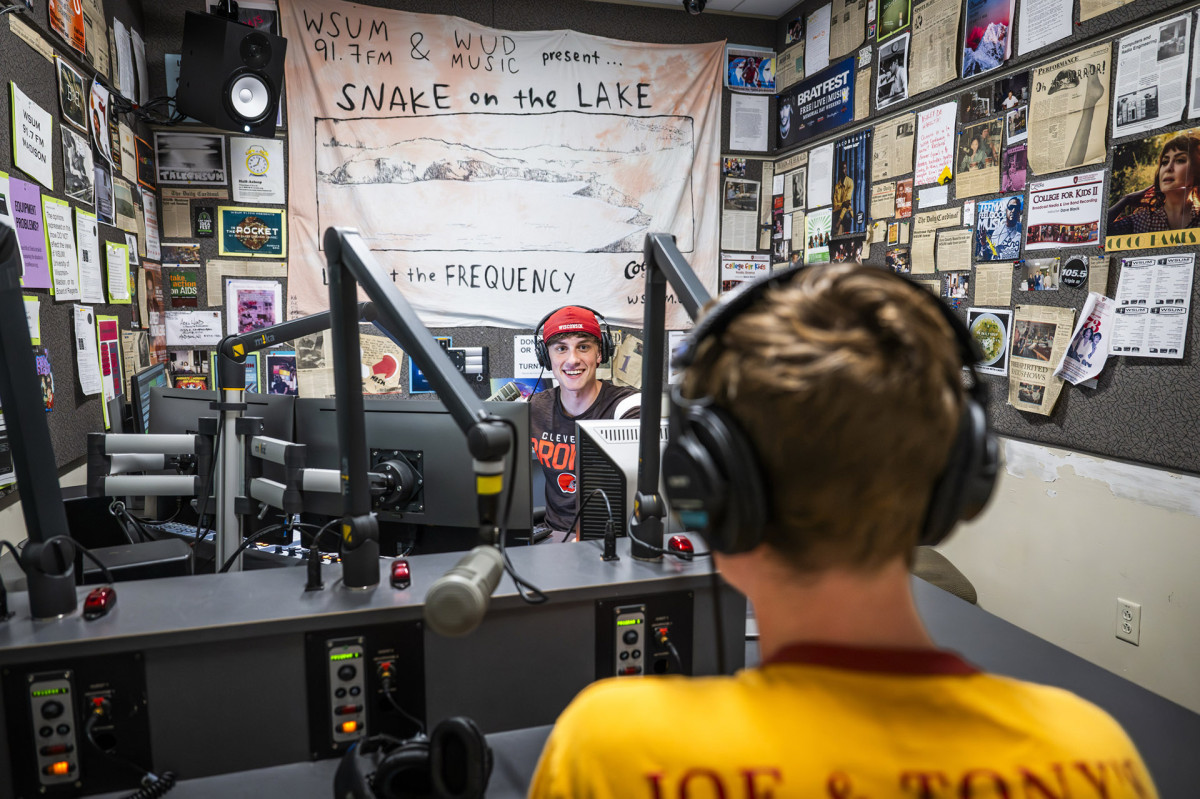
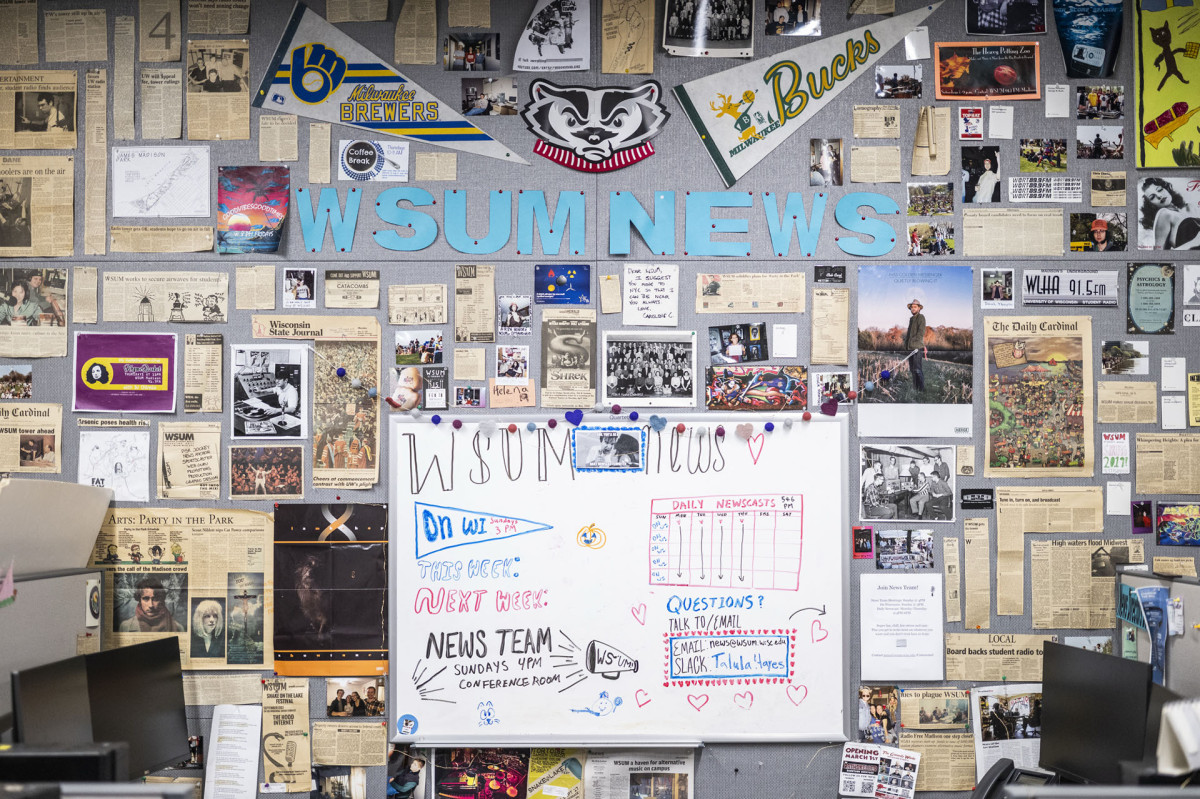
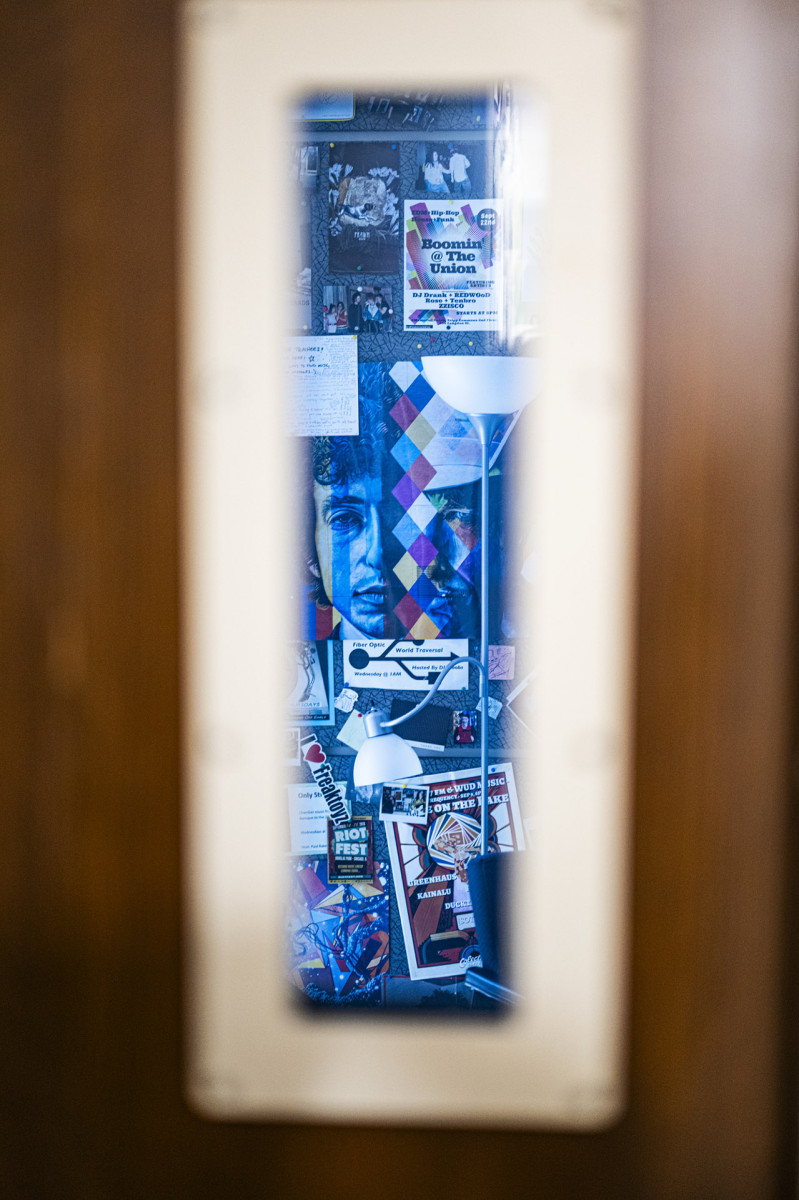
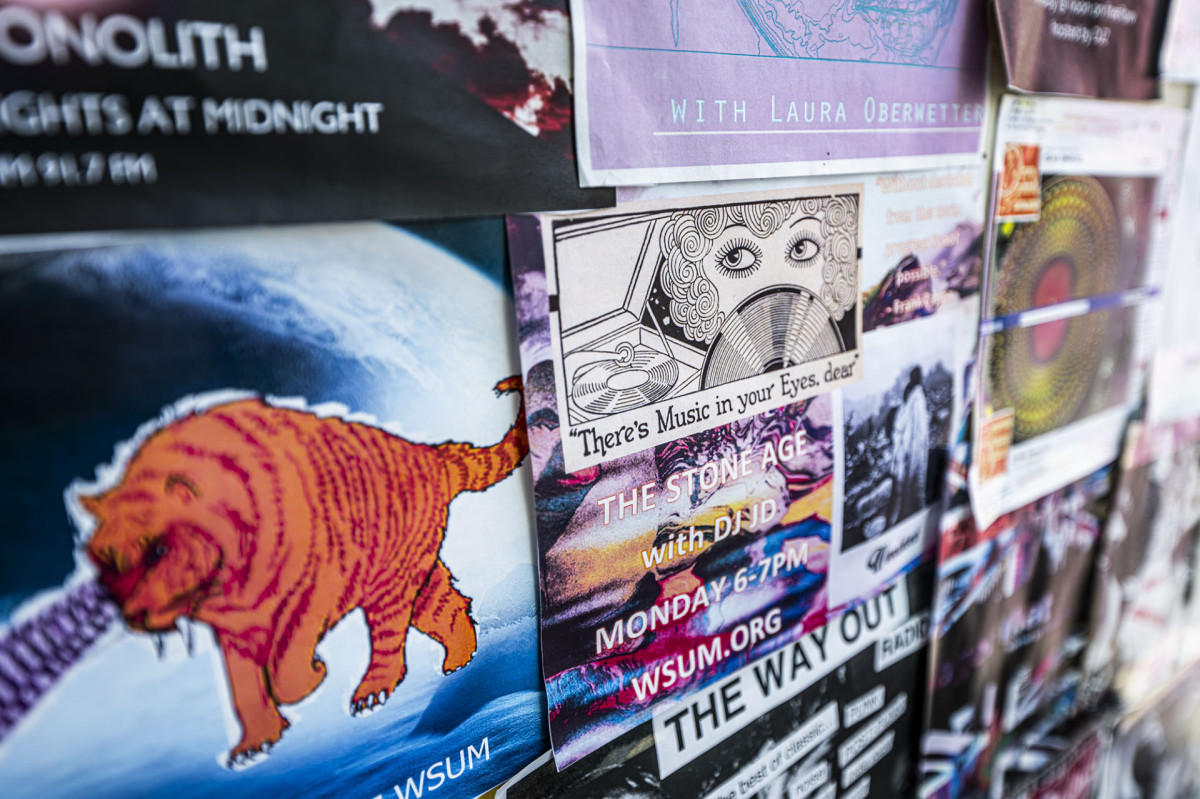
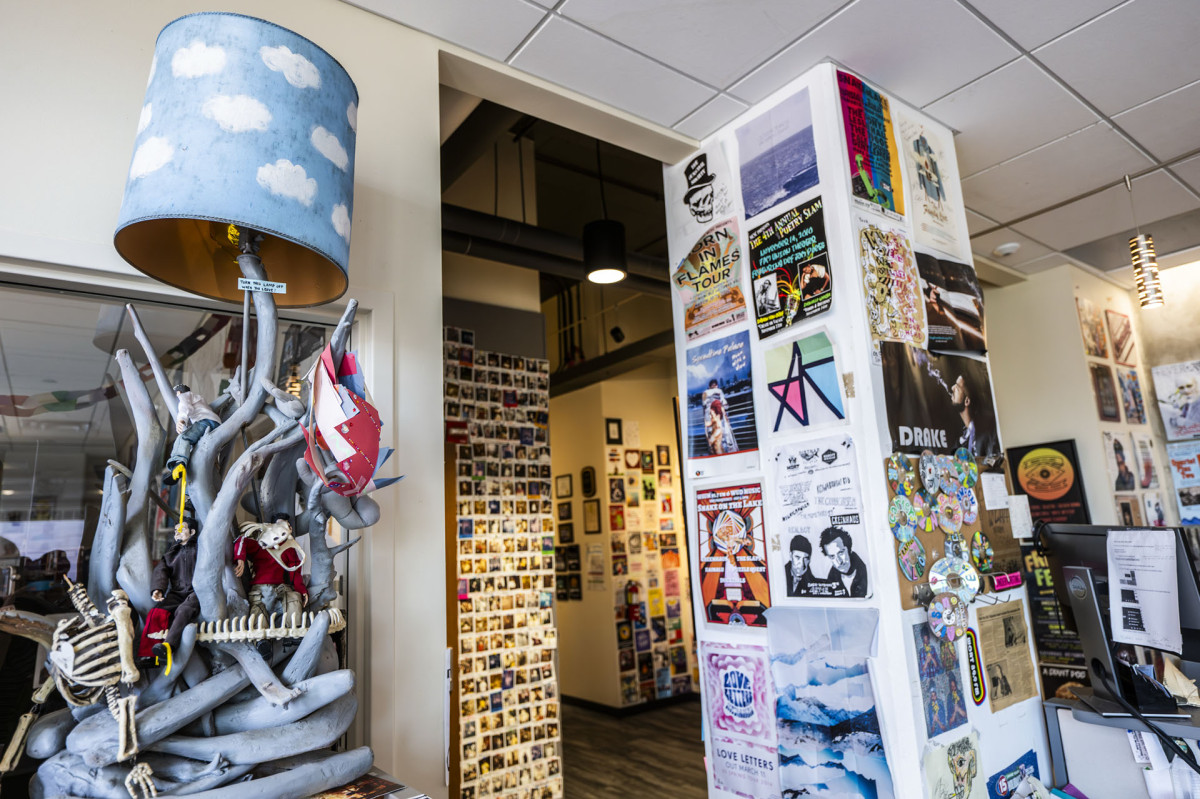
The University of Wisconsin–Madison’s student-run radio station is an eclectic collage of talents — which is pretty obvious the minute you open the door. Step inside, and the vibrant interior of WSUM is plastered with concert posters, Polaroid photos and flyers for music shows produced on-site. A life-sized cutout of Will Ferrell, dressed as his anchorman character Ron Burgundy, stands guard in a corner. Leaflets for student-DJ shows with titles like “Silly Love Songs” and “Around the World in 60 Minutes” flutter from an exposed concrete wall that serves as an enormous programming calendar.
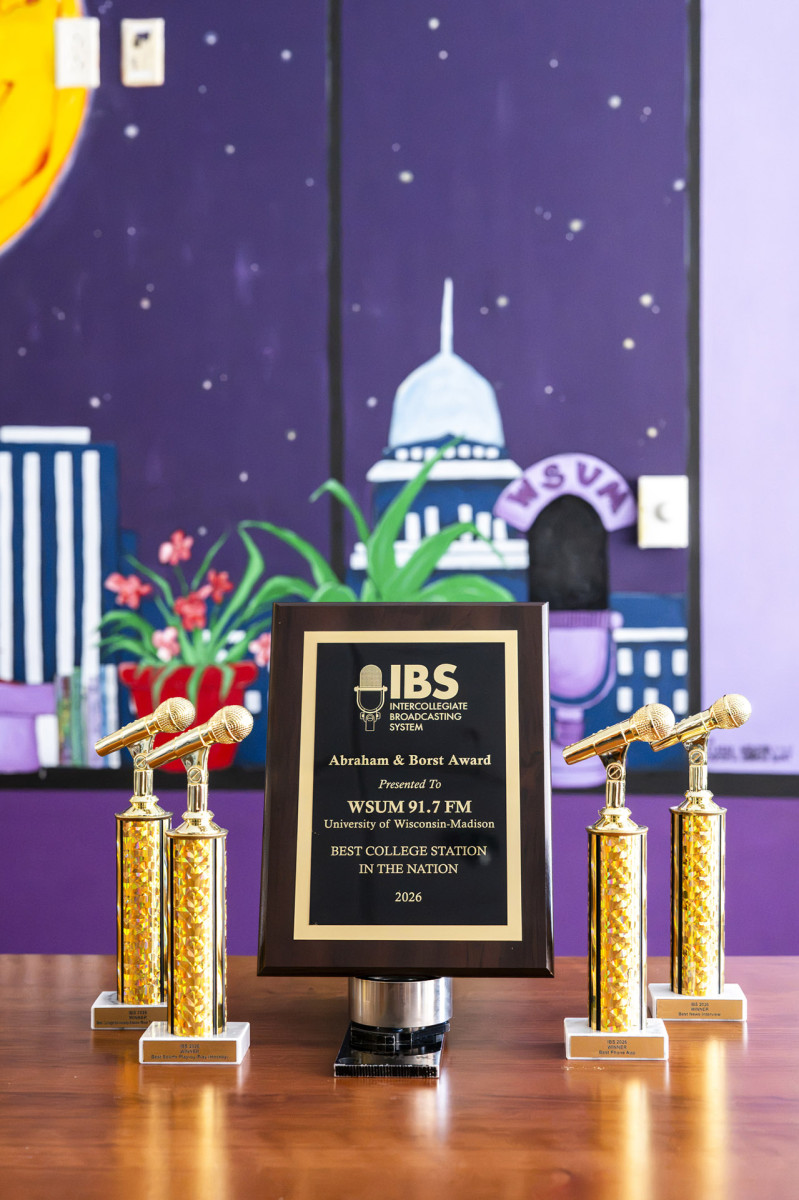
There’s also a display case brimming with trophies and another wall covered with plaques, all earned by the station through the hard work and creativity of its student members. Earlier this year, WSUM won its proudest honor yet when it was named not only the country’s top college radio station (for institutions with more than 10,000 students), but also best overall station (competing with TV, radio and community student stations at hundreds of institutions) by the Intercollegiate Broadcasting System (IBS).
The announcement coincided with a 24th-anniversary celebration at the WSUM studio, which broadcasts at 91.7 FM locally and streams online everywhere.
“It was crazy,” says WSUM talk radio director Aniruddh Nambudiri, a journalism and communication arts major. “It showed us that with the things we are doing here — people are listening.”
The year 2026 has been a particularly outstanding one for WSUM. Along with its best-station awards from IBS, its student staff won first-place college honors in the categories of best phone app (by Camille Forster), best news interview (Nathan Jahn and Vince Hesprich) and best sports play-by-play (Anthony Winker and Evan Schmid). The station scooped up an additional 16 awards from the Wisconsin Broadcasters Association. It was granted the Dean’s Award of Excellence from the university, received a Citation by the Assembly from state government, and earned the declaration of April 19, 2026, as “WSUM Day” from the mayor of Madison.
The station is also a finalist in six categories for the College Broadcasters, Inc., National Student Production Awards to be held next month, including for Radio Station of the Year.
What’s WSUM’s secret? Well, there’s its student-driven multimedia approach and its diverse programming — including music, news, talk and Badger sports play-by-play, plus podcasts, blog posts, live studio concerts and its annual free music festival, which takes place this Friday on the Memorial Union Terrace.
Being named best in the nation “gave us a sense of pride and more motivation to keep working harder, because we can get better,” says Johnny Raider, who is earning a master’s degree in journalism and serves as production director at WSUM. “We can add more things to our arsenal of digital media, not just audio, because people consume their content everywhere. I think you’ll see a lot more of that in the next year.”
Nicknamed “The Snake on the Lake,” WSUM is licensed to broadcast 24 hours a day on air. It also hosts three online streams: one that simulcasts what’s being broadcast on 91.7 FM in Madison, another focused on sports and coverage of Badger athletics, and the third, called Free Flow, for slightly edgier music shows. The station typically employs 17 hourly student workers in key roles such as station manager, web director and assistant tech director. Another 230 or so volunteers, largely students along with a couple dozen community members, land slots as hosts of one-hour shows.
There’s so much freedom here, so you really have to have your own ideas.
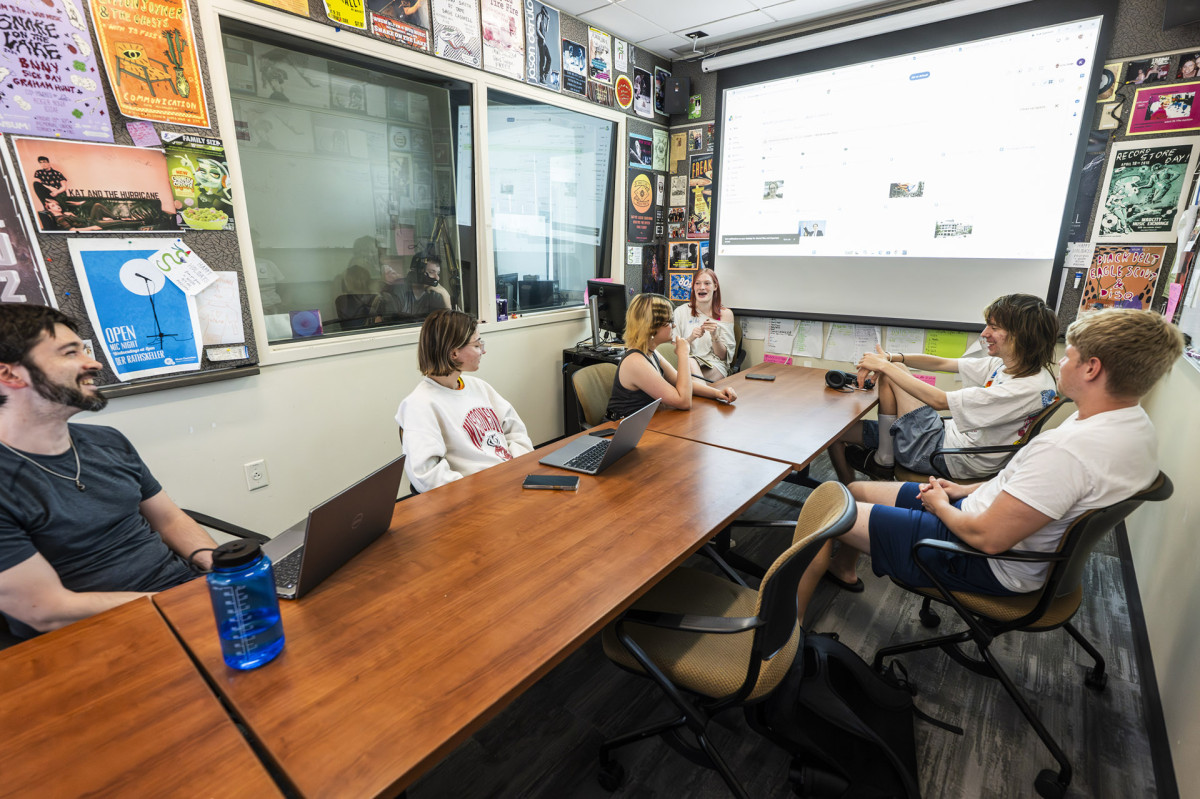
Those volunteers must go through an intense, semester-long series of training sessions to learn production skills, federal broadcasting rules, station policies and more before they are eligible to submit a proposal for a radio show. Students can be majors in any field and at any level of their college journey. They don’t earn credits for the extracurricular activity, but working at WSUM serves as a unique creative outlet with hands-on, professional-level experience.
In the fall semester, WSUM can have more than 210 different shows programmed throughout the week, says Paige-Elizabeth Kearney, the station’s program director and a senior in communication arts. Music DJs pull from the station’s large library of digital media, CDs and vinyl, or even their personal collections.
“I would say the music programming is very indie-focused — that’s the majority of it,” Kearney says. “We do have a lot of electronic, a lot of folk. We have some global music. It’s a very eclectic mix; there’s something for everybody. You’re rarely going to hear the same song twice, because everybody’s taste is so unique and different.”
Douglas McLeod, the Evjue Centennial Professor of Journalism and Mass Communication at UW–Madison, praises WSUM not only as a facility for students to get real-world career training, but also as a “place they can call home on campus.”
“It has a very well-organized staff, and incredibly dedicated students who like doing what they do there,” says McLeod.
While the School of Journalism and Mass Communication is WSUM’s academic home, the station is funded through segregated fees approved by student government. The station has two professional staff, an engineering supervisor and Director of Student Radio Kelsey Brannan. Brannan, a Badger alum, worked at WSUM as a student herself and years later took over from her mentor, the late Dave Black, known as the unstoppable force behind WSUM’s original growth.
McLeod credits Black’s and now Brannan’s leadership for much of WSUM’s success. Brannan is “absolutely phenomenally organized on all fronts,” he says. And since its founding, WSUM has grown from “an in-house hardwired station that was broadcasting just in the dorms, to some of the best radio facilities in the state.”
Growth has also meant diversification for WSUM, and that’s brought in new audiences — across the globe.
“We are a radio station, but we’re also a multimedia organization,” Brannan explains. “Podcasts are a big part of what we do. Any talk or sports program at WSUM can turn their show into a podcast.”

A range of viewpoints and on-air style is not only allowed, but expected.
“Every host is responsible for their radio show, so they are not told what to play, what to say, anything like that, as long as it’s within the legal bounds and policies we teach them in training,” Brannan adds. “It’s a total creative outlet for them.”
Nambudiri agrees. The UW–Madison senior discovered WSUM the fall of his freshman year at the student org fair. Coming from India, “I didn’t know what student radio was,” he says. “I heard (the students representing WSUM) blasting Nigerian funk music. I thought, ‘That’s awesome.’ I just went up to the table and they told me, ‘You can do this.’”
Three years later, Nambudiri is director of talk shows at WSUM and hosts his own music show, “Chai Shai,” featuring mostly Indian punk and metal music. He’s pursuing a certificate in sports communication, so WSUM also provides him the outlet to do sports commentary on its dedicated stream and blog.
“There’s so much freedom here, so you really have to have your own ideas,” he explains. “They say, ‘Here you go — we’re going to train you on how to do things, but the why and the what you’re going to do is entirely on you.’”