‘The world needs you’
UW–Madison celebrated the achievements and expertise of doctoral and professional graduates at Friday’s spring commencement.
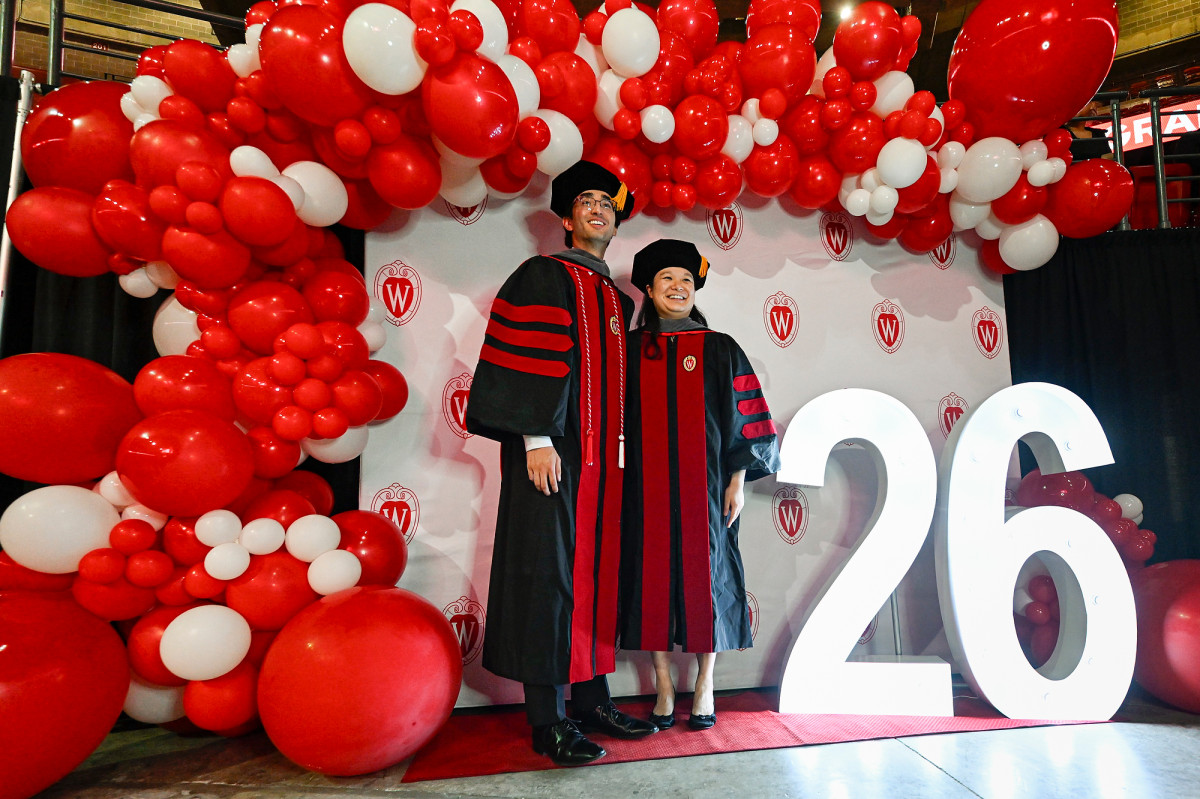
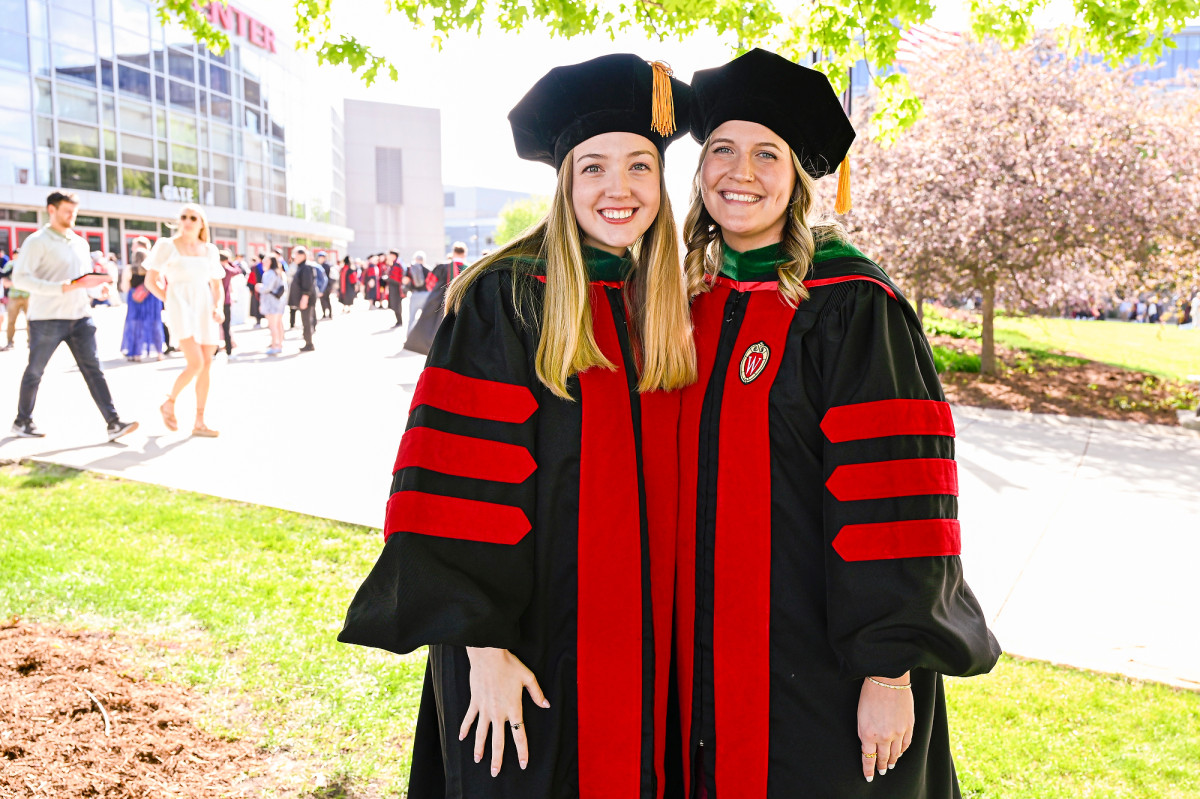
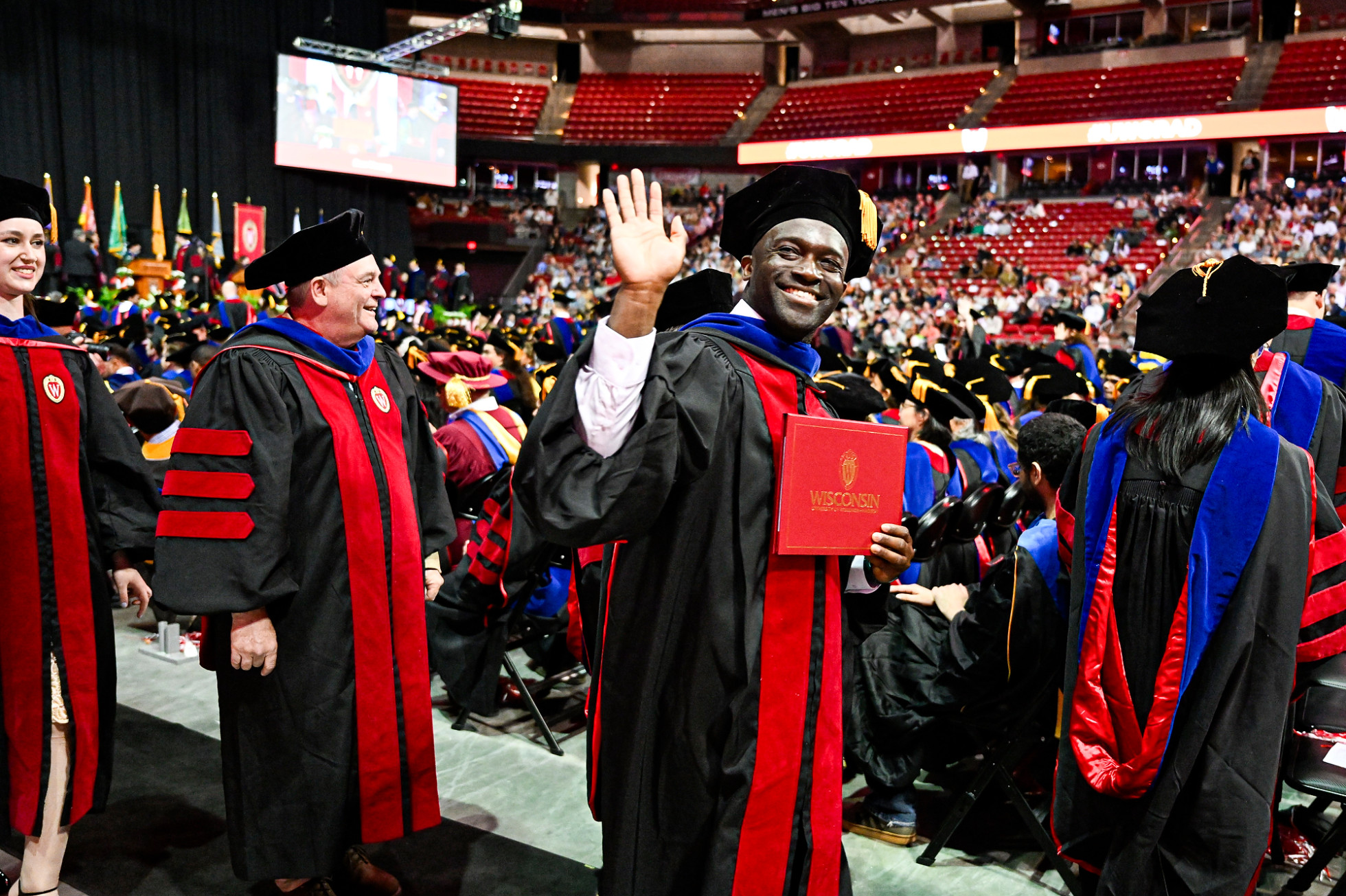
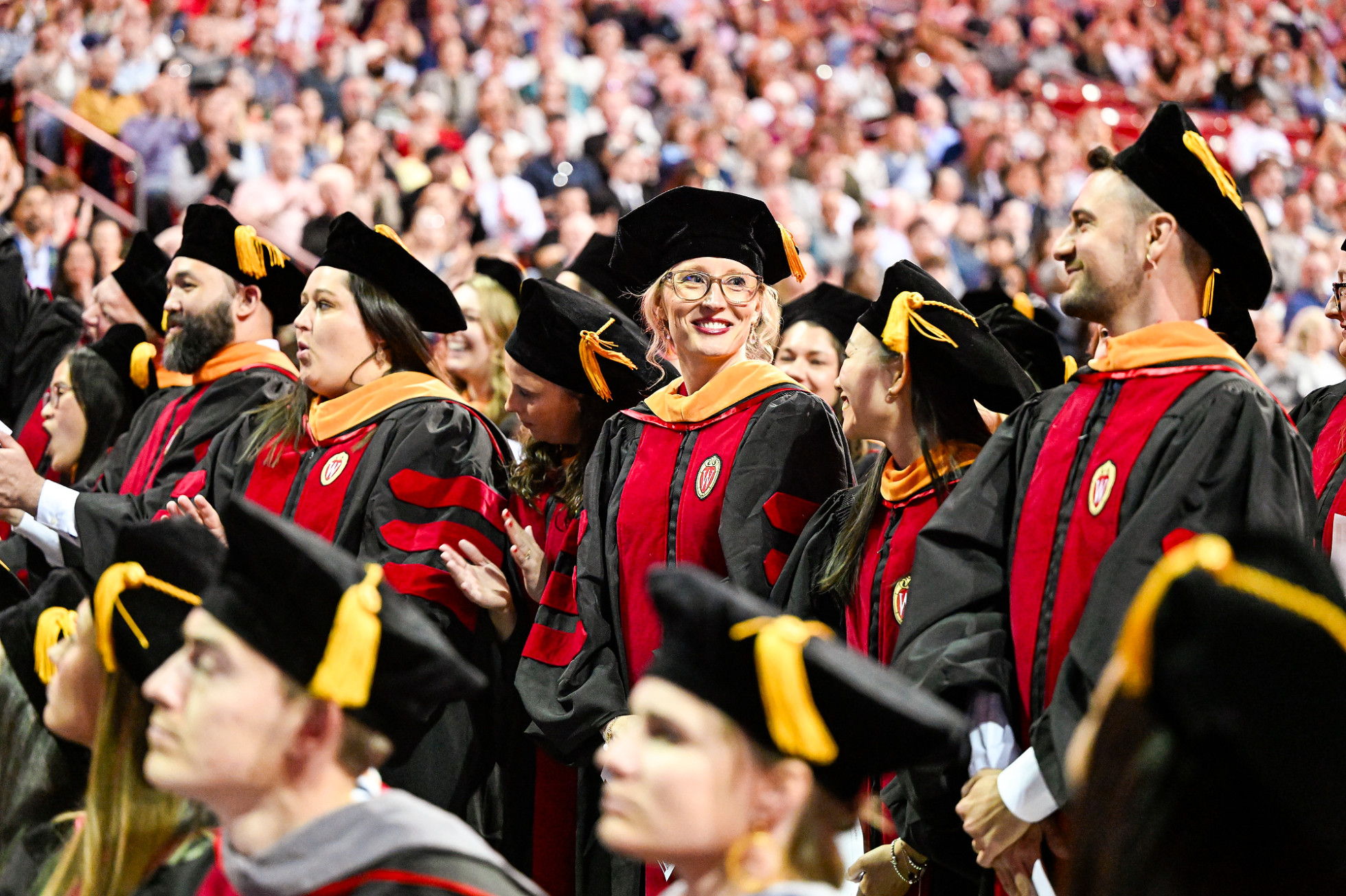
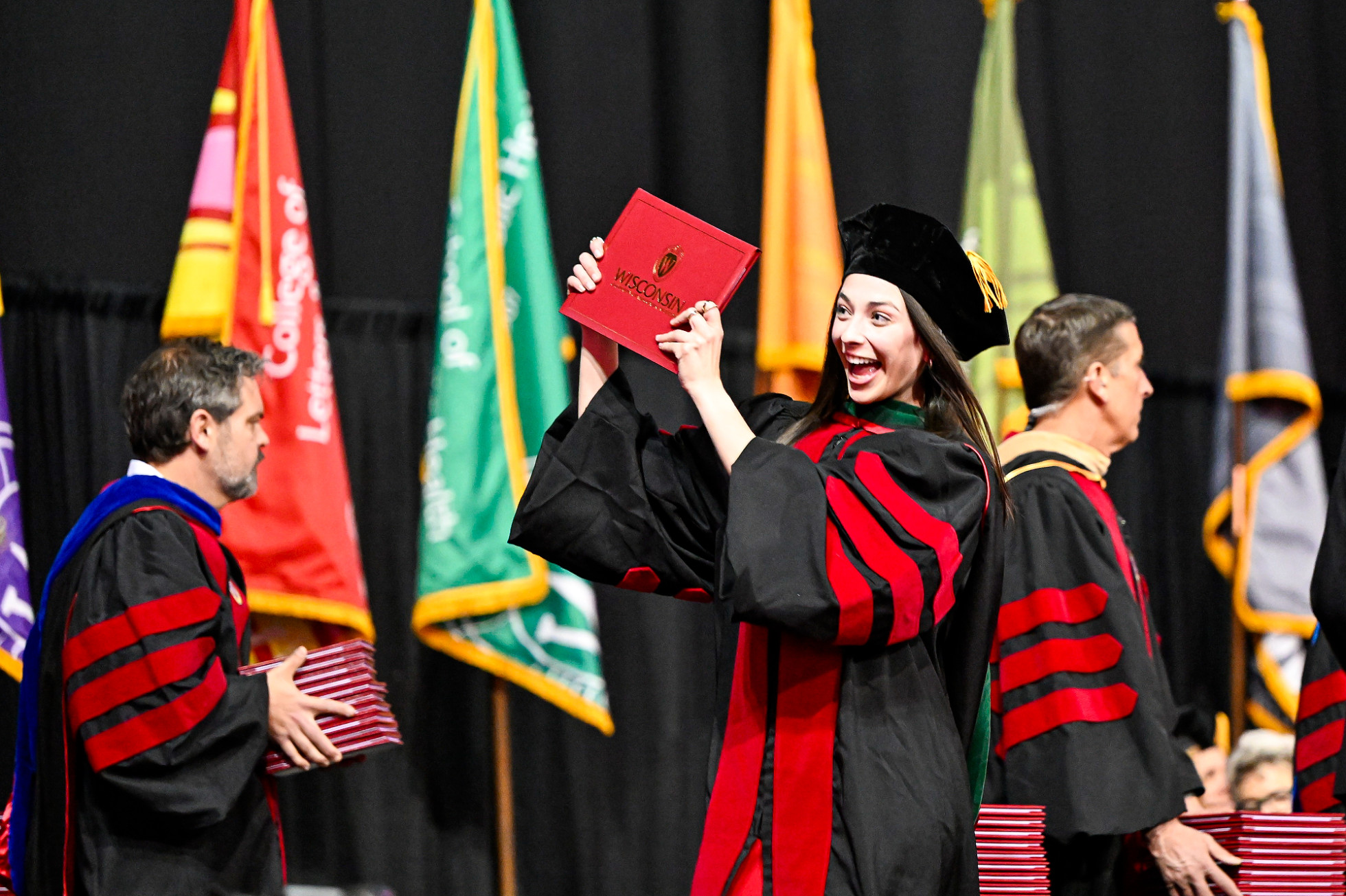
On Friday evening, with cheers and perhaps a few tears of joy and relief, hundreds of doctoral, master of fine arts and medical professional degree candidates celebrated the culmination of their persistence, discovery and growth at the University of Wisconsin–Madison’s spring 2026 commencement ceremony.
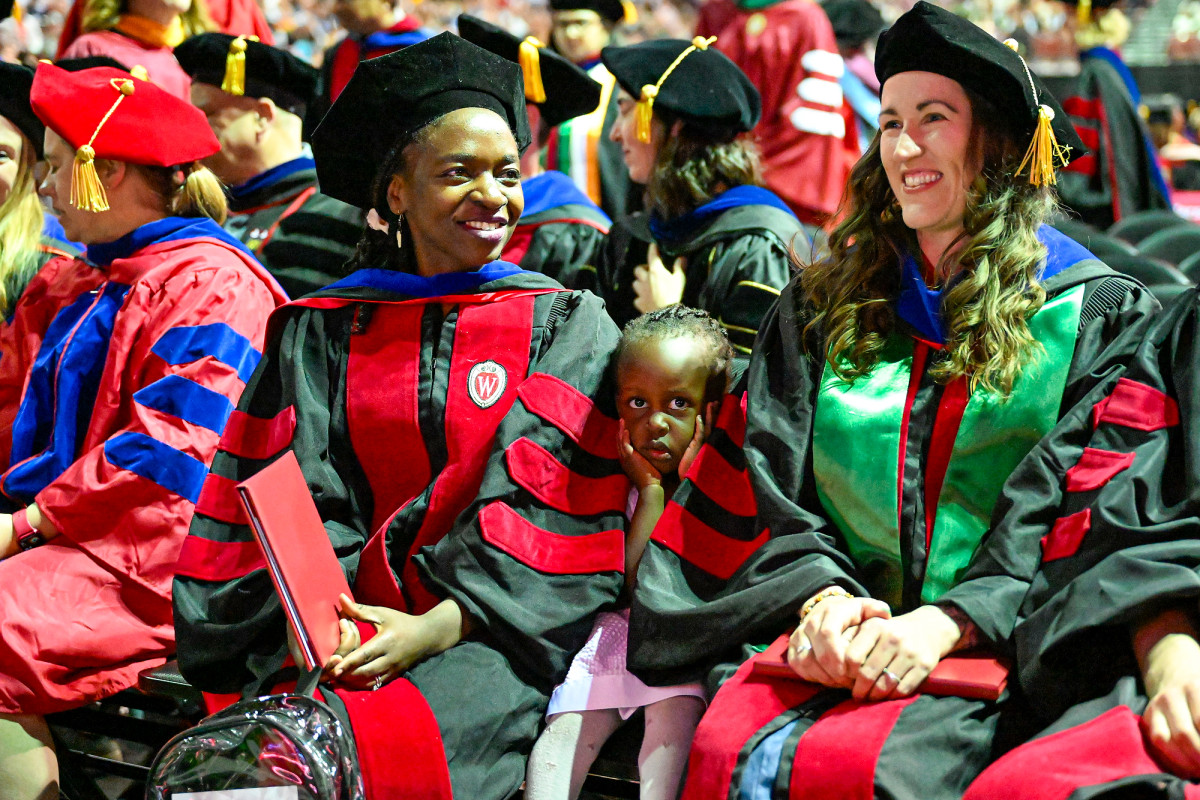
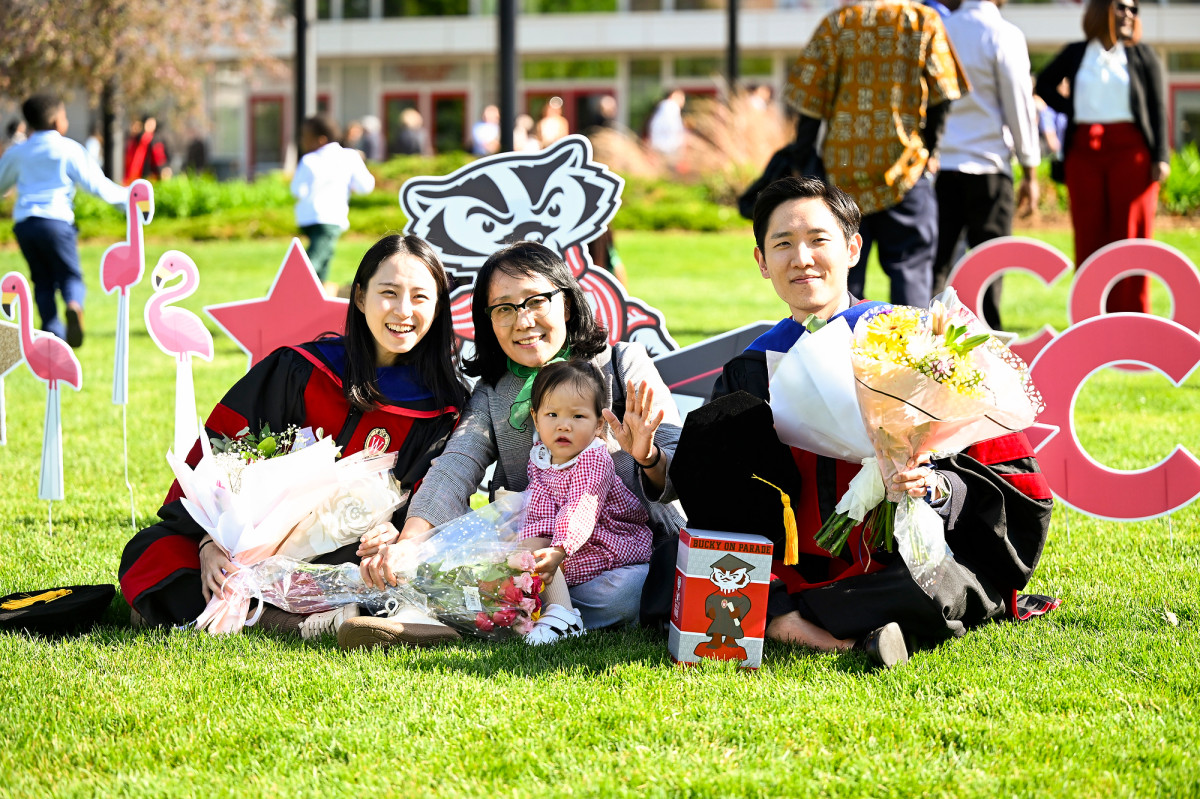
Thousands of family members, friends and supporters filled the Kohl Center to honor graduates whose paths to the ceremony reflected years of careful research, artistic practice, clinical training and scholarly work across disciplines ranging from engineering and medicine to music and the humanities.
In remarks to graduates, Chancellor Jennifer Mnookin encouraged them to think beyond the titles attached to their degrees and recognize the broader capacities they developed during their time at UW–Madison.
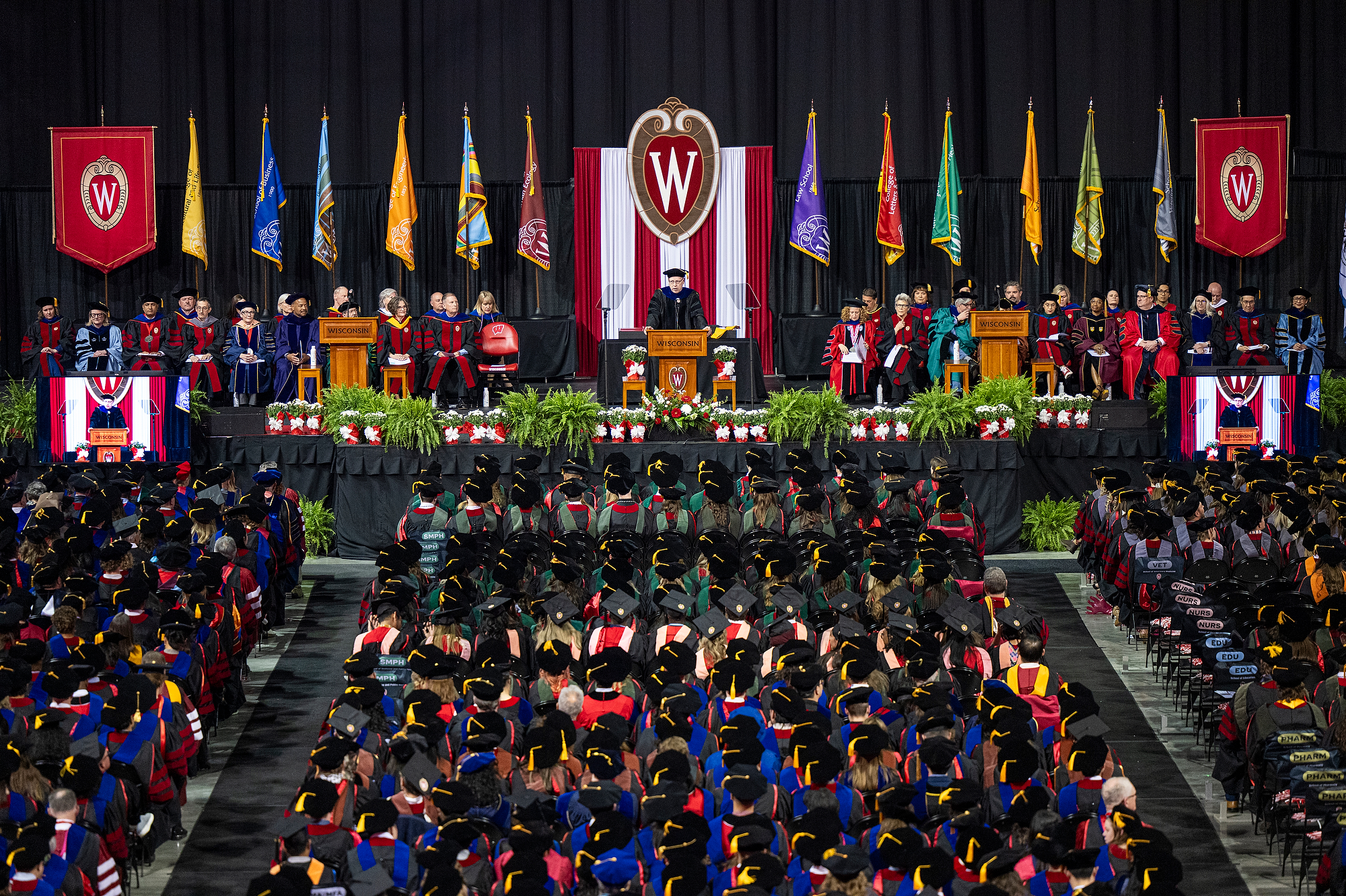
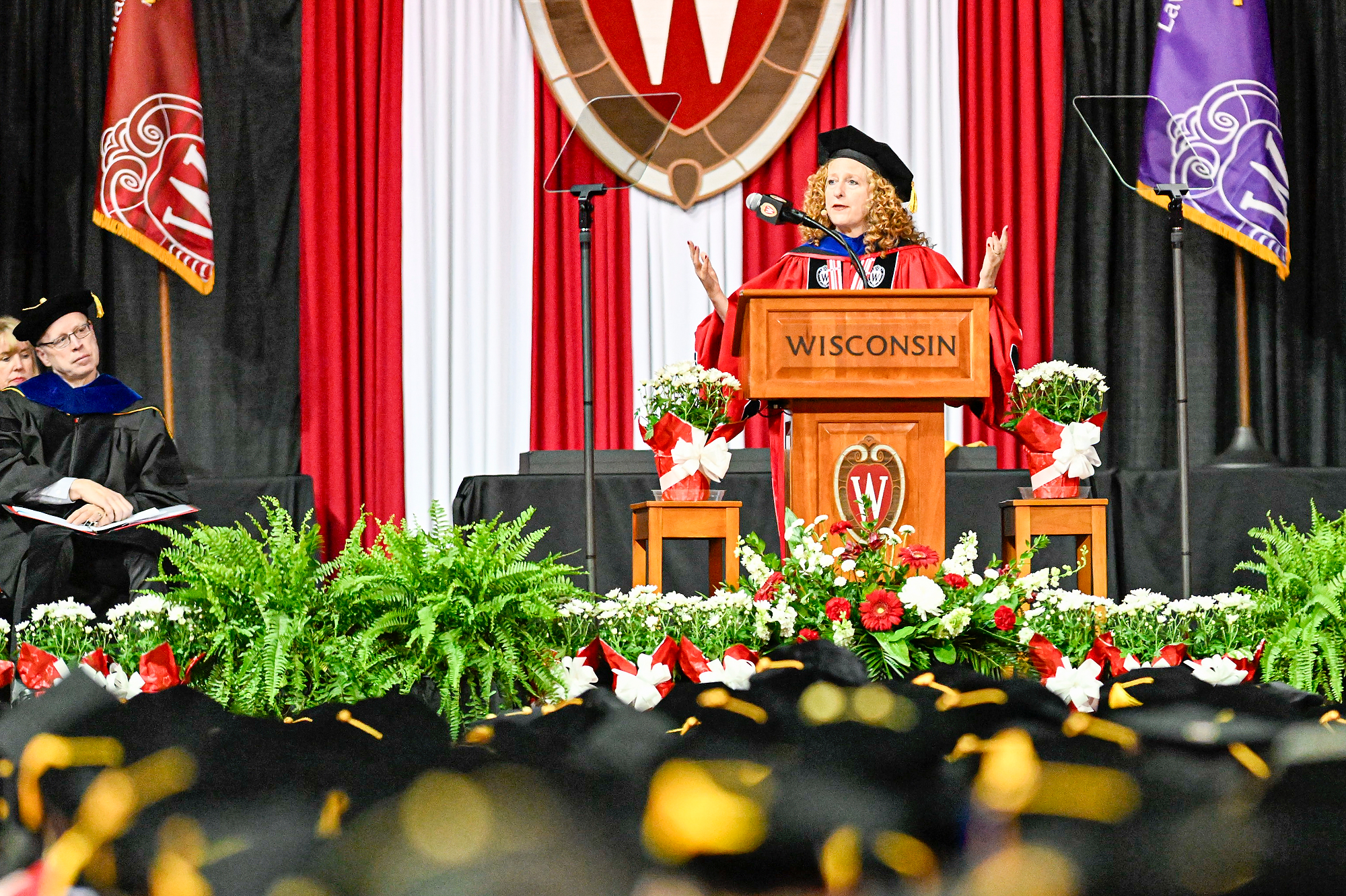
“You’ve rightly earned these prestigious titles,” Mnookin said. “But they don’t fully capture you. They do not capture the habits of mind you have developed, the judgment that you have built, the patience that you have practiced, the creativity that you have summoned or the capacity that you now have to see problems in ways others may not.”
Mnookin told graduates that in a rapidly changing world, their ability to collaborate across disciplines and communicate complex ideas clearly would matter as much as the technical expertise they developed at UW–Madison.
“In a moment when misinformation and disinformation too often carry the day, careful and resonant communication is not just a nice thing to do — it’s necessary,” Mnookin said. “The world needs you. It needs your expertise.”

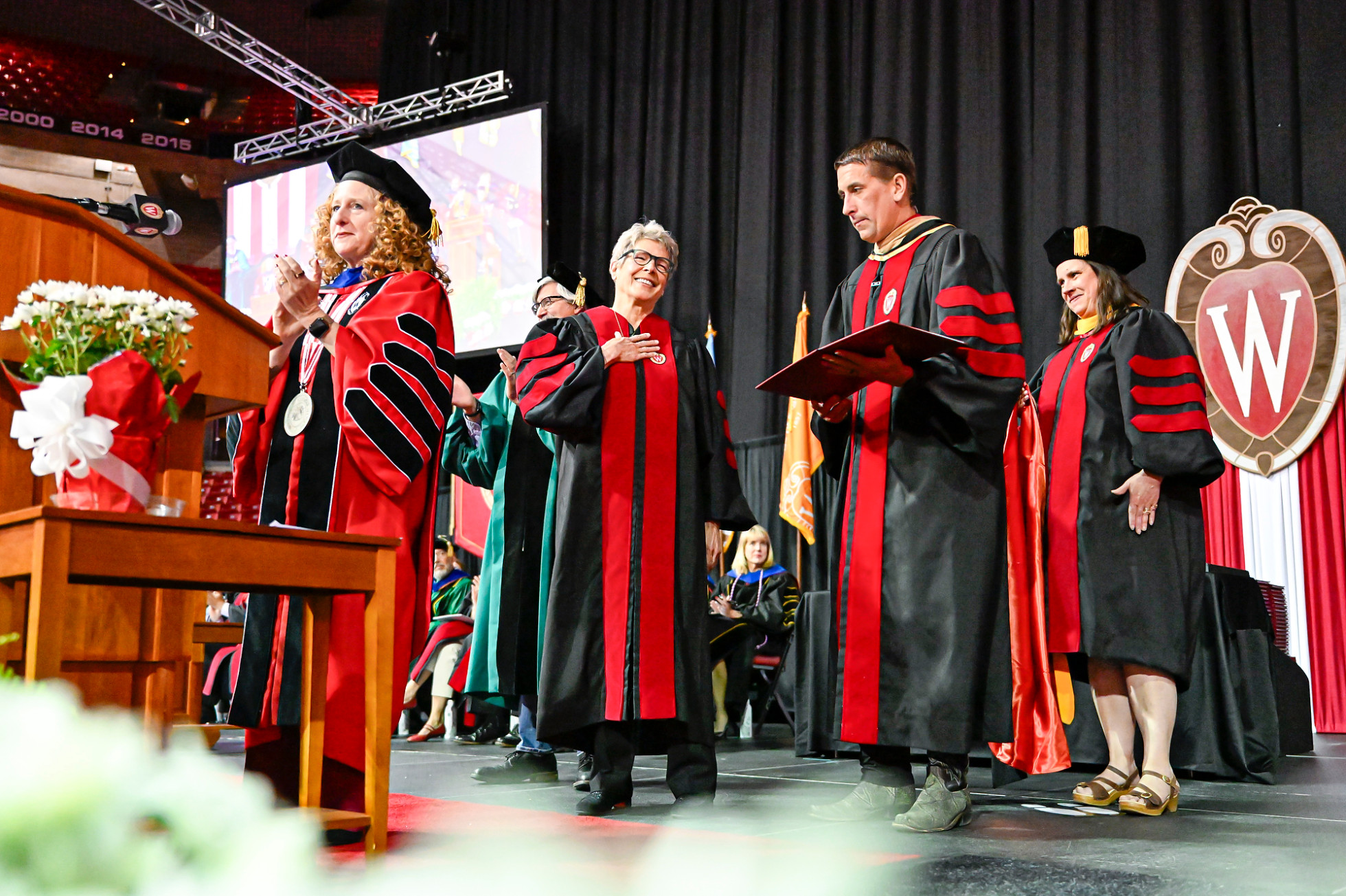
One Badger alumna who for decades has shared the expertise she developed in Madison with the world received a special honor during the ceremony. Tia Nelson, a longtime conservation leader whose work has advanced environmental stewardship throughout Wisconsin, the United States and the globe, received an honorary doctorate degree in recognition of her lifelong public service.
Upon receiving the degree, Nelson reflected on the value of persistence and the importance of remaining open to new ways of approaching difficult problems.
“Be expansive in your curiosity,” Nelson told graduates. “Work with people who see the world differently than you do. Work with persistence.”
Nelson, who’s the daughter of former Wisconsin governor and U.S. Sen. Gaylord Nelson, recounted the story behind her father’s creation of Earth Day and described how broad collaboration across political, disciplinary and generational lines helped shape the modern environmental movement.
“Earth Day and the movement behind it worked because it reached across the aisle, it reached across disciplines, across ideas and across generations,” Nelson said.
For many graduates, the ceremony marked not just the completion of a degree, but the culmination of years spent building relationships, learning to navigate uncertainty and discovering how their work connects to broader communities.
That was true for doctoral voice performance graduates Madison Barrett and Eloise Berkley, who completed both their master’s and doctoral degrees together over five years at UW–Madison.
Watch the speeches
“The collaborators that we get to work with are so special, especially in the arts, because you form these really close, deep bonds when you create art together,” Barrett said before the ceremony. “I found a community of mentors that will be in my life forever and have freed my artistic voice.”
The pair met as graduate students and performed together throughout their time on campus, including in the School of Music production of the Baroque opera “La Calisto.” In a fitting end to their time at UW–Madison as friends and collaborators, Barrett, a mezzo-soprano, and Berkley, a soprano, sang the national anthem together at the beginning of the Friday ceremony.
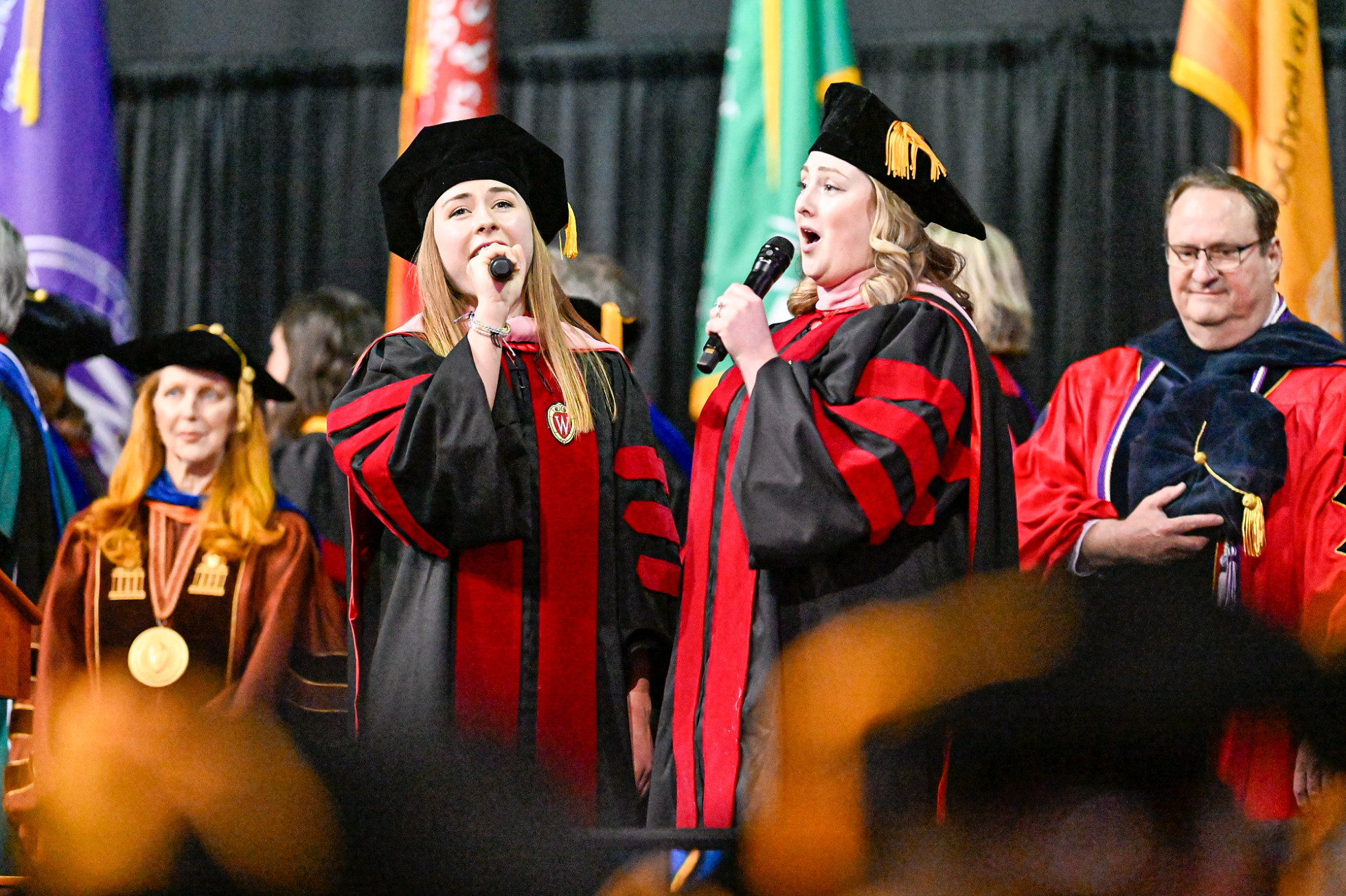
“It really has been so special,” Berkley said of being a member of UW–Madison’s artistic community. “I learned a lot, and I had a wonderful singing and performance experience, but I really value the friendships so much.”
The pair’s reflections echoed many of the themes woven throughout Friday’s ceremony: that higher education is not only about specialized knowledge, but about learning how to think creatively, communicate clearly and engage thoughtfully with people whose experiences differ from one’s own.
Barrett, who plans to pursue a mix of professional performance and teaching, said graduate school taught her to focus less on final achievements and more on the process of growth itself.
“Rather than looking for the end goal, see if you can stay present in the actual journey itself,” Barrett said. “That’s where the value is.”
Berkley is already an adjunct instructor at Beloit College while pursuing a career in higher education musical instruction. She said some of her most important growth came from embracing unfamiliar challenges.
“I think the places where I’ve learned the most are the places that I previously strayed away from because they frightened me,” she said.
Mnookin, who is departing UW–Madison later this month to become president of Columbia University, closed her remarks by encouraging graduates to remain open to these kinds of growth experiences as they move on to the next chapter of their lives.
“Do not let your expertise and the magnificent credential that you are earning today become in any way a cage,” Mnookin said. “Let it be a foundation.”